Lockouts · Manilla
Business Lockout Service in Manilla
You signed the lease on the unit last week and the landlord handed over possession, but the previous tenant's locks are still on both doors and no keys came with them.
In plain words
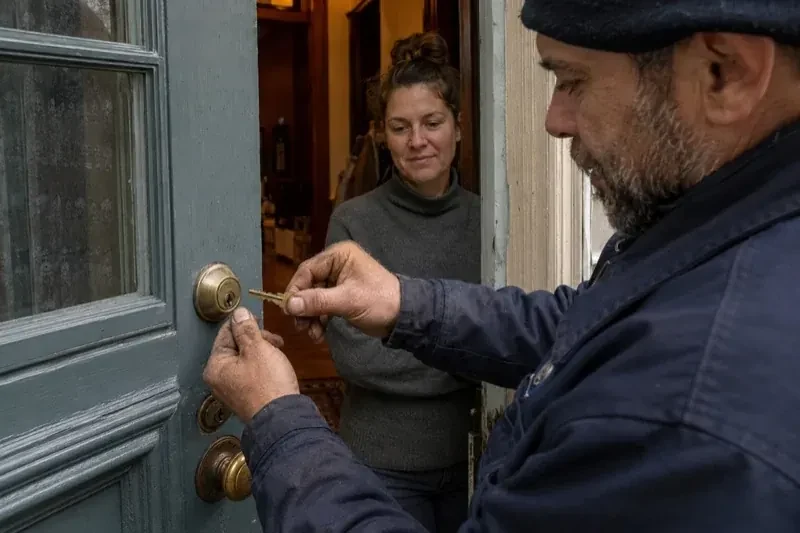
A business lockout service reopens commercial premises when the door is locked and nobody on site can open it. The locksmith begins by confirming that the person asking for entry has authority to act for the business, through identification and a document or a phone call that ties them to the premises. The hardware and any connected alarm or access system are identified next, and the door is opened by the gentlest method the lock allows. Once staff are inside, whatever caused the lockout is put right so the doors lock again at closing, and a written account of the work is left for the business's records.
How the visit goesYou signed the lease on the unit last week and the landlord handed over possession, but the previous tenant's locks are still on both doors and no keys came with them. Your fixtures arrive tomorrow and the doors will not open.
Business Lockout Service
How the visit goes
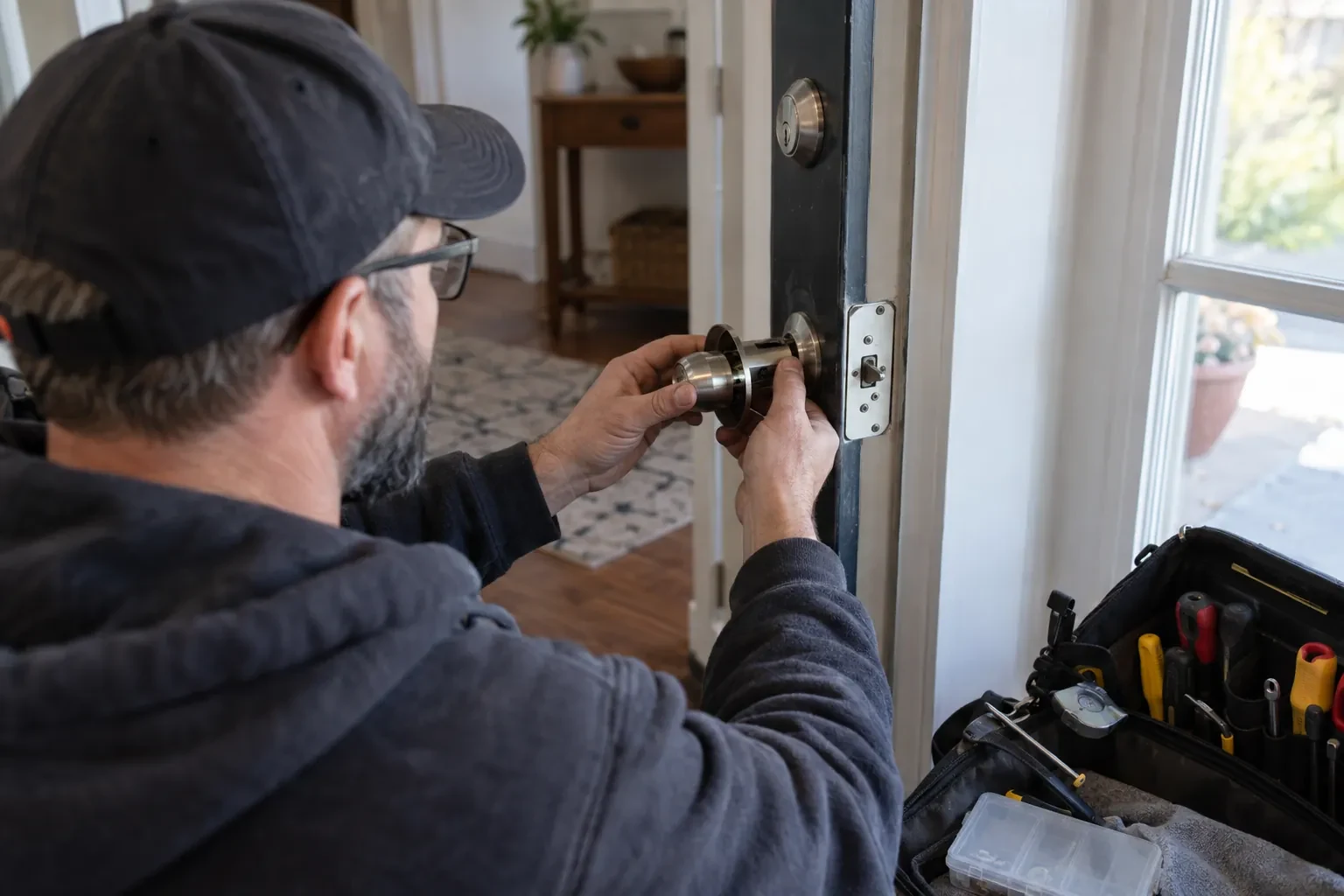
The building around the unit
A unit inside a plaza, office tower or industrial condominium comes with rules of its own. The locksmith asks whether the door is master keyed to a building system, because rekeying one cylinder without the property manager's knowledge can lock out cleaning and maintenance staff. A labelled fire door needs hardware that keeps its rating. A door on the exit route must keep releasing from inside with one motion, which rules out some replacements before they are suggested. Loading docks, freight elevators and after-hours building access are confirmed so the locksmith can actually reach the door with tools. A short call to the property manager often answers all of this at once.
Opening an aluminium storefront door
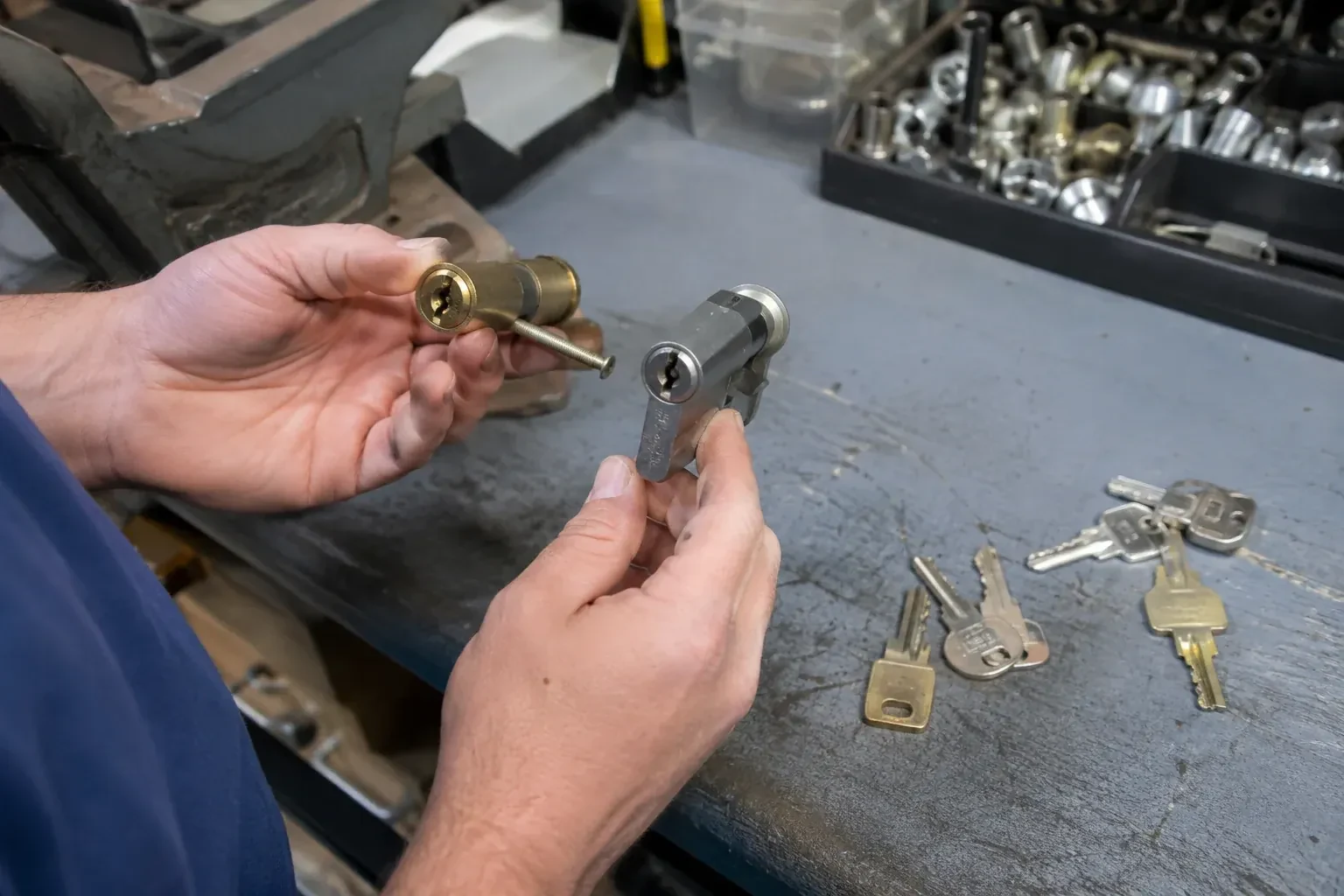
The narrow stile of a glass storefront door carries a mortise cylinder that turns a cam inside a slim lock case. The locksmith picks or decodes that cylinder, then works the cam through its full travel to draw the hookbolt out of the frame or lift the deadlatch. A hookbolt hangs into its strike and cannot be pushed back with a shim, so the cylinder is the honest route in. Once open, the cylinder's set screw and cam alignment are checked, because a cam that has slipped a few degrees is a common reason the key stopped working, and the paddle inside is tested so staff can leave through the same door without a key.
Access control back on its feet
When the lockout involved a reader, strike or magnetic lock, you leave with the system working as it was designed to. Power and backup batteries are restored, the strike or lock is confirmed to hold and release on command, and the reader accepts the fobs it should. Credentials belonging to people who have left are deactivated with the provider while everyone is thinking about it. The mechanical override key is the piece most businesses misplace; it should live with a named keyholder away from the door, not in a drawer inside. A short note of the controller's location and the provider's contact goes into the record for the next person who needs it.
Business Lockout Service
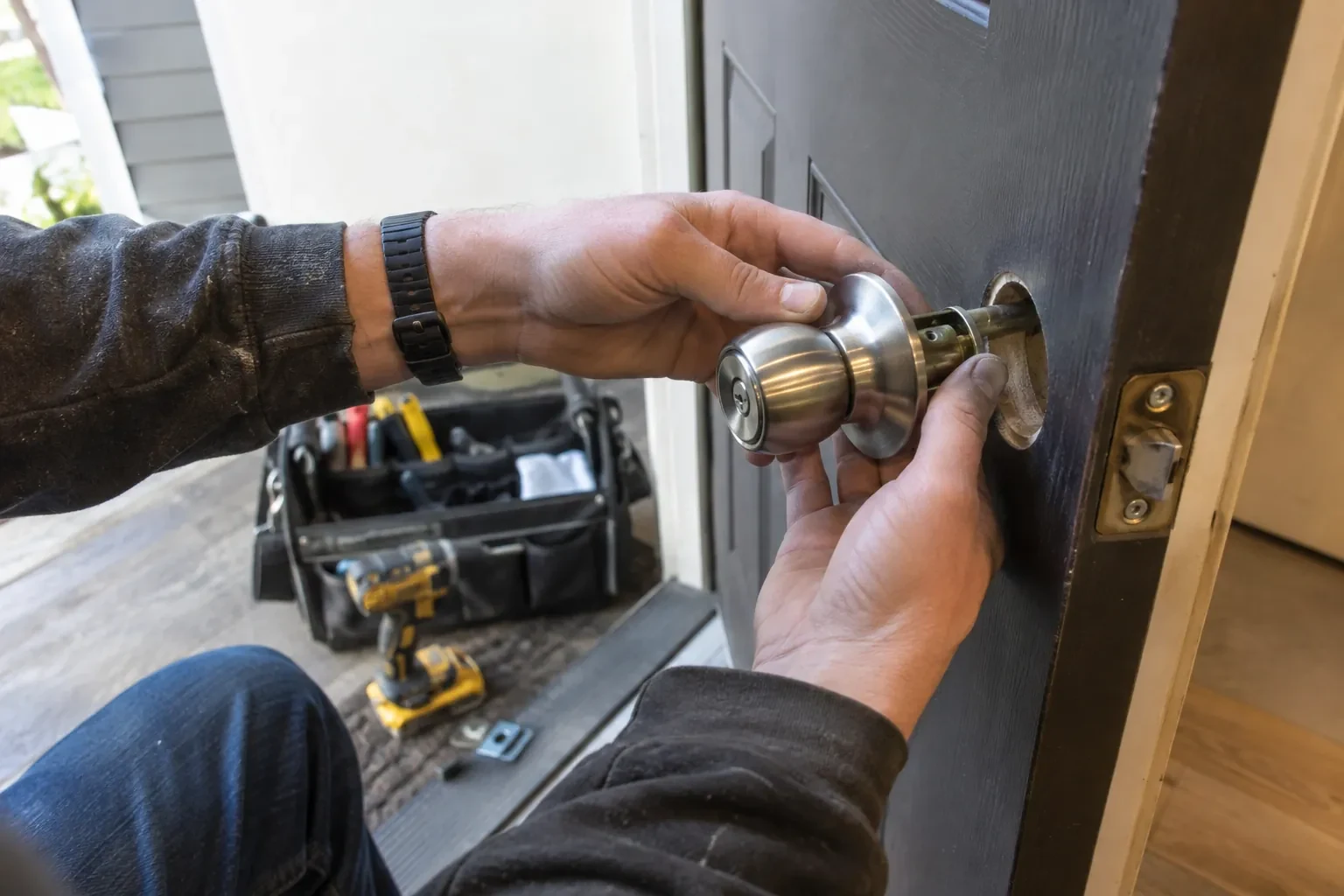
In the van
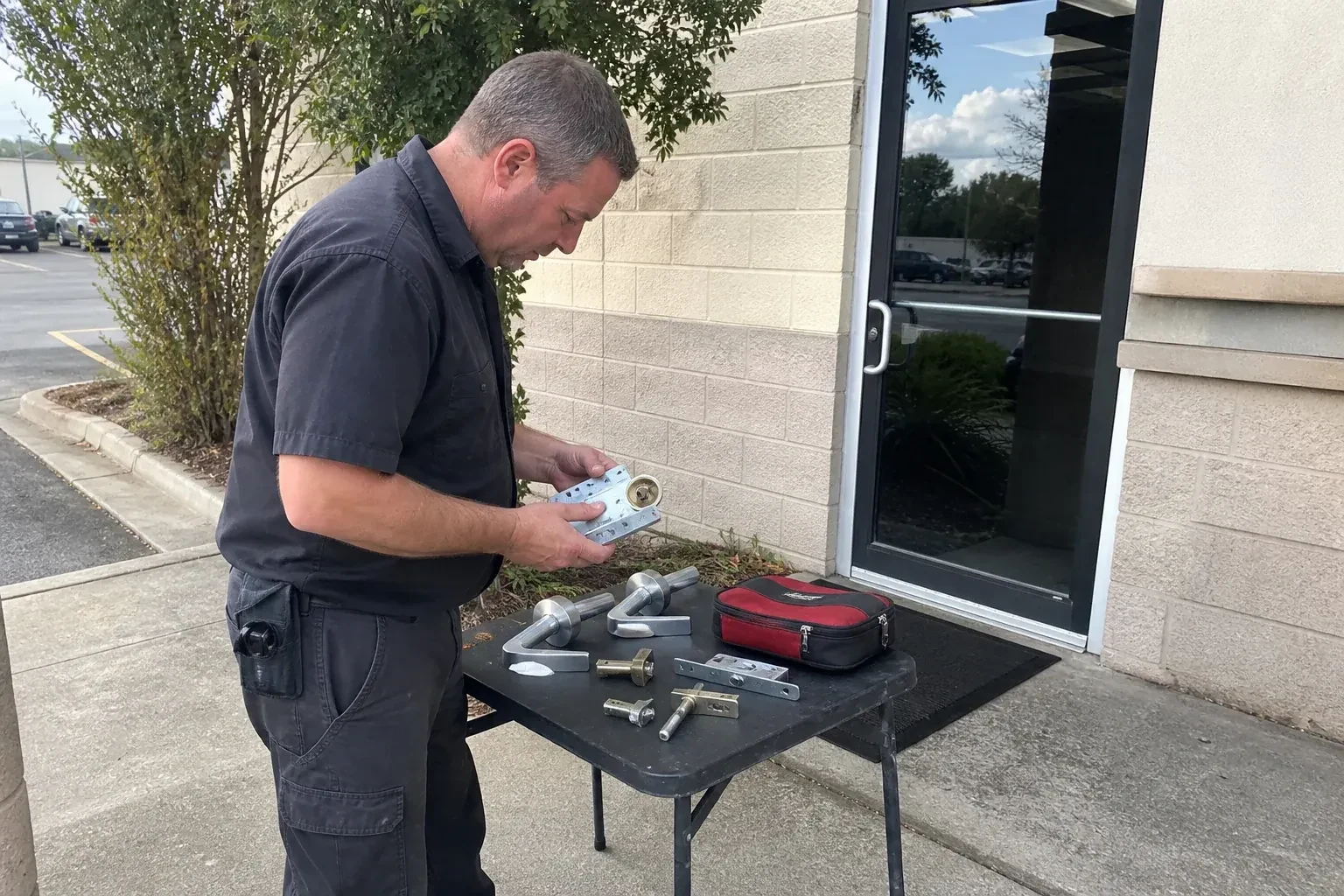
Strikes, pivot shims and closer adjustment tools
Broken key extractors
Replacement mortise and rim cylinders
Storefront deadlatch and hookbolt bypass tools
Storefront deadlock and deadlatch bodies
Business Lockout Service
What affects the quote
When the call comes in
A weekday morning, an evening after closing, a weekend or a statutory holiday all cost the same amount for a business lockout, and locksmiths are reachable at any hour. The figure is confirmed at the door once the locksmith has looked at the door and the hardware involved.
Damage from earlier attempts
A paddle bent by a pry bar, a stile scratched by a screwdriver or a cylinder wrenched by pliers may need repair as well as opening, and the locksmith points out what was already there before quoting it.
Access control and alarm coordination
Restoring power to a strike, opening an override cylinder, re-enrolling fobs and waiting for an alarm station or access provider to respond are each small tasks the quote names separately.
What to have ready
- Which door are you locked out of, and what does the lock on it look like?
- Does the building have a property manager or a master key system for the unit?
- Can you send a photo of the lock face and the edge of the door?
Business Lockout Service: questions
QuestionsAn employee left and never returned their keys. Should we rekey?
It is the sensible step, and a lockout visit is a convenient moment for it. Rekeying keeps your existing cylinders and changes the pins so a new key operates them and the unreturned one does nothing. If your doors use interchangeable cores, swapping the core takes minutes. Bring every door that shared the old key onto the new one, count the fresh keys into named hands and start a register so the next departure is a line in a book rather than a call.
Will we get something in writing afterwards?
Yes. The visit closes with a written account of which door was opened and how, the condition the hardware was in, anything replaced, the number of keys cut and who received them. Landlords ask for it when locks on a unit change, insurers after a loss, and franchise head offices as a matter of course. Keep it with the lease; it also tells the next locksmith exactly what is on your doors.
We need to open for customers. How do you sequence the visit?
Entry comes first and repairs second. Once authority is confirmed the door is opened, staff go in and start their routine, and the locksmith turns to the cause: extracting a broken key, rekeying for a lost one, re-springing a deadlatch or lifting a dropped door. Anything that can wait for a quieter hour, such as rekeying interior doors, is offered as a return visit so the shop floor is not blocked while it trades.