Lockouts · Keneden Park
Business Lockout Service in Keneden Park
You signed the lease on the unit last week and the landlord handed over possession, but the previous tenant's locks are still on both doors and no keys came with them.
In plain words
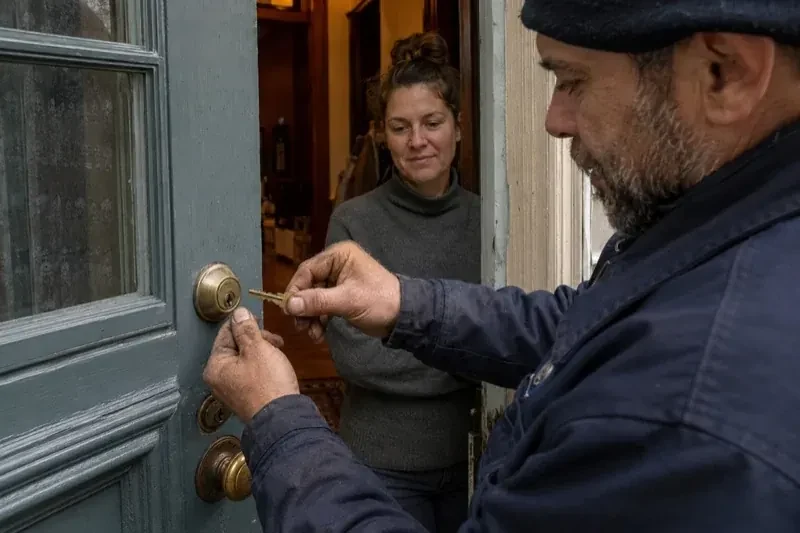
Authority for a business is a question about the company, not just the individual at the door. An owner shows identification and something connecting them to the premises, such as the lease or the business registration. A manager or employee adds a call to the owner or head office, or a property manager who can vouch for them. A commercial landlord brings the lease terms or written instruction that supports the request. Good locksmiths treat this as the opening step of every business lockout and help find the right document rather than guessing, because the same care protects the business the next time a stranger claims to work there.
How the visit goesMinus eighteen with a wind, and the exterior cylinder on the shop door has frozen solid overnight after yesterday's slush. The key goes in halfway and stops. The delivery driver is due, the phone is ringing inside, and nobody can reach it.
Business Lockout Service
How the visit goes
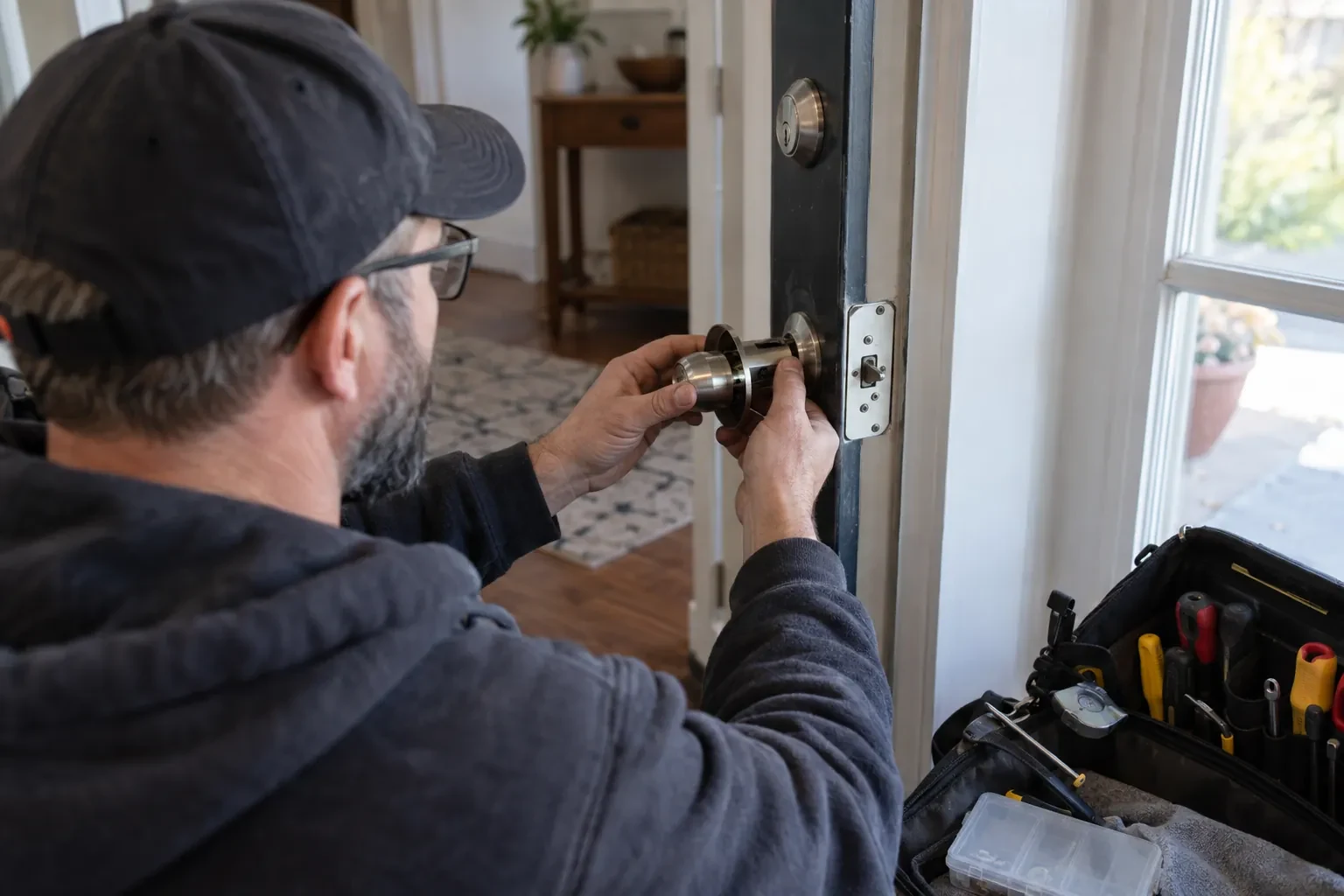
The building around the unit
A unit inside a plaza, office tower or industrial condominium comes with rules of its own. The locksmith asks whether the door is master keyed to a building system, because rekeying one cylinder without the property manager's knowledge can lock out cleaning and maintenance staff. A labelled fire door needs hardware that keeps its rating. A door on the exit route must keep releasing from inside with one motion, which rules out some replacements before they are suggested. Loading docks, freight elevators and after-hours building access are confirmed so the locksmith can actually reach the door with tools. A short call to the property manager often answers all of this at once.
Non-destructive first, on every commercial door
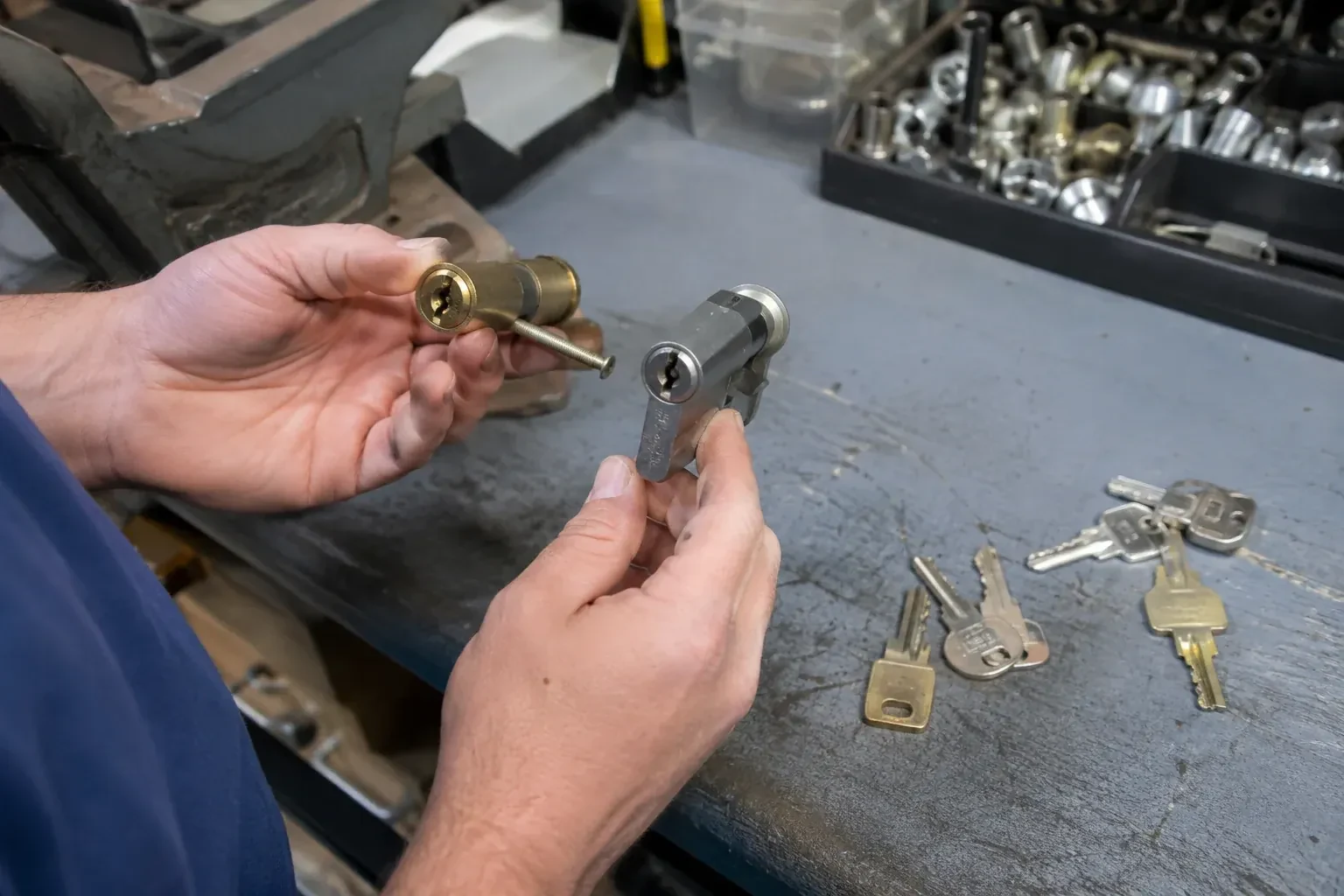
Commercial cylinders are built to a higher standard than most residential ones, but the order of work is the same. The locksmith begins with methods that operate the mechanism as a key would: picking or decoding the mortise or rim cylinder, or pulling a removable core with a control key when the building uses one. Next come bypasses that suit the specific hardware without cutting anything. Drilling sits at the end of the list and is discussed before it begins, aimed only at the cylinder, with a replacement fitted in the same visit. Working in this order keeps the storefront, the trim and the lock body as they were, and the business back on its own keys.
Ready for the rest of the winter
A storefront cylinder that froze is handed back dried, cleaned of salt and dressed with a dry lubricant that sheds moisture instead of trapping it. A tube of lock de-icer for the opening manager's coat pocket and a keyhole cover on the most exposed door are small habits that carry a business through a season of freeze and thaw. The closer is adjusted for cold weather so the door still latches when the fluid thickens, and the threshold is checked for the ice ridge that forms where slush is tracked in. If the same door freezes every year, a weather-shielded cylinder or a small vestibule heater is worth a conversation.
Business Lockout Service
In the van
Strikes, pivot shims and closer adjustment tools
Broken key extractors
Replacement mortise and rim cylinders
Storefront deadlatch and hookbolt bypass tools
Storefront deadlock and deadlatch bodies
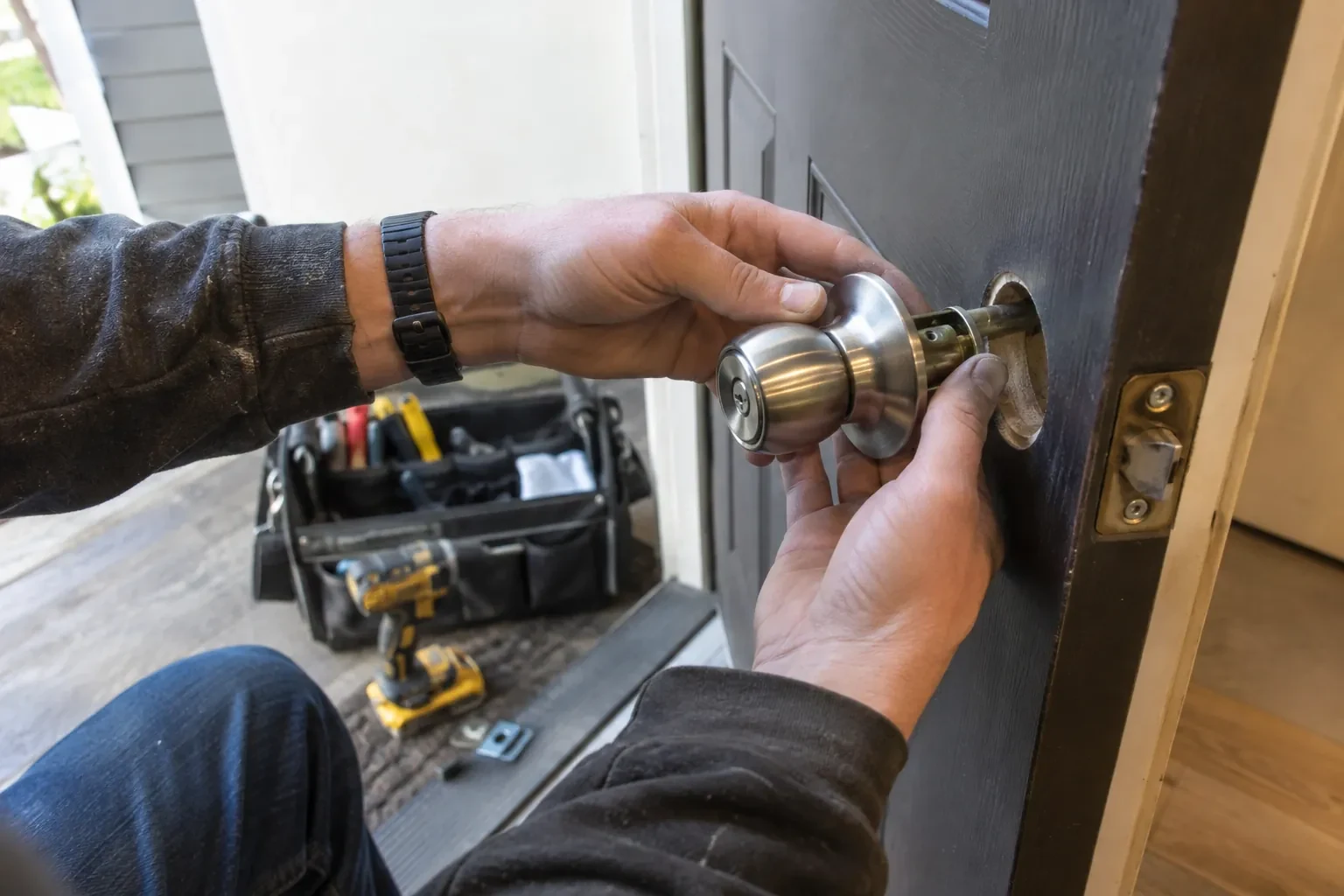
Business Lockout Service
What affects the quote
Access control and alarm coordination
Restoring power to a strike, opening an override cylinder, re-enrolling fobs and waiting for an alarm station or access provider to respond are each small tasks the quote names separately.
Broken key extraction and cylinder service
Removing a snapped key, cleaning and lubricating the cylinder and replacing a worn cam or tailpiece are added to the opening when that is what caused it, and a new key cut from code follows.
Storefront, lever, mortise or exit device
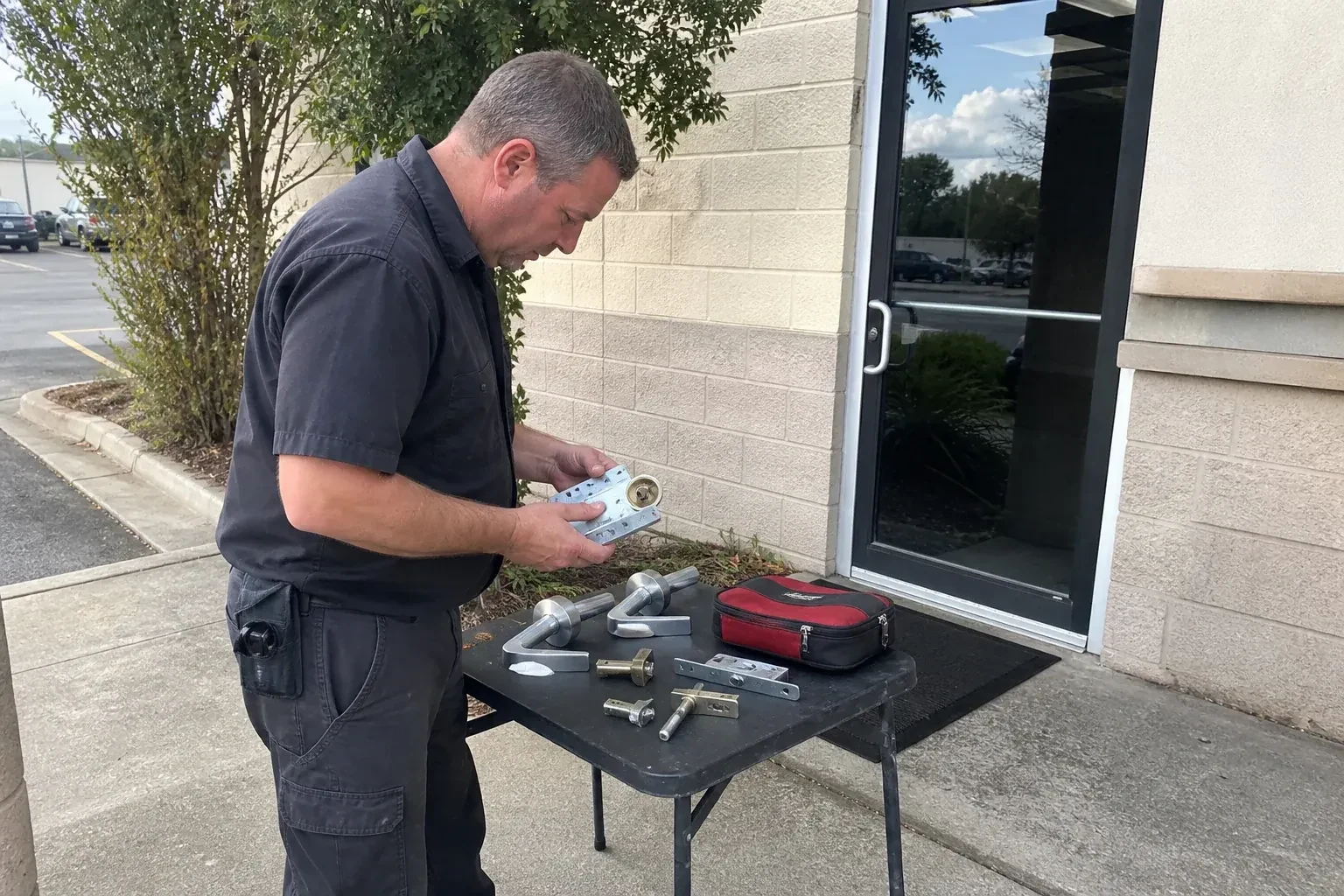
An aluminium storefront cylinder, a cylindrical lever lockset, a full mortise lock and the trim of an exit device each take different tools and time to open, and the hardware on your door sets the starting point.
What to have ready
- Can you send a photo of the lock face and the edge of the door?
- Has anyone already tried to force or pry the door?
- Is there an alarm on the door, and who holds the code and the monitoring password?
Business Lockout Service: questions
QuestionsAn employee left and never returned their keys. Should we rekey?
It is the sensible step, and a lockout visit is a convenient moment for it. Rekeying keeps your existing cylinders and changes the pins so a new key operates them and the unreturned one does nothing. If your doors use interchangeable cores, swapping the core takes minutes. Bring every door that shared the old key onto the new one, count the fresh keys into named hands and start a register so the next departure is a line in a book rather than a call.
Will we get something in writing afterwards?
Yes. The visit closes with a written account of which door was opened and how, the condition the hardware was in, anything replaced, the number of keys cut and who received them. Landlords ask for it when locks on a unit change, insurers after a loss, and franchise head offices as a matter of course. Keep it with the lease; it also tells the next locksmith exactly what is on your doors.
We need to open for customers. How do you sequence the visit?
Entry comes first and repairs second. Once authority is confirmed the door is opened, staff go in and start their routine, and the locksmith turns to the cause: extracting a broken key, rekeying for a lost one, re-springing a deadlatch or lifting a dropped door. Anything that can wait for a quieter hour, such as rekeying interior doors, is offered as a return visit so the shop floor is not blocked while it trades.