Commercial · Kawartha Lakes
Access Control Installation
Another employee left and the keys never came back.
In plain words
Where a building has more than one controlled door, a networked system lets each opening run its own schedule: the front office unlocked for regular hours, a stockroom open to two people only, a loading dock released for a delivery window, with the management software tying those schedules together. A shared entrance in a multi-tenant building can carry each tenant's own credentials without giving one business access to another's suite, and the same platform keeps a combined log, so a manager checking last night's entries never has to walk the building door by door.
How the visit goesThe team has grown past the point where one shared key still makes sense. New hires need a way in before a manager arrives, and the current setup cannot tell one person's entry from another's.
Access Control Installation
How the visit goes
Reading the door and the frame
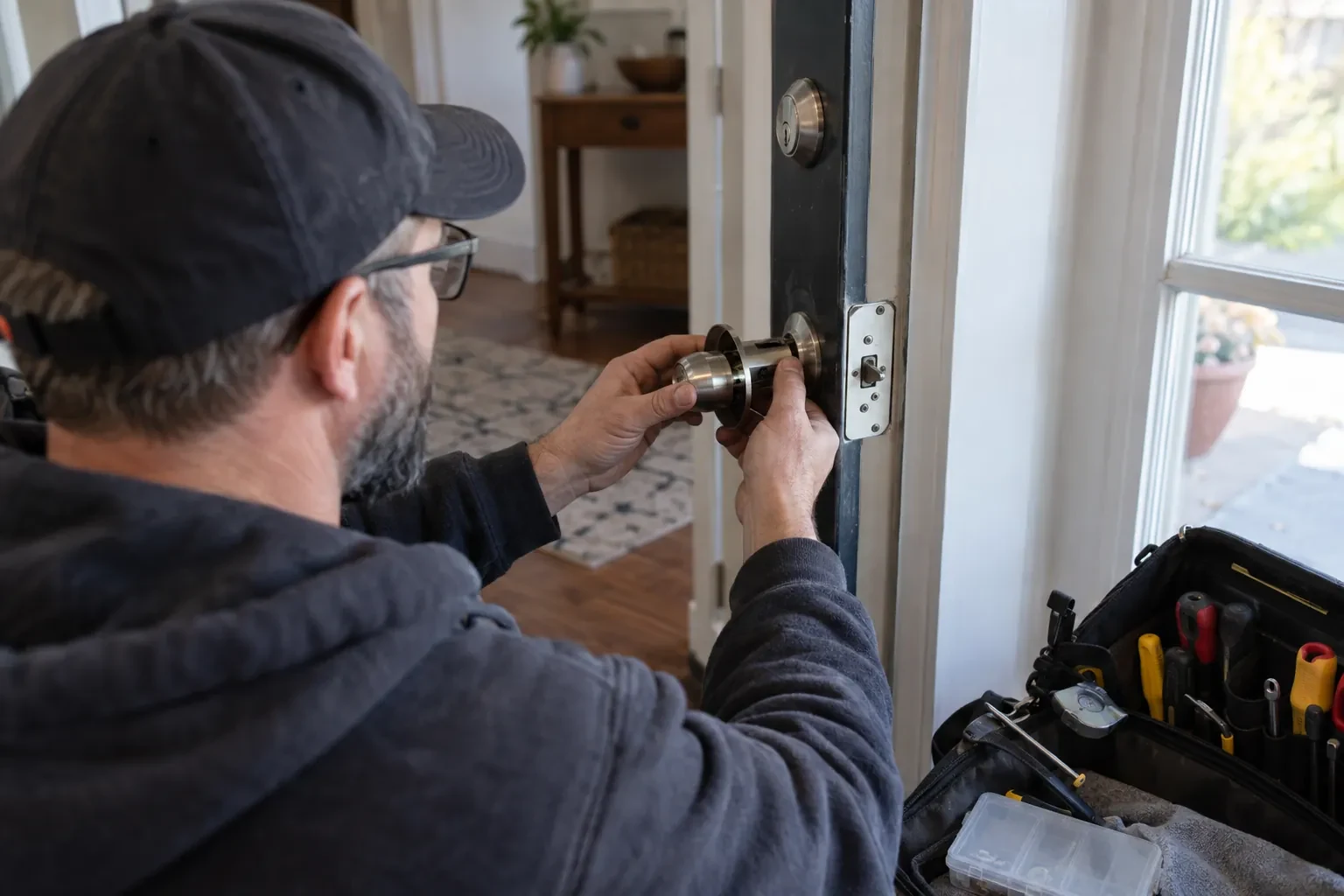
Every opening gets a physical look before it gets any wiring. The locksmith checks what the door and frame are made of, which way the door swings, whether an electric strike will seat cleanly in the existing frame, and whether the door sits on a fire separation, which changes what can be added to it. A hollow metal frame, a wood door, and an aluminum storefront door each take different hardware, and a door that already sits loosely in its frame is noted before an electric strike or a magnetic lock is chosen for it, since alignment decides how reliably the lock releases.
Fitting a magnetic lock with its release device
A magnetic lock is mounted to the head of the frame with a matching armature plate on the door, and it is never installed alone: a request-to-exit device, usually a motion sensor or a mechanical push bar, is wired in to drop power to the magnet the moment someone inside moves to leave, and a connection to the fire alarm panel does the same the instant an alarm activates. The lock is aligned so the plate meets the magnet squarely across the full swing of the door, since even a small gap lets a determined push defeat the hold.
Watching the doors through a change of season
Steel and aluminum frames move slightly with temperature, and a wood door can swell in a humid spell or shrink once the heat comes on for winter, either of which can nudge an electric strike or a magnetic lock's armature plate out of the alignment it was installed with. A door that used to release cleanly and now needs a firm pull, or a magnetic lock that seems to hold less securely than it did in the spring, is usually telling you about the door rather than the electronics, and an alignment check at each change of season keeps it from becoming a pattern.
Access Control Installation
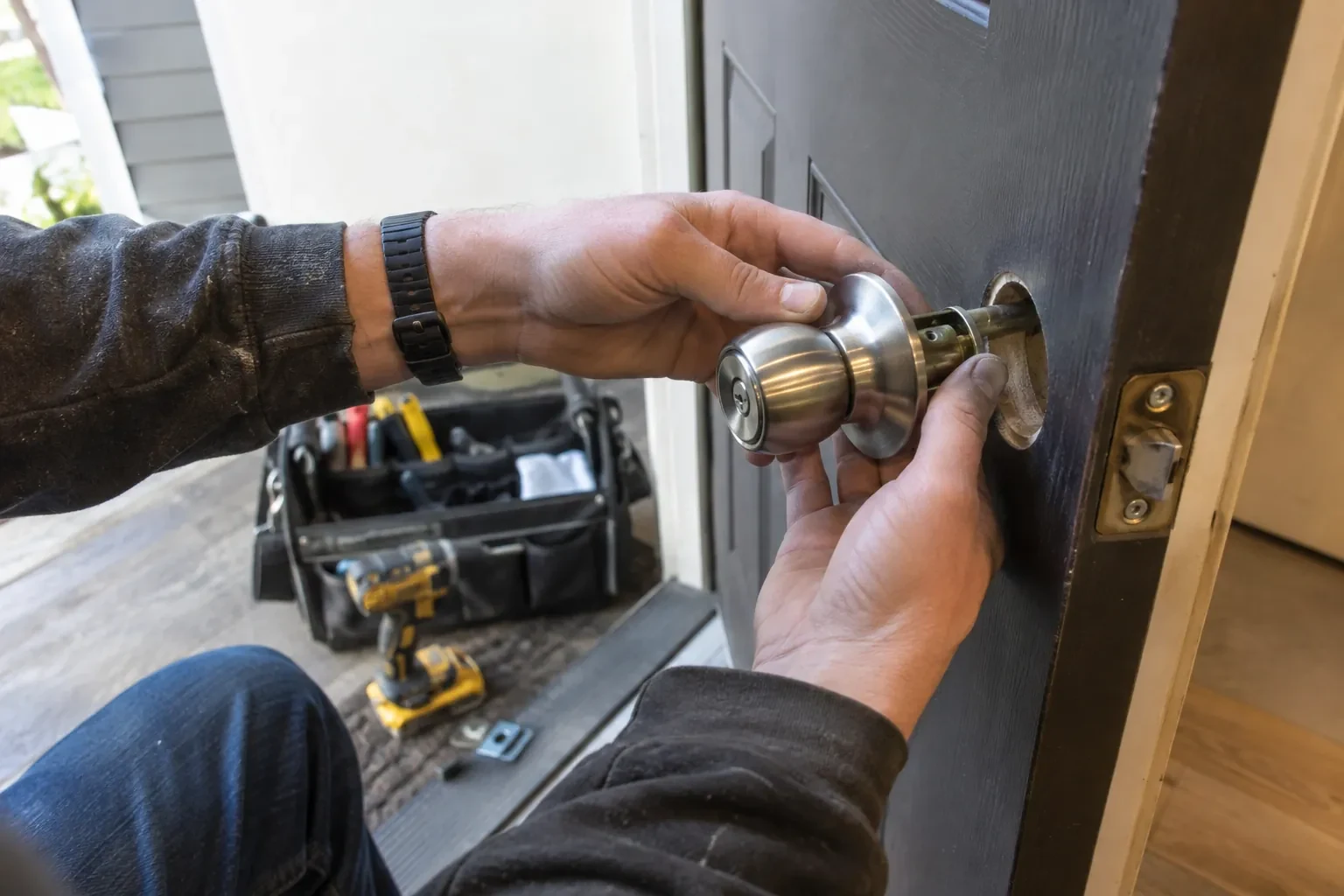
In the van
Credential cards and fobs
Keypad readers
Mechanical override cylinders
Power supply with battery backup
Low-voltage cable
Access Control Installation
What affects the quote
Room left for future doors
Sizing the controller and power supply with some spare capacity for a door or two added later costs a little more at installation but avoids a second controller purchase when the building later adds an opening.
What cabling already exists
Exposed ceilings, accessible risers or existing conduit make running new low-voltage cable straightforward; finished walls and long runs between openings and the controller location add time and materials to the same job.
Power supply and backup sizing
A power supply and battery backup have to be sized to the number of doors and locks they support, and a building with several openings on one controller needs a larger supply than a single standalone unit.
What to have ready
- Do any doors need different hours than the rest of the building?
- Is there an existing keypad or card system on any door now?
- Do you want cards, fobs, keypad codes, or a mix of these?
Access Control Installation: questions
QuestionsWhat happens at a networked location if the network or Wi-Fi goes down?
A standalone reader at a single door keeps working during a network or Wi-Fi outage, since it checks its own stored list rather than relying on a live connection. A networked controller generally keeps making local decisions at each door as well, though live updates, remote changes and off-site log access may pause until the connection returns.
What's the difference between an electric strike and a magnetic lock?
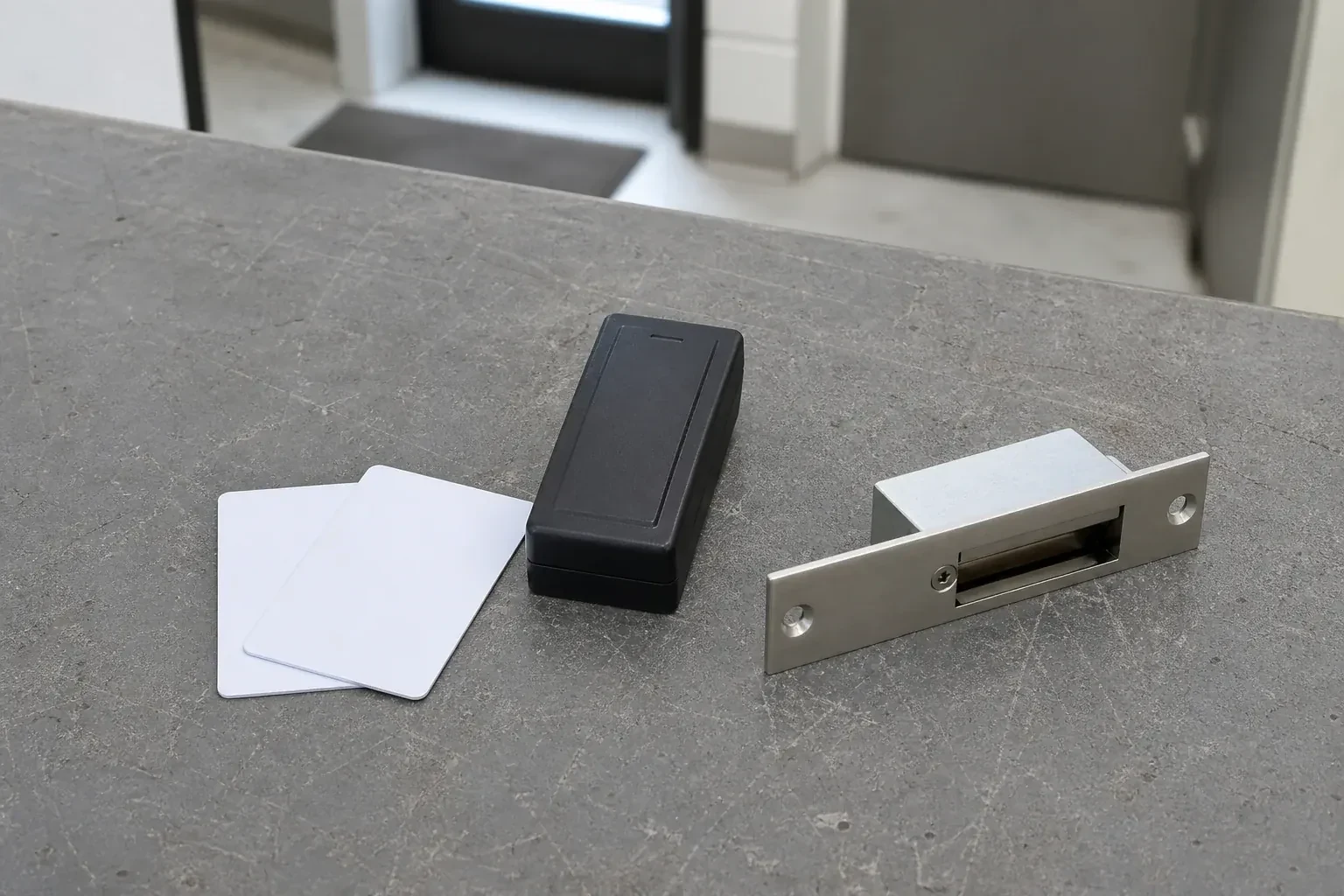
An electric strike fits into the existing door frame and works with the door's own latch or bolt, releasing it briefly for a valid credential while otherwise behaving like an ordinary strike plate. A magnetic lock instead clamps the door shut with an electromagnet mounted at the head of the frame, and it is always installed with a request-to-exit device so someone leaving is never held up looking for a way out.
Can access control go on a fire exit or a required exit door?
Yes, with extra care taken specifically because it is an exit. A magnetic lock on an exit door is paired with a request-to-exit device and wired into the fire alarm system so it releases automatically the instant an alarm activates, and the door is confirmed to open with one motion from the inside at all times. An electric strike on an exit door generally needs no additional egress hardware.
Related services
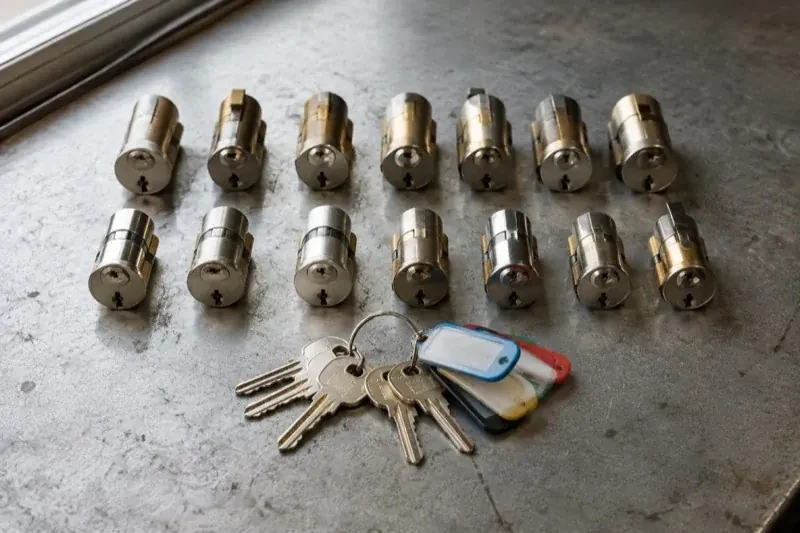
- Master Key System DesignA property manager taking over a small commercial building inherits a shoebox of keys with no labels and no chart.
- Panic & Exit HardwareAfter the fit-out, the gym floor now holds more people than the old office space ever did, and the exit door at the back still has the same turn-lock it had when the room held desks.
- Commercial-Grade Lock ReplacementHead office wants every branch keyed alike under one system, and half the locations are still running whatever lockset the original contractor happened to install years ago.