High security · Manilla
Safe Installation & Servicing in Manilla
The office is moving three blocks over, and the old commercial safe that has sat bolted to the concrete for fifteen years now needs to come out, travel across town, and go back down just as solidly.
In plain words
Businesses call for this service for two different reasons that sometimes overlap: protecting cash held overnight, and protecting paper records that would be enormously slow to recreate. The two priorities point toward different construction, since a cash-rated body resists tools while a document-rated interior resists heat and holds its temperature down through a timed fire test. Servicing an existing unit follows the same split: bolt-work and lock mechanics get physical attention, while any fire-rated lining is checked for the trapped moisture that builds up behind an airtight seal.
How the visit goesA community group counts the weekend's raffle and bake-sale cash on a kitchen table, then carries it home in a tote bag until the bank opens Monday, because there has never been anywhere safer to leave it.
Safe Installation & Servicing
How the visit goes
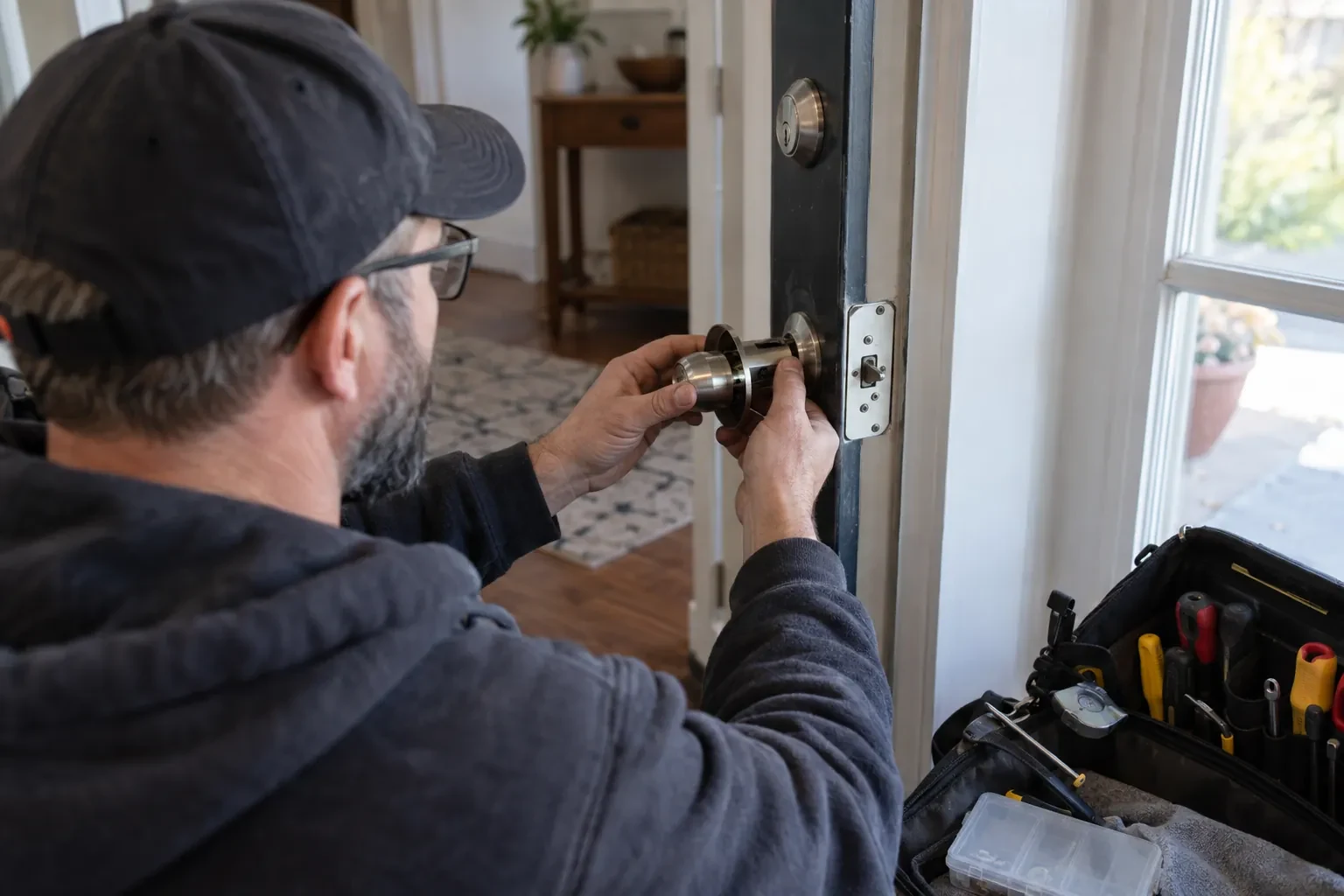
What kind of lock is already, or will be, on the door
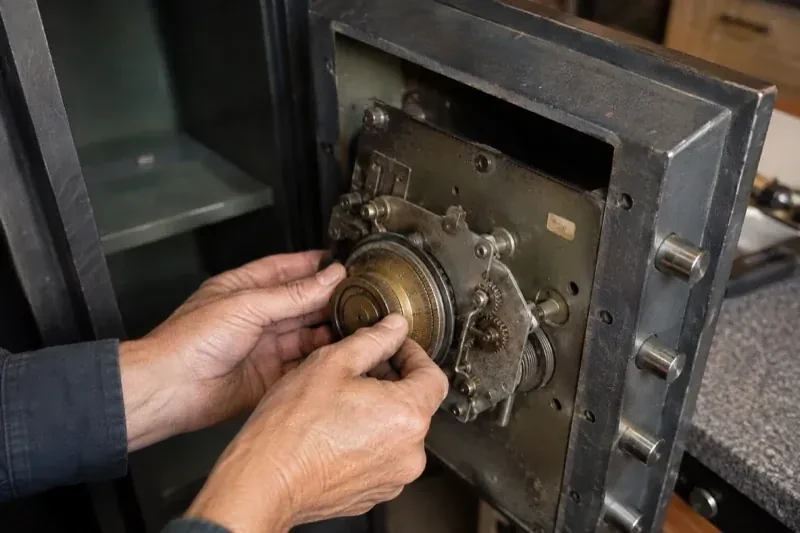
A mechanical dial and an electronic keypad are serviced differently, so the lock gets identified early. On a new installation this is a straightforward choice by the owner. On an existing safe, the locksmith checks whether the dial turns smoothly through a full combination, whether an electronic keypad still lights up and accepts a code, and whether a hidden mechanical override exists behind the keypad in case the batteries run flat. Any handle that binds or clicks without retracting the bolt gets traced back to the lock before the rest of the service continues.
Anchoring into a concrete floor
On a concrete floor, holes are drilled through the safe's pre-cut anchor points with a hammer drill and a masonry bit sized to the anchor hardware, and the dust is cleared from each hole so the anchor seats fully rather than on loose grit. Concrete anchor bolts are driven in and torqued to the hardware manufacturer's specification, tight enough to resist prying but not so tight that the anchor or the safe's own steel is stressed. The safe is tested afterward by hand to confirm it does not rock or shift.
Paperwork worth keeping somewhere other than inside the safe
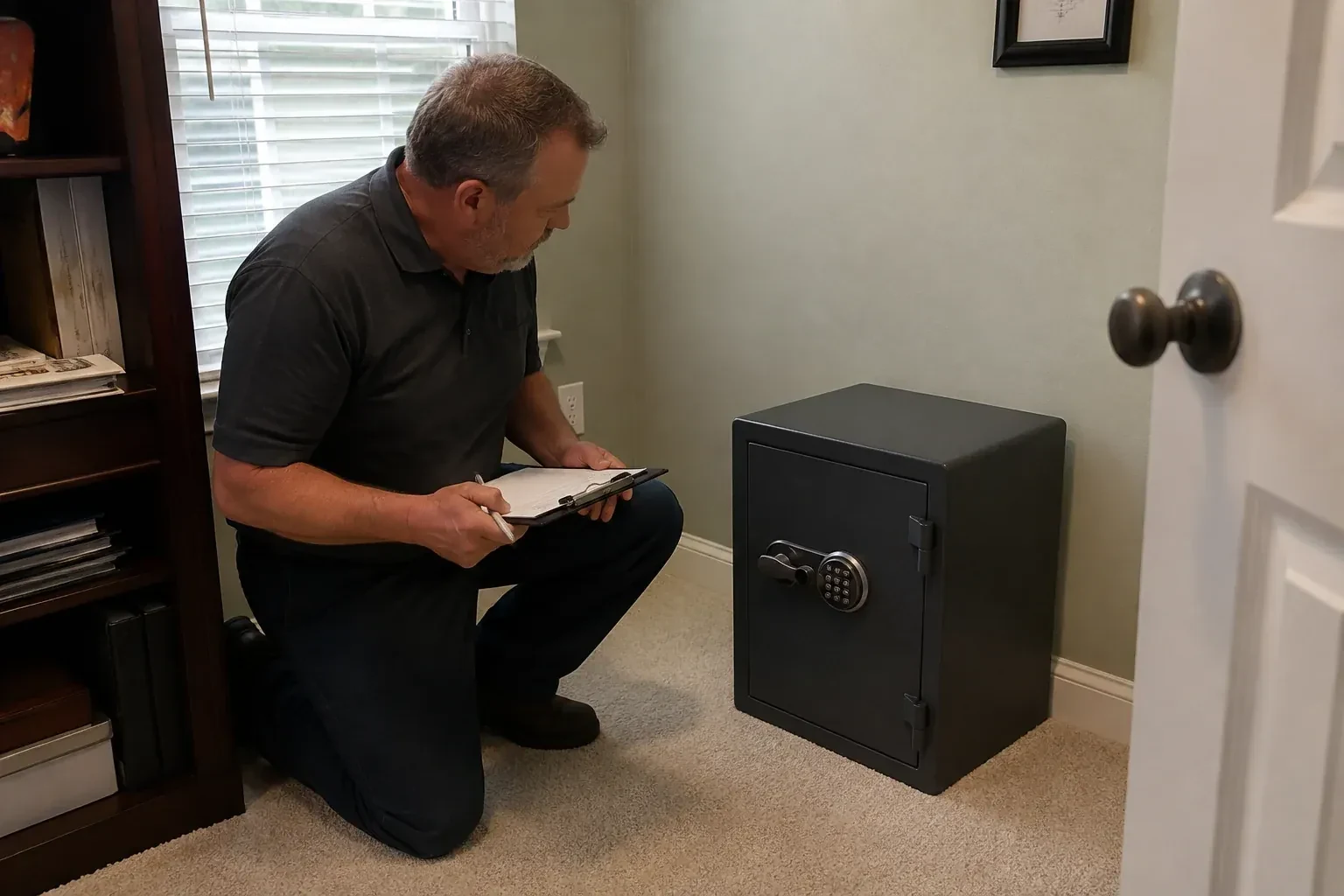
The model number, the burglary and fire ratings, and a note of how and where the unit was anchored are all details worth keeping on file, ideally somewhere other than locked inside the safe itself. An insurer asking about coverage for cash or valuables will often want exactly this information, and having it ready saves a search through old boxes later. A few photographs taken during installation, showing the anchoring and the rating label, cover most of what gets asked for afterward.
Safe Installation & Servicing
In the van
Concrete anchor bolts
Torque wrench and socket set
Desiccant packets
Wood subfloor lag bolts and washers
Mounting plate
Safe Installation & Servicing
What affects the quote
New installation versus servicing an existing unit
Fitting a brand-new safe involves positioning, anchoring, and lock setup from scratch, while servicing an existing one focuses on bolt-work, lock testing, and confirming or adding anchoring, generally a shorter list of tasks.
Fire rating and duration chosen
A longer fire-rated duration or a lower protected temperature for digital media generally means thicker insulation and a larger overall footprint for the same interior storage space.
An insurer's or head office's stated requirement
Some businesses are told by a policy or a head office exactly what rating a safe on the premises needs to meet, which narrows the choice of unit before other factors are weighed.
What to have ready
- Do you currently know the combination or code?
- Does an insurer or head office require a specific rating?
- Is that floor concrete, wood subfloor, or tile?
Safe Installation & Servicing: questions
QuestionsWhat information should I have ready before requesting a quote?
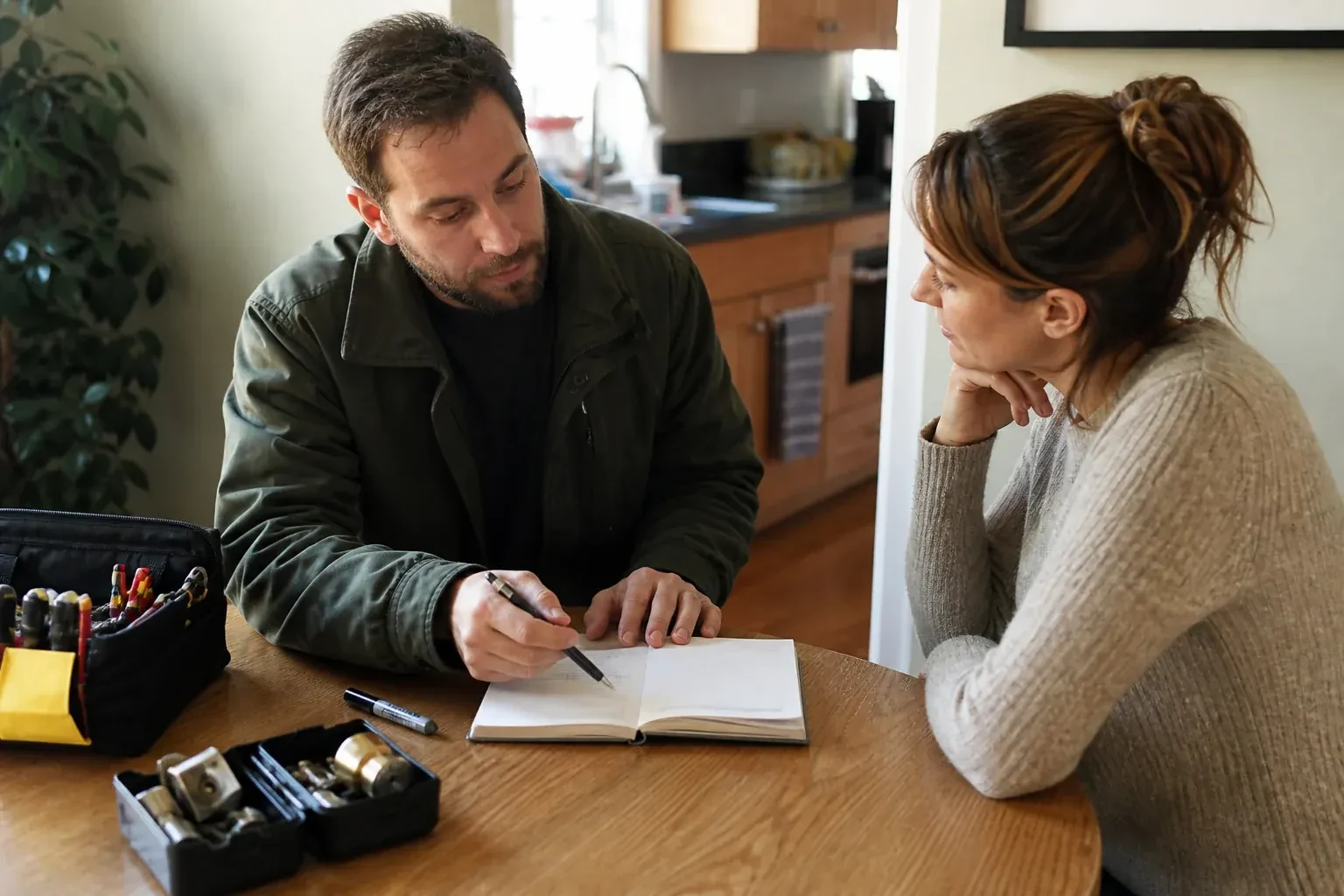
Knowing roughly what the safe will store, whether it is a new purchase or an existing unit, and what floor or wall it will sit against covers most of what shapes the visit. If the safe is already on site, its approximate weight and dimensions help too, along with whether it currently has a working lock and combination. An insurer's stated rating requirement, if there is one, is worth mentioning as well.
Will anchoring damage my flooring?
Anchoring leaves small holes at the anchor points, sized to the bolts being used, and on a finished floor these sit under the safe itself where they are never seen again. On tile, the risk of cracking nearby tiles is real enough that an alternative fastening point or a different spot in the room is often chosen instead of drilling straight through the tile itself.
How do I decide between a bigger safe now or upgrading later?
It comes down to how much the amount being stored is likely to grow over the next few years. A safe sized with some room to spare avoids an early repeat visit, while a unit sized exactly for today's needs can be outgrown within a year or two for a growing business. Anchoring and lock work do not change much with size, so the main trade-off is simply the footprint the larger unit takes up in the room.