Car keys · Kawartha Lakes
Vehicle Lock Repair
Your key turns smoothly in the driver's door, the same as it always has, but the button underneath stays down and the latch never releases.
In plain words
Some vehicle lock faults are entirely mechanical, a cylinder worn from years of use, a linkage rod that slipped off its clip, while others sit in the electrical side: a tired actuator motor, a corroded connector, or a coin battery inside the key fob that has finally run flat. A locksmith working on a modern vehicle checks both sides before deciding what to repair, since a stiff key points first to the key, the cylinder and the mechanical path, while trouble that shows up only with the switch or remote points the other way, and the two call for different parts entirely.
How the visit goesAfter a cold night the driver's door key barely goes in, and when it finally seats it stops halfway and will not turn any further. Meltwater from the day before ran into the keyway and the overnight drop in temperature sealed it solid.
Vehicle Lock Repair
How the visit goes
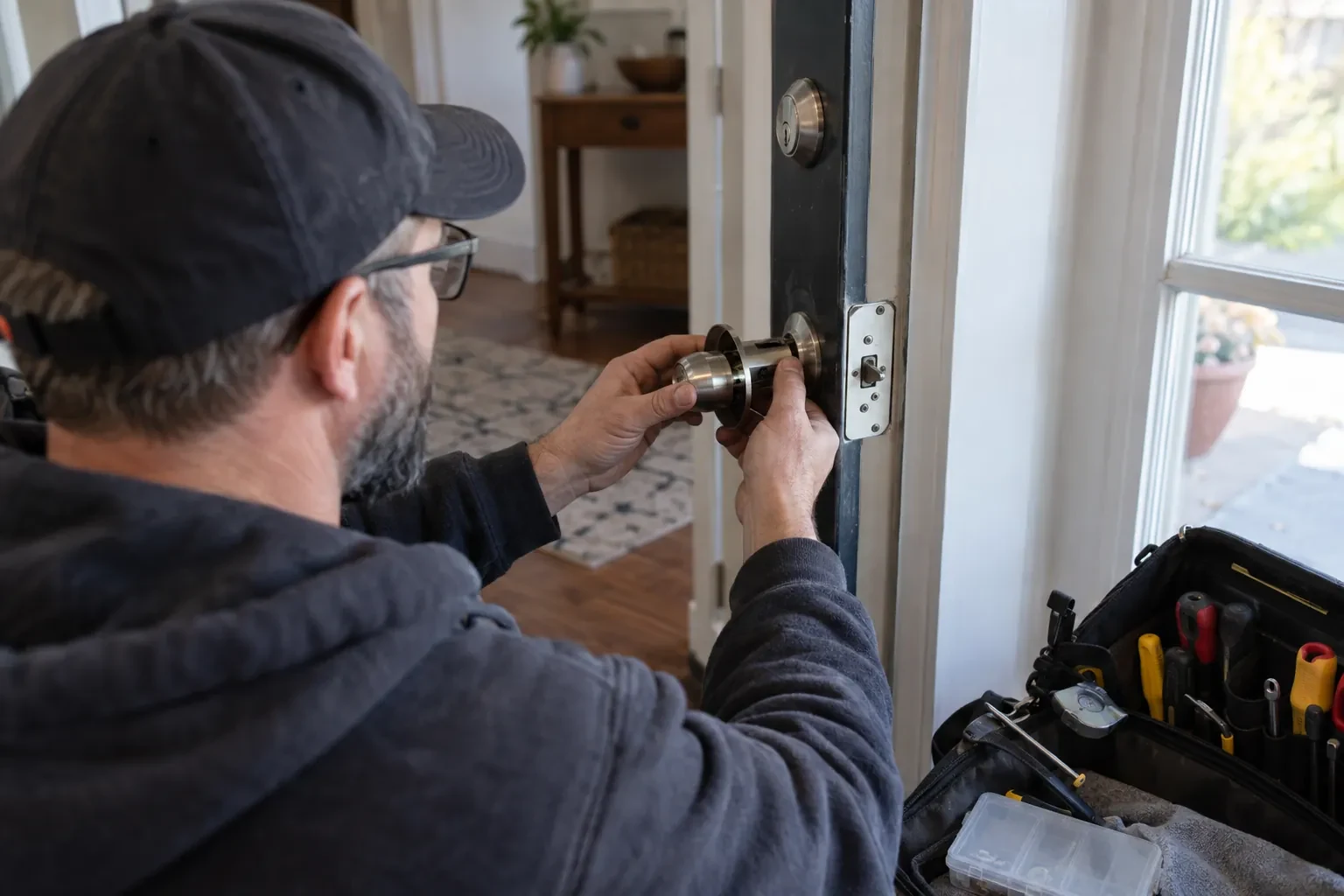
Opening the panel to see the linkage and actuator
Reaching the actual mechanism means removing the interior trim panel behind the affected lock. With it off, the locksmith can often see whether the linkage rod is still clipped to the back of the cylinder, whether the power actuator moves when the switch or remote is used, and whether corrosion or a cracked wiring boot at the hinge has reached the connector, though on some doors a carrier plate, water shield or window guide still has to come away first to reach these parts. This is where a spinning key or an unresponsive remote usually gets its explanation.
Tracing and repairing a wiring fault
Where the fault sits in the wiring rather than the actuator, the locksmith follows the circuit back from the lock to the door hinge, checking the flexible wiring boot that carries the wires between the body and the door for cracks or fraying. A damaged section is repaired or the boot replaced, and the connector is checked for corrosion, since this small rubber conduit takes the brunt of every door open and close over the years.
Keeping moisture out of a freshly repaired lock
A lock that has just been serviced benefits from a dry start. Worn weatherstripping near the repaired point is worth attending to soon, since it is the most common way moisture reaches a cylinder, a linkage or an actuator a second time. Wiping down the door sill and keeping the seal clean through the wetter months goes a long way toward keeping today's repair from repeating itself.
Vehicle Lock Repair
In the van
Power door lock actuator
Trim panel removal tools
Key blanks cut to code
Weatherstripping and seal sections
Automotive pick and tension tools
Vehicle Lock Repair
What affects the quote
Getting to the vehicle
A vehicle parked in an accessible driveway is straightforward. One in an underground garage, a gated lot or a location with limited parking adds time that the quote takes into account.
Transponder or immobilizer compatibility
Vehicles that require a chip inside the key for the engine to start add the cost of a compatible transponder and the programming step, on top of cutting the key blade itself.
Which lock is affected
A front door, a rear door, the trunk or hatch, and a storage compartment each sit differently in the vehicle and take different amounts of time to reach and repair, which shows up in the quote.
What to have ready
- Does the key turn without effect, resist turning, or not go in at all?
- Has the key fob's battery been replaced recently, or not that you recall?
- Do you have the vehicle's registration or ownership document on hand?
Vehicle Lock Repair: questions
QuestionsDoes a repaired vehicle lock still use my original key?
Wherever possible, yes. The point of repairing rather than replacing a lock outright is to keep it working with the key and fob you already carry, so the whole vehicle continues to answer to one set rather than needing a second key for one door.
Will fixing one lock affect the rest of my central locking?
No, the other doors are left alone during the repair, since the fault is traced to the specific point that failed. Central locking is tested afterward with every door watched together to confirm the whole set still moves as one when the fob is used.
How long has my vehicle's lock actually been going bad before I noticed?
Sometimes not long at all: a stiff key, a remote that occasionally needs a second press, or a door that hesitates can come from unrelated causes, debris in the key groove, a low fob battery or interference, rather than one wear process running its course, so the technician checks each on its own before assuming a shared history.
Related services
- Car Key ReplacementThe car is yours now, but somebody else still holds a key to it.
- Spare Car Key DuplicationThe proximity fob has ridden in a pocket for years, the range feels shorter than it used to, and a dashboard warning mentioned a battery a while back.
- Key Fob ProgrammingThe remote clicks the way it always has, but the vehicle no longer locks, unlocks or answers with its usual chirp.