High security · Kawartha Lakes
Safe Opening & Combination Change
The bookkeeper who set the office safe's code retired in a hurry, and the float cash for tomorrow's registers is sitting behind a keypad nobody else in the building can operate.
In plain words
Changing a combination is not only for a safe that has stopped opening. Businesses routinely have a working safe recombined the moment someone who knew the old code leaves, retires or changes roles, because a combination known outside the current staff is a loose end worth closing on its own. The visit is short when the safe already opens fine: confirm authority, dial or key in the old combination, set a new one, and test it before anyone signs off on the work.
How the visit goesA safe sat in a late parent's basement for years, its combination known to nobody left in the family, and everyone would like to know what is actually inside it.
Safe Opening & Combination Change
How the visit goes
Reading the safe before touching it
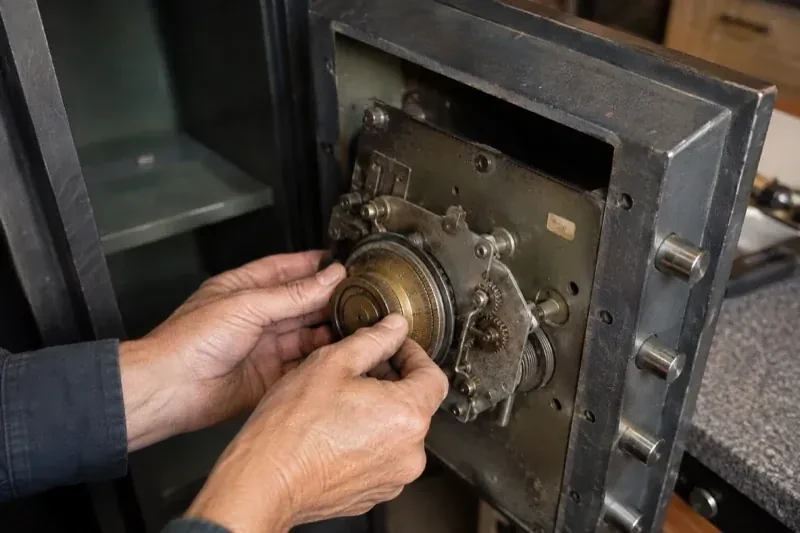
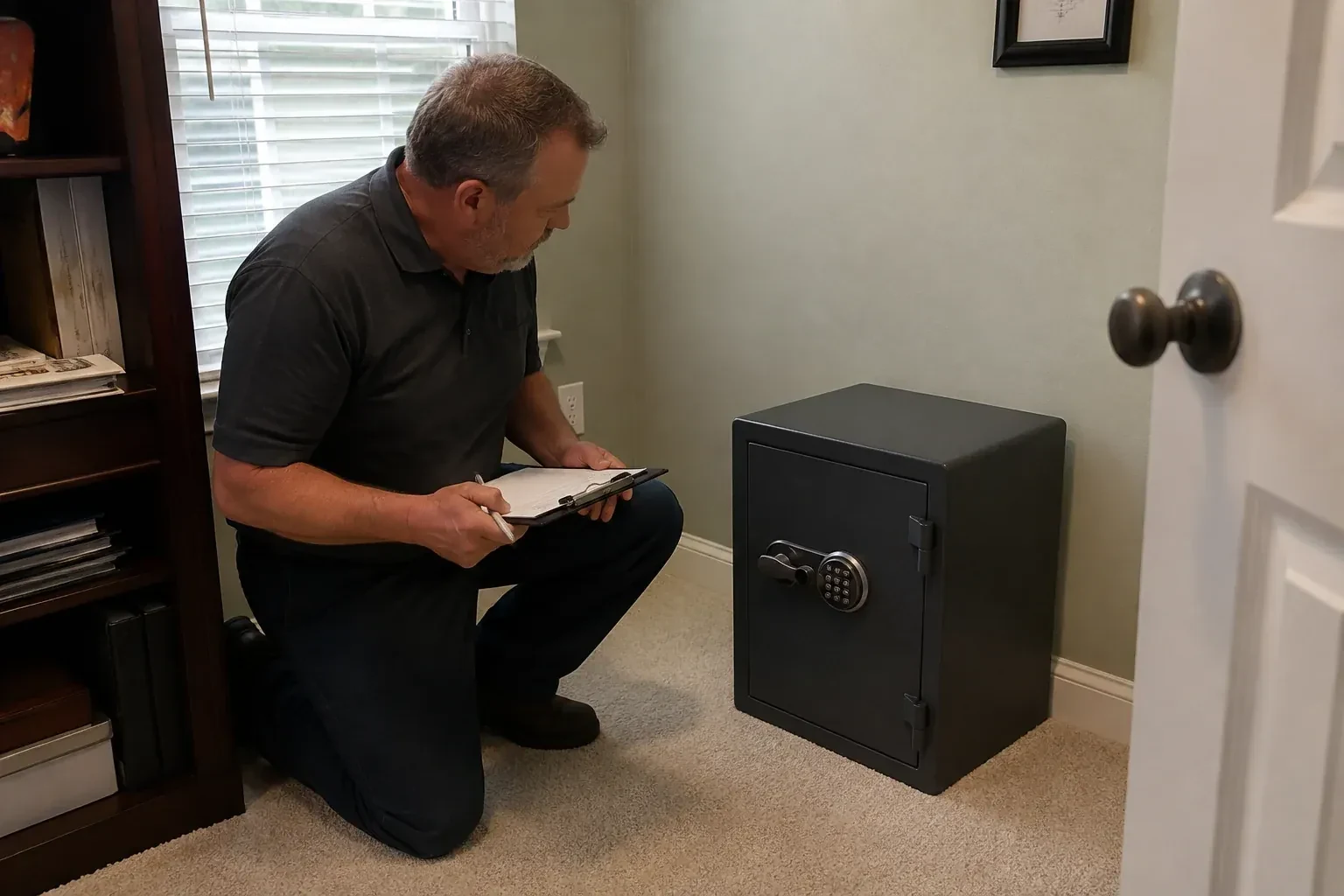
Every safe carries clues about what is inside its lock. A manufacturer's data plate, usually on the door or inside the frame, often names the brand, model and sometimes the lock's own security rating. The dial style, the keypad's shape and buttons, and whether a key cylinder sits alongside the combination lock all narrow down the lock family before a single tool is used. Older safes without a legible plate are identified from the case shape, the handle style and the dial ring instead. Getting this identification right decides which manipulation technique, which reset procedure or which manufacturer tool applies, and it is the difference between a clean opening and a guess.
Setting and testing the new combination
With the safe open and the lock confirmed sound, a new combination or code is set, with the current owner choosing the numbers themselves within whatever range and spacing that lock's rules allow, rather than being handed a default. For a mechanical lock this means using a change key to reset the wheel pack to the new sequence; for an electronic lock it means entering the new code through the keypad or a connected programming tool. The new combination is then dialed or keyed in several times, with the door open and then closed, before the visit is considered finished, so any mistake surfaces on the spot rather than the next morning.
A repaired point instead of a hole
If drilling was needed, the hole is closed with a repair plug or patch plate matched to the case material and finish before the visit ends, so the safe's exterior shows a single small, professionally finished repair rather than an open hole. Where the drilled point affected the lock's original security rating, that is explained plainly, along with whether the replacement lock restores it. Restoring the case's original protection at that point follows the safe maker's approved repair method rather than being assumed automatic, since drilling can affect fireboard or barrier material there; the rest of the case, its steel, hinges and fire lining, carries on as it was.
Safe Opening & Combination Change
In the van
Manufacturer reset tool
Manipulation and tension tools
Dial decoding instrument
Drill rig and carbide bits
Repair plug and patch plate
Safe Opening & Combination Change
What affects the quote
Replacement lock or hardware needed
If the existing lock is worn out, damaged, or simply outdated, a replacement mechanical or electronic lock adds to the visit, priced separately from the opening itself.
Damage from a prior break-in attempt
Pry marks, drill attempts or a tripped relocker from an earlier incident mean assessing and repairing that damage in addition to the combination work the visit was booked for.
Distance to the safe's location
Travel time to the site is part of every call-out, and a location further from the locksmith's usual service area is reflected in the quote alongside the work itself.
What to have ready
- Has the safe ever been drilled or serviced before?
- Is the lock a dial, a keypad, or a key?
- Does the keypad light up or make sounds when pressed?
Safe Opening & Combination Change: questions
QuestionsIs a mechanical dial or an electronic keypad the better choice for a business safe?
Each suits a different way of working. A mechanical dial has no battery to fail and a long service life, but only ever holds one combination at a time. An electronic keypad allows separate codes for different staff and an audit trail on some models, at the cost of needing battery changes. Either can be fitted with a genuinely high security rating; the choice usually comes down to how many people need independent access.
What should I have ready before the visit?
The safe's brand and model if you know them, whether the lock is a dial, a keypad or a key, roughly how old the safe is, and how the combination was lost or forgotten. Mention whether the safe holds anything with its own handling needs, such as firearms or business records, and how many people should have the new code afterward.
Do you need the safe's model or serial number before you arrive?
It helps but is not required. A data plate on the door or frame, a purchase receipt, or a manual kept in a drawer all speed up identifying the lock family in advance. Where none of that survives, the locksmith identifies the safe from its case shape, dial style and handle once on site, which simply adds a short assessment step at the start of the visit.