
Commercial · Kawartha Lakes
Master Key System Design
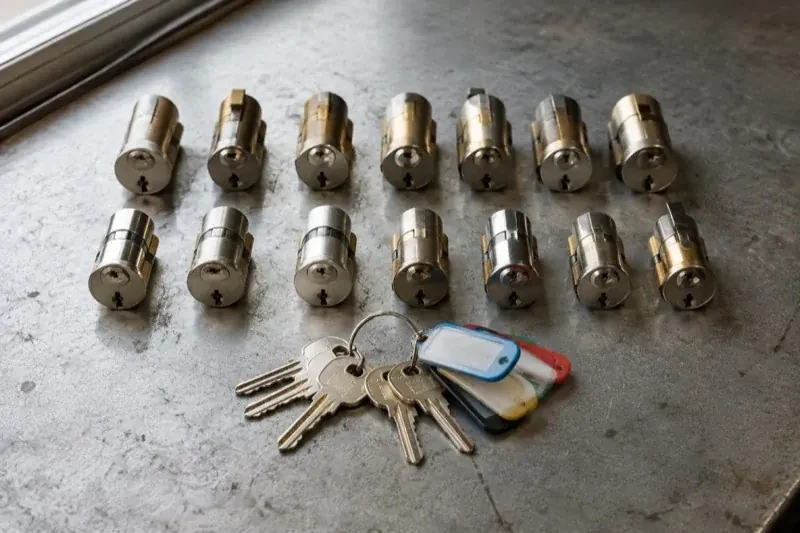
A property manager taking over a small commercial building inherits a shoebox of keys with no labels and no chart.
In plain words
What a business actually takes away from a master key system project is a documented chart, not just a set of new keys. Every level is recorded against the doors it opens, every key is marked by role rather than by address, and the cylinders have been tested individually and as a group before handover. That record becomes the reference for everything that follows: adding a new employee, handling a departure, or working out exactly what is affected if one key later goes missing, instead of guessing from a label on a keyring.
How the visit goesThe new wing was built with its own brand of cylinder, so the two-year-old keys from the original building do not open a single door in the addition. Staff are now carrying two separate key rings just to move around one workplace.
Master Key System Design
How the visit goes

Who holds the top-level master
A single top-level master, if the property has one at all, is deliberately kept to the shortest list the business can operate with. The check here is a direct conversation about who genuinely needs to open every door on the property versus who only thinks they might one day, since every extra holder is another way a full-access key can go missing. This conversation happens before cutting begins, because narrowing the list afterward means recovering and replacing keys that have already been issued to people no longer on it.
Working around a building that is already occupied
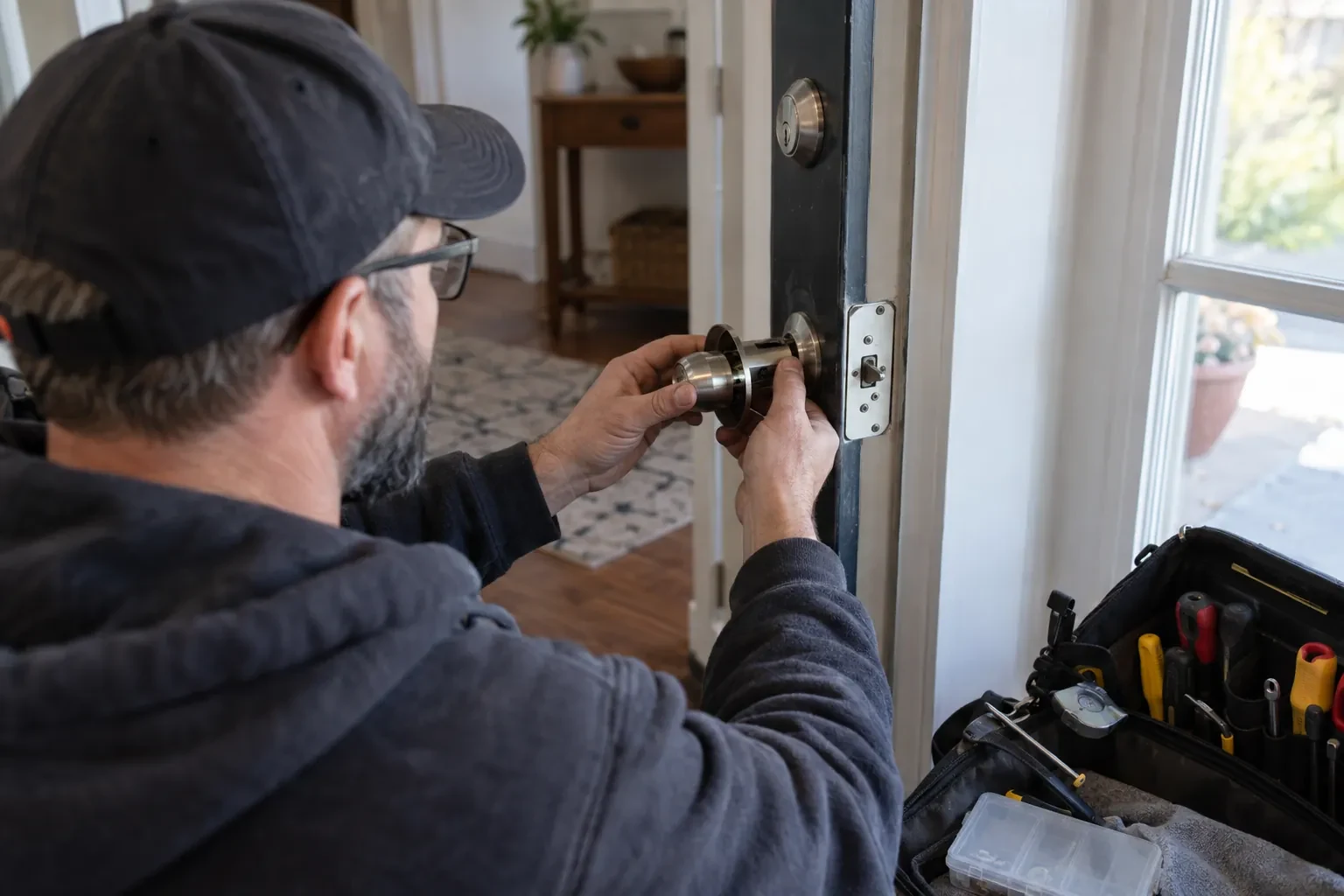
In an occupied property, doors are rekeyed in a planned order rather than all at once, so a department is never left without a working key partway through a shift. Interim arrangements, such as a temporary key for a door being converted to a new level, are agreed in advance and closed out the same visit they are used. This staged approach lets a business keep operating through the change instead of losing access to parts of the building while the new hierarchy is being built.
A plan for the next new hire or department
Adding someone to the system afterward is usually a matter of consulting the existing chart and issuing them a copy of the authorized key their role already calls for, rather than opening the whole hierarchy back up. A genuinely new combination is only usable on doors whose cylinders are pinned to accept it, so the same chart shows whether that means picking an existing bitting or scheduling a repin, keeping the decision informed rather than improvised.
Master Key System Design
In the van
Plug follower and key gauge
Bench test fixture
Change and master keys
Restricted or standard key blanks
Cylinder decoders

Master Key System Design
What affects the quote
Condition of the property's current keys
A property with a reasonably current, if informal, sense of who holds which key gives the assessment a shorter starting point than one where keys have been copied and reissued for years with no record at all. More reconstruction work at the start affects the overall quote.
Keyway chosen: standard or restricted
A restricted or patented keyway costs more in blanks and administration than a standard keyway, since duplication is controlled through the manufacturer's authorized record rather than cut anywhere. Higher-risk doors, such as records or cash rooms, often justify that additional control; lower-risk doors may not.
Whether hardware needs replacing for accessibility
Doors on a barrier-free path of travel need lever or paddle-style hardware rather than round knobs, so a property with several such doors that currently have incompatible hardware has more replacement work folded into the project than one already fitted with compliant hardware.
What to have ready
- Who should be named as the system's administrator going forward?
- Are there any doors you want left outside the master system entirely?
- Is there an existing chart, or is this starting from scratch?
Master Key System Design: questions
QuestionsCan electronic locks be part of the same system as mechanical keys?
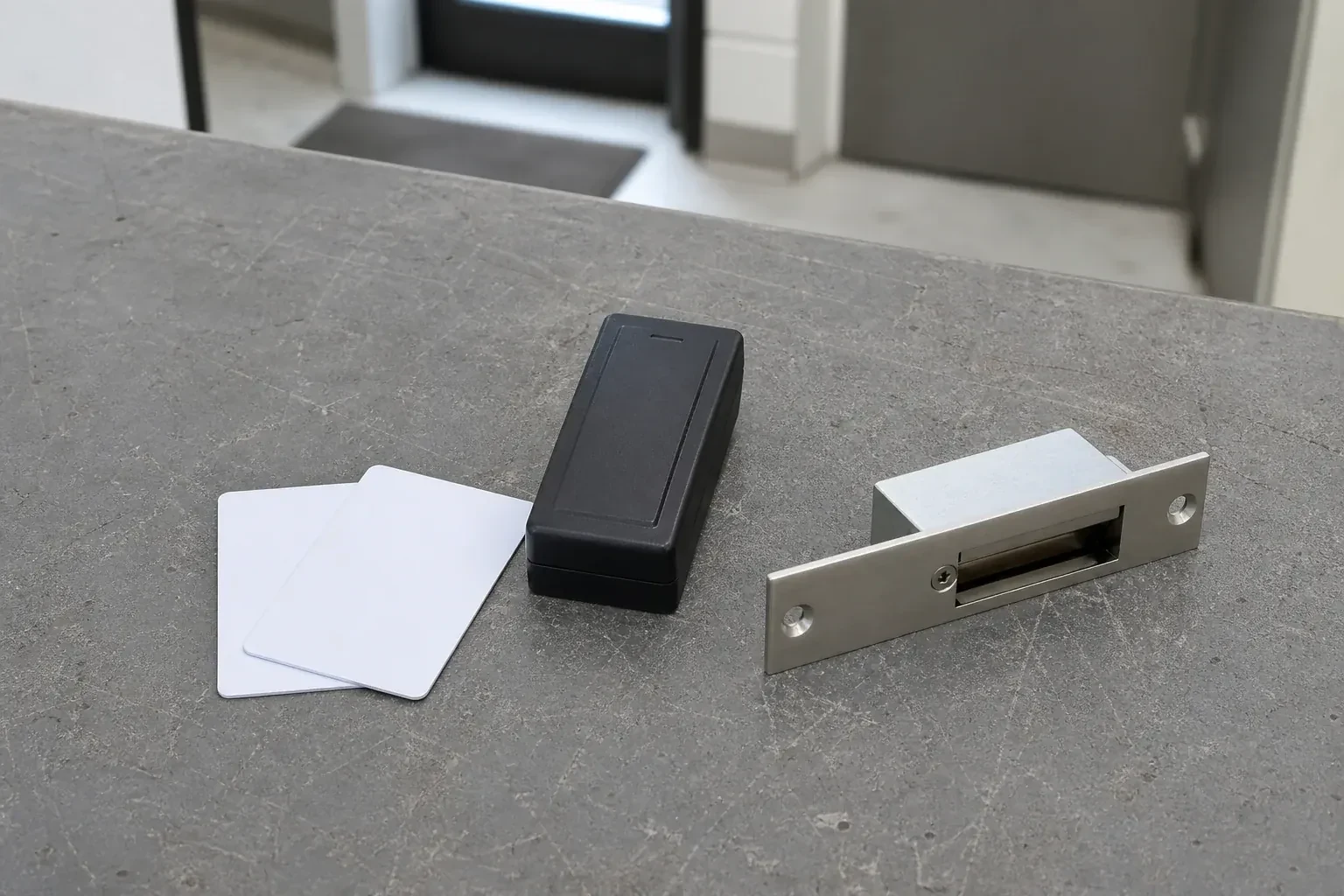
Yes. Where a property mixes keypad or card doors with mechanical cylinders, the access levels are designed to line up across both, so a department sitting at one sub-master level mechanically holds a matching level electronically. Mechanical override cylinders behind an electronic lock are pinned into the same chart as every other door, so one record still describes the whole property.
Can my existing locks be used, or do I need all new hardware?
Many existing cylinders can join a new hierarchy as they are, once their keyway and condition are confirmed compatible. Others, particularly older or mismatched hardware, are replaced so the whole system pins cleanly without cross-keying. The assessment identifies which doors fall into each group before any work begins, so the plan reflects what is actually on the property rather than assuming everything needs to change.
How is accountability maintained when several people hold different levels of keys?
Through the chart and issuance log rather than memory. Each level is tied to named roles or people, each key is marked to reflect its level rather than the door it opens, and any change of hands is recorded with a signed receipt. That record names every authorized holder for a door, though it can only account for a key that was never copied, loaned or picked up by someone outside that list.
Related services
- Access Control InstallationAnother employee left and the keys never came back.
- Panic & Exit HardwareAfter the fit-out, the gym floor now holds more people than the old office space ever did, and the exit door at the back still has the same turn-lock it had when the room held desks.
- Commercial-Grade Lock ReplacementHead office wants every branch keyed alike under one system, and half the locations are still running whatever lockset the original contractor happened to install years ago.