Change or rekey · Kawartha Lakes
Vintage Mortise Lock Service
You bought a house with its original hardware and a bag of loose keys.
In plain words
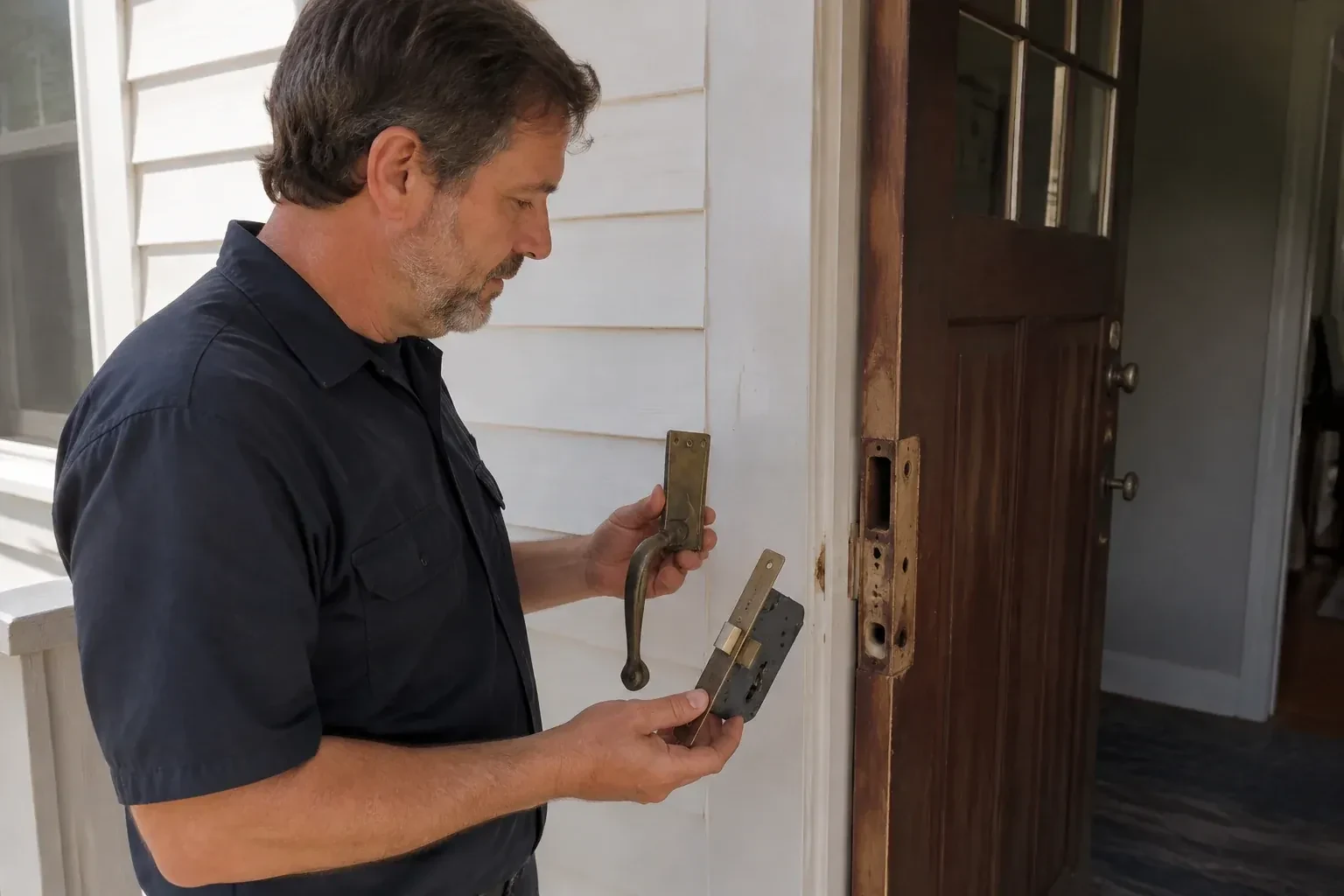
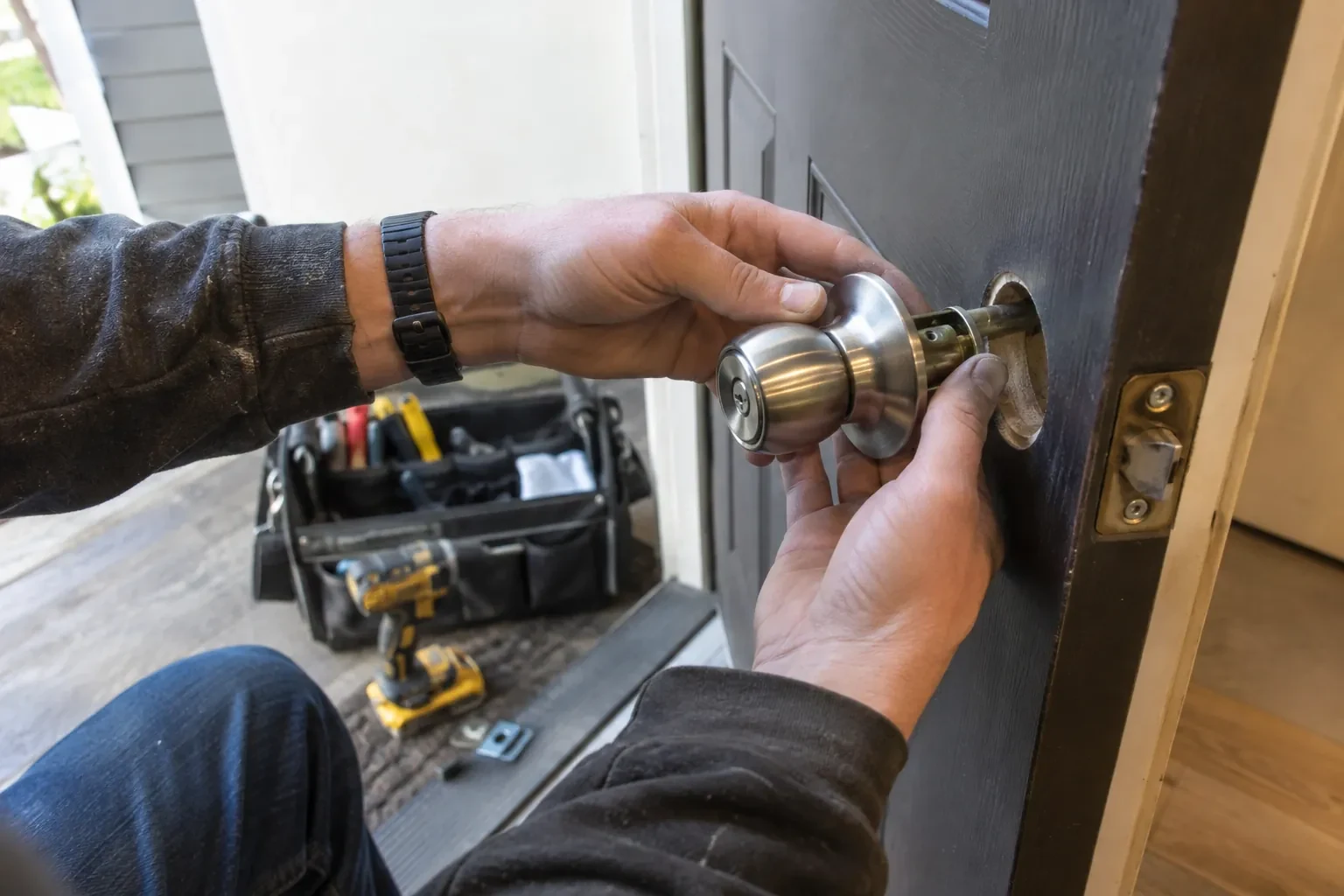
Most old mortise locks fail for boring reasons. A coil spring that has been compressed a hundred thousand times since the house was built finally breaks, or the grease inside the case dries into something like wax and the levers stick in it. Neither justifies cutting a new hole in a solid oak door. The service opens the case, cleans out the old lubricant, replaces the springs with the right size, matches any worn follower or lever and lubricates the mechanism lightly. The same case goes back into the same pocket, and the knob returns to level with the crisp snap it had decades ago.
How the visit goesThe old skeleton key still fits the keyhole, but it now needs a jiggle, a lean on the door and a little luck before the bolt moves. Last week it took three tries. You have one key and no idea where a second could come from.
Vintage Mortise Lock Service
How the visit goes
Who owns the door
The first check has nothing to do with the lock. The locksmith confirms that the person asking for the work owns the home or lawfully lives in it, since a serviced lock and a freshly cut key are, in the end, a way into someone's house. Photo identification and something tying you to the address usually settles it in a moment. On a rental, the landlord and the tenant are expected to agree on lock changes and share keys, so the locksmith asks who should hold the new bit keys or cylinder keys and notes it. This small formality protects the household as much as anyone, and it is done before a screwdriver comes out.
When a case is fitted new
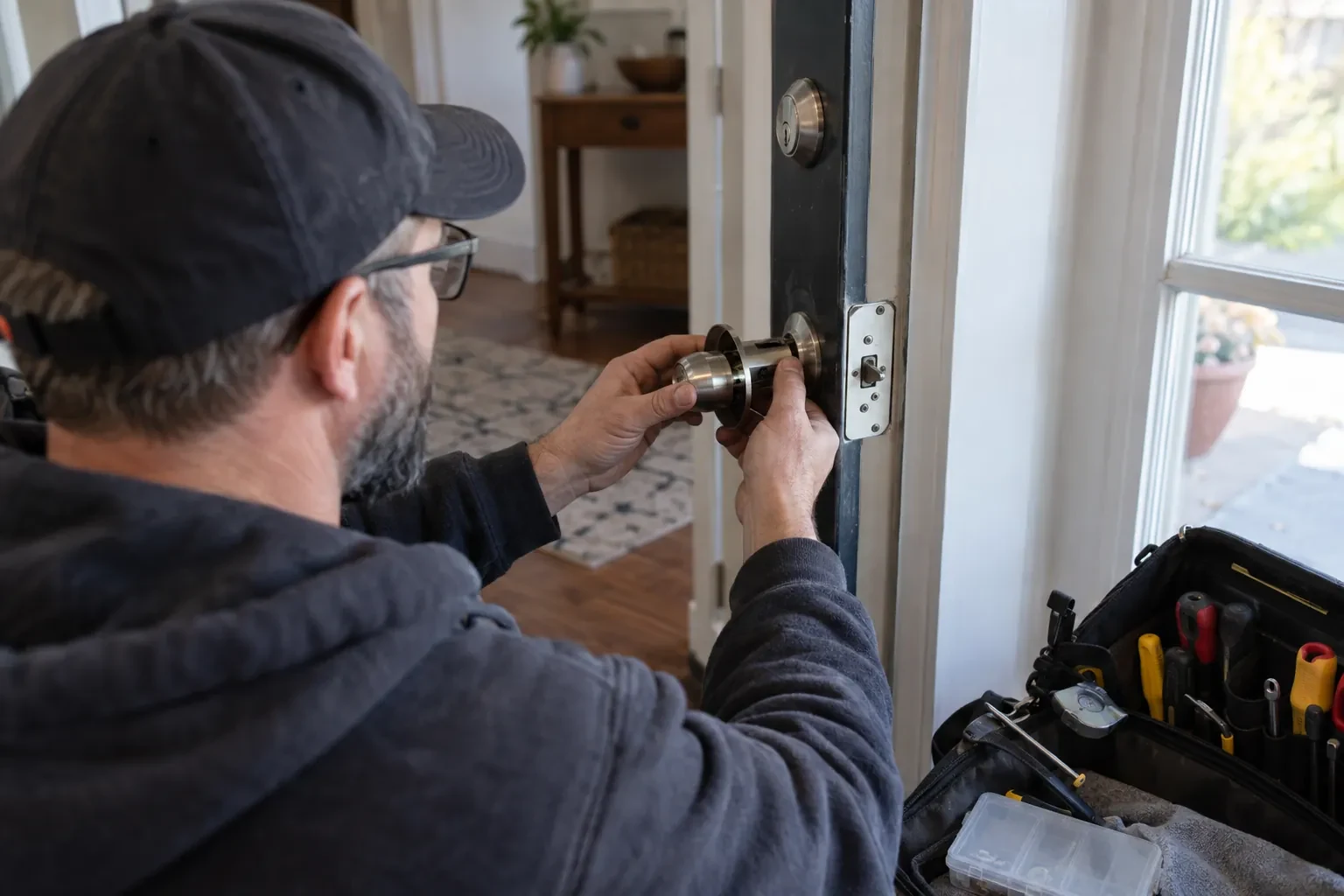
If the old case could not be saved, the replacement is fitted to the door rather than the door to the replacement. A reproduction or modern mortise case matching the measured height, depth, backset, faceplate and hub is chosen with the goal of it dropping into the existing pocket; where a small difference remains, the pocket is trimmed with a chisel by the least amount that works, never bored out. The original knobs, escutcheons and strike are refitted wherever their spacing allows, and a new cylinder is keyed to match the rest of the house if wanted. The result reads as the original lock from either side of the door, with the reliability of a fresh mechanism.
Parts, records and the house file
Anything that came out of the lock, a broken spring, a worn lever, the old cylinder, is offered to you rather than thrown away; some owners keep the originals with the house's papers. The locksmith leaves a short account of what was done: the case type and size, what was replaced, whether keys were made or a cylinder rekeyed, and how the strike was adjusted. For a designated heritage property this record shows the original hardware was retained. For everyone else it is simply the sheet you hand to the next locksmith, or the next owner, so nobody has to rediscover what is inside the door.
Vintage Mortise Lock Service
In the van
Hub followers and lever packs
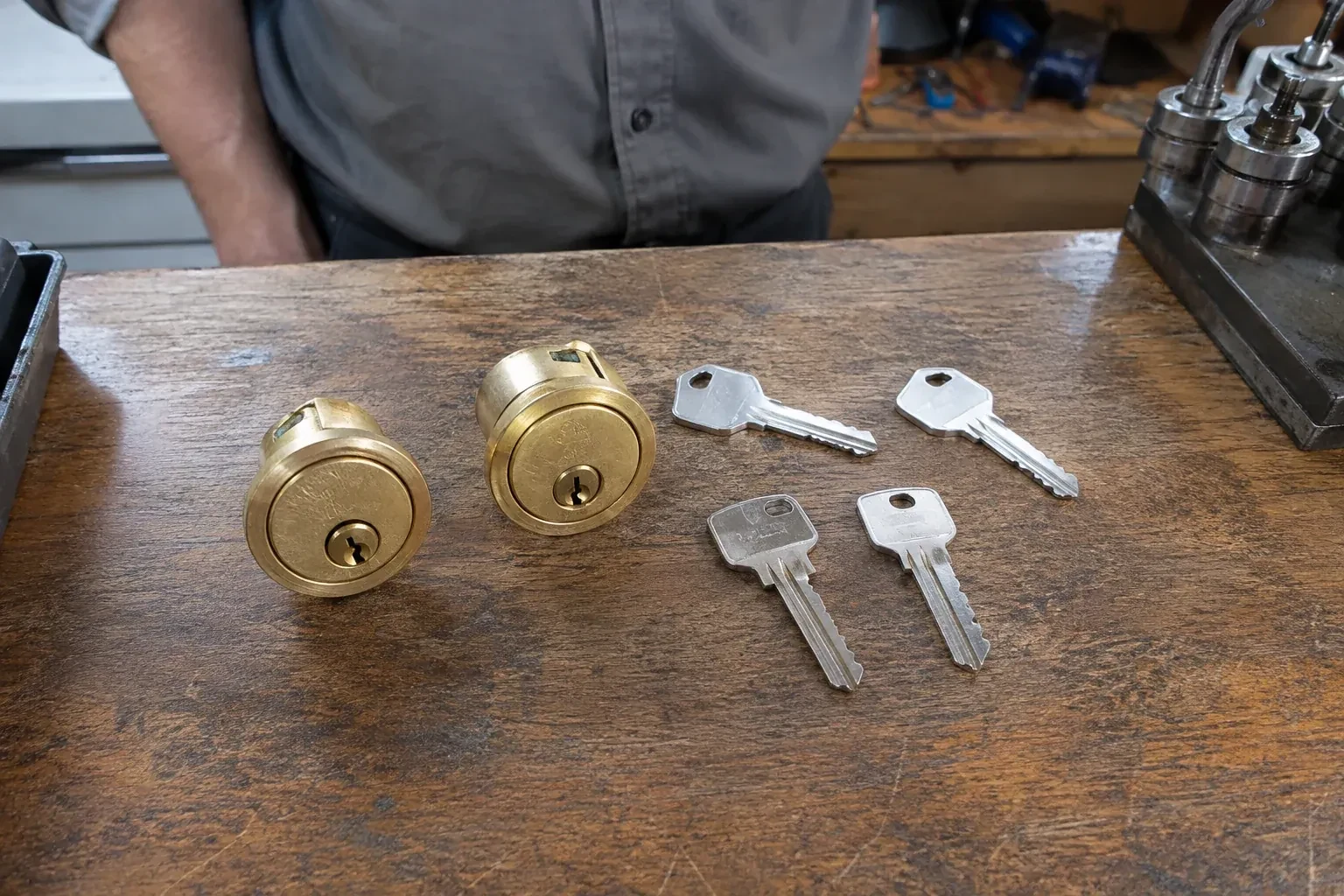
Mortise cylinder and cam
Latch and hub springs
Light lock oil
Warding files
Vintage Mortise Lock Service
What affects the quote
Strike and hinge work
Where the door has dropped or swelled, adjusting or moving the strike and tightening or packing hinges is part of the fix. It is small work but it is listed, so you see what was done to the door.
How many keys you want
Bit keys are made individually by hand and cylinder keys are cut per copy, so the count you ask for is a line of its own. Decide who in the household needs one before the visit.
Bit key or cylinder lock
A bit-key case has keys filed by hand on the bench, while a cylinder lock is rekeyed or fitted with a new cylinder on a key machine. The two take different time and materials, and the quote follows.
What to have ready
- What does the knob do when you turn it: return, sag, or not come back?
- Is the deadbolt keyed from the inside as well as the outside?
- Is the property designated as a heritage building?
Vintage Mortise Lock Service: questions
QuestionsWhat does the service visit involve, step by step?
The locksmith checks your authority to request the work, examines the door and lock, and tells you what it needs. The knobs, plates and cylinder come off, the case slides out of the door edge and is opened on a bench, cleaned, re-sprung and repaired. Keys are made or the cylinder rekeyed, the door pocket is tidied, everything goes back on, and the strike is adjusted. You test the finished lock from both sides.
Which parts usually need replacing?
Springs, first and foremost: the latch spring, the hub spring that returns the knob, and the small springs on the deadbolt levers. After that, the spindle and knob set screws, a hub whose square has worn round, a worn deadbolt lever or follower, and on later locks the cylinder set screw or the cylinder itself. Bolts, cases and trim are almost always kept, cleaned and refitted rather than replaced.
The lock works with the door open but not when it is closed. Is the lock broken?
Almost certainly not. That pattern means the door has moved in its frame so the latch and bolt no longer meet the strike squarely. Solid wood doors in older houses swell in humid weather and settle on their hinges over the years. The service adjusts or shims the strike and tightens or packs the hinges so the bolt throws without lifting the door, and the lock itself is usually cleaned and lubricated at the same time.
Related services
- Deadbolt InstallationThe back door has a deadbolt in name only: a short bolt, a thin brass strike held by two little screws, and a jamb you can flex with your palm.
- Lock Replacement & UpgradeThree teenagers, a dog walker, a cleaner and one house key that keeps going missing.
- Smart Lock InstallationYour mother still lives on her own, and the personal support worker, the pharmacy delivery and two siblings all need to get in on different days.