Locksmith
Our advice corner
We would rather you knew enough to make a good decision than rely on us to make it for you. The short articles here explain how locks work, what wears them out, and which small habits keep your doors, keys and cars trouble-free for longer.
Your questions, our answers
When does a locksmith decide to drill instead of pick?
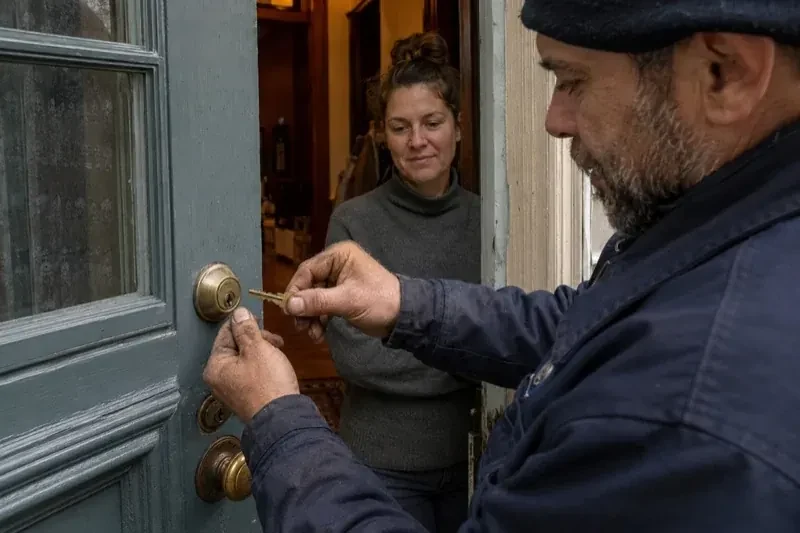
Drilling is the last rung, reached only when the cylinder has genuinely stopped cooperating. Typical reasons are a plug seized by corrosion or a failed spring, a key snapped deep inside that blocks the pins, a high-security cylinder whose anti-pick features make picking impractical, or a lock already damaged by someone's earlier attempt. The decision is explained before the drill comes out, the hole is confined to the cylinder, and replacement hardware goes in straight afterwards.
An employee left and never returned their keys. Should we rekey?
It is the sensible step, and a lockout visit is a convenient moment for it. Rekeying keeps your existing cylinders and changes the pins so a new key operates them and the unreturned one does nothing. If your doors use interchangeable cores, swapping the core takes minutes. Bring every door that shared the old key onto the new one, count the fresh keys into named hands and start a register so the next departure is a line in a book rather than a call.
Will extracting the piece damage my lock?
Extractor tools grip the key, not the lock, and are meant to leave the pins, springs and plug as they were: hooks and spirals ride in the keyway grooves beside the fragment and draw it out the way the key travels. It is not certain, though; a deeply lodged fragment or a prior failure can still leave a lock, especially a vehicle cylinder, needing further work. Damage most often comes from what happens before the locksmith arrives, mainly tweezers, screwdrivers and glue, which is why leaving the keyway alone matters.
Why did the frame break instead of the lock?
Because that is where the weak point was. A standard strike plate is held by two short screws in a soft wood jamb, and the deadbolt only reaches into a shallow pocket behind it. A kick delivers the full weight of a body to those screws, and the wood around them splits along the grain. The bolt itself is rarely the failure. That is why the repair concentrates on the strike side: a boxed strike, a full-depth pocket and long screws into the stud.
Does road salt affect door locks?
Yes, especially on side doors near a treated driveway or walkway. Salt spray dries into a crust inside the keyway and around the plug, and each thaw dissolves and re-deposits it deeper. Over a few winters it pits brass and makes the pins drag. The remedy is a flush with contact cleaner, a thorough drying, and a dry lubricant that sheds moisture, followed by rinsing the hardware when the weather allows.
When is replacing a lock better than rekeying it?
When the hardware itself is the weak point: a plug worn oval, a cylinder eaten by salt from a driveway-facing door, a light knob lock on an exterior door, a keyway with no blanks left in supply, or when you want a different style, a heavier deadbolt or a keypad. In those cases a new lock keyed to match the rest of the house is fitted in the same visit. Everything else is rekeyed.
Can all my doors be made to work with one key?
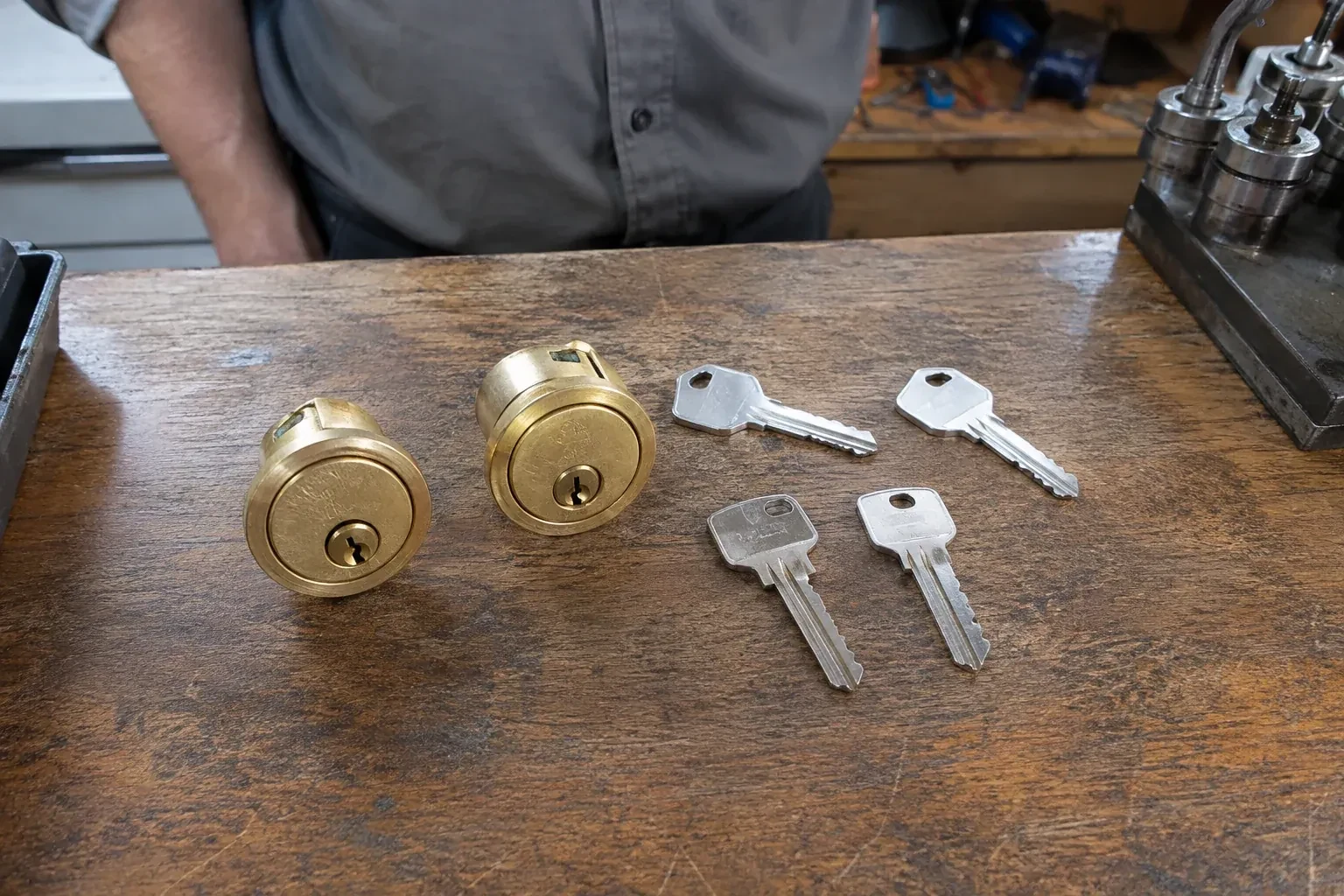
Usually, yes. Where the cylinders accept the same style of key blank, each can be pinned to one new combination, so a single key runs the front, back, side and garage doors. A lock from a different keyway family is brought into the group by exchanging its cylinder for a compatible one in the same finish. During the first walk around the property the locksmith reads every keyway and tells you up front which doors can be keyed alike.
The door has to be pulled before the old bolt will lock. Will a new one fix that?
The new bolt will only lock as smoothly as the door and frame let it, so the locksmith deals with the cause as part of the installation. A door that has sagged on loose hinges gets longer hinge screws or a shim, thick weatherstrip is trimmed, and the strike is set from the bolt's actual position with the door closed. The pocket is bored deep enough for a full throw. Afterwards the bolt should slide with fingertip effort.
Is it possible to upgrade just the exterior locks now and handle interior doors later?
Yes, and it is a common way to spread the work out. Exterior doors carry the security load, so starting there with a graded deadbolt and a reinforced strike covers the part that matters most first. Interior locks, passage sets, privacy locks on bathrooms and bedrooms, can be scheduled for a later visit without affecting anything already done, and the locksmith can note what was fitted so the second visit matches it.
What does the service visit involve, step by step?
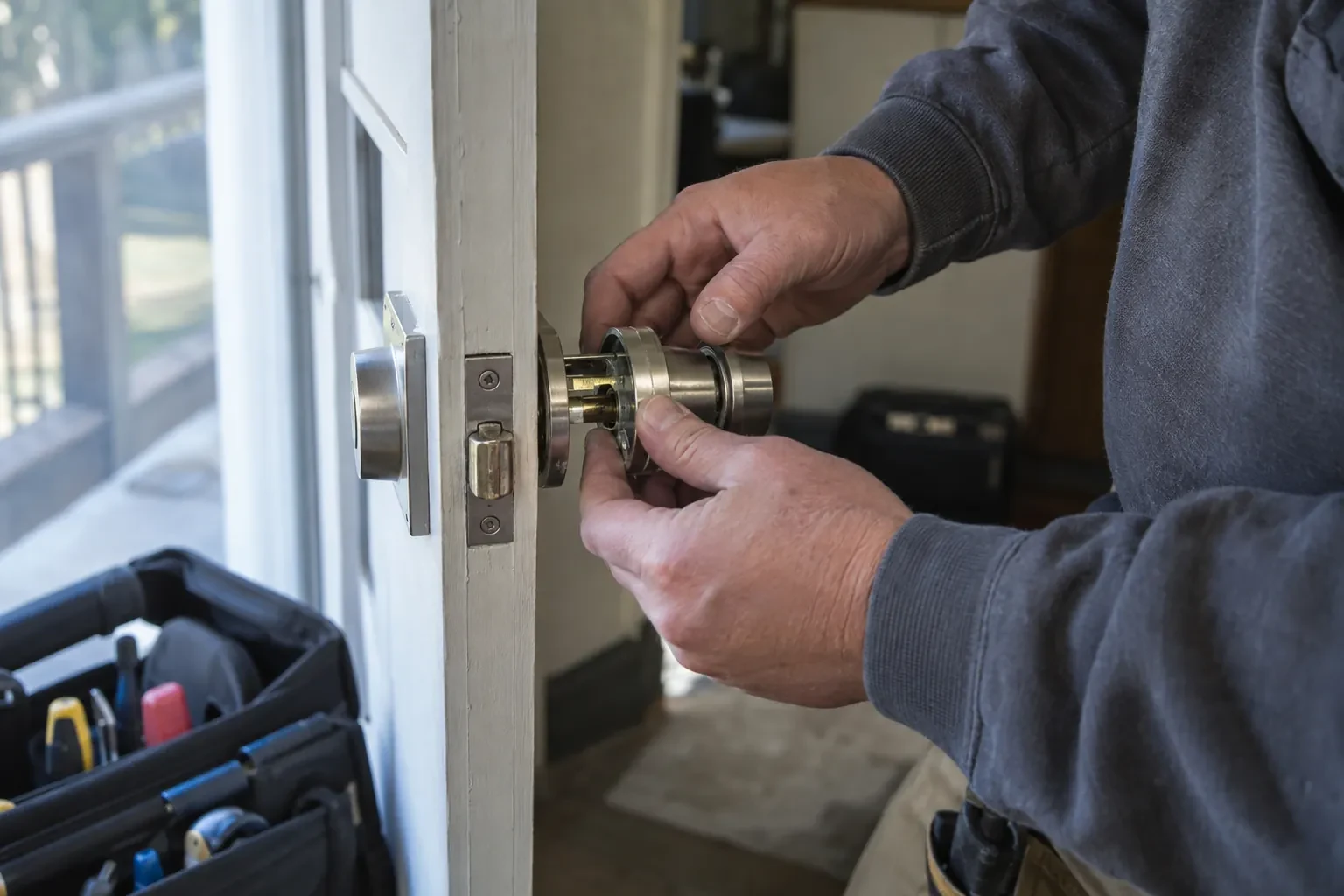
The locksmith checks your authority to request the work, examines the door and lock, and tells you what it needs. The knobs, plates and cylinder come off, the case slides out of the door edge and is opened on a bench, cleaned, re-sprung and repaired. Keys are made or the cylinder rekeyed, the door pocket is tidied, everything goes back on, and the strike is adjusted. You test the finished lock from both sides.
What information should I have ready when I call?
The door's material and rough thickness, what lock is on it now and whether it is a separate deadbolt above a knob or lever, and whether there is a storm door. Say what you want the lock to do: codes only, phone control, alerts, auto-lock. Mention how the Wi-Fi is at the front door if you know, whether you rent or own, and how many people need their own way in. A photo of the inside and outside of the existing lock is a real help.
How do you decide whether to repair a gate lock or replace it?
The decision follows what the assessment actually finds rather than the age of the hardware alone. A cylinder that is only stiff or slightly worn is usually serviced and left in place, while one that is pitted, cracked or built to a grade unsuited to its exposure is replaced. The same logic applies to a closer or hinge: adjustment first, replacement only once the part itself has genuinely failed. You are told which category the hardware fell into and why before any work proceeds.
My mailbox is in a condo or apartment lobby panel. Who authorizes the work?
For a single resident's compartment, proof tying that person to the unit is usually enough. For a run of compartments changed together, the property manager or superintendent coordinates the visit and confirms which units are involved, and each compartment is still checked against a resident or the building's own records before its lock is touched.
Is a mechanical dial or an electronic keypad the better choice for a business safe?
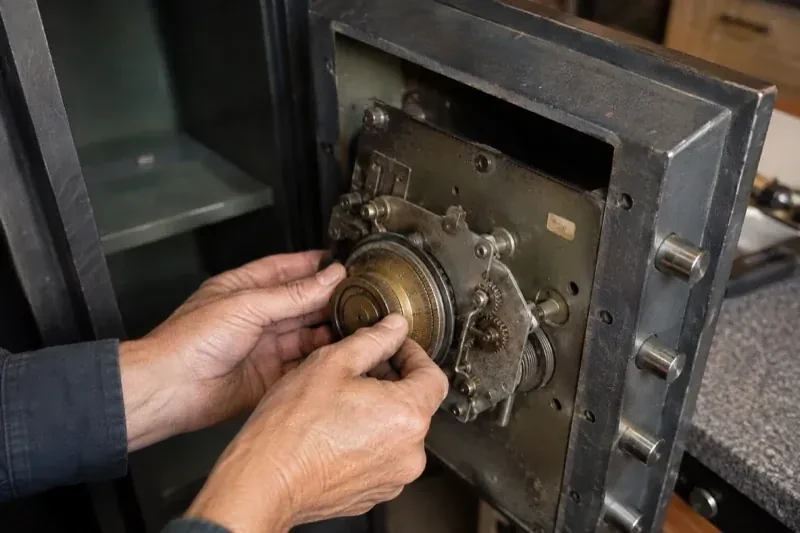
Each suits a different way of working. A mechanical dial has no battery to fail and a long service life, but only ever holds one combination at a time. An electronic keypad allows separate codes for different staff and an audit trail on some models, at the cost of needing battery changes. Either can be fitted with a genuinely high security rating; the choice usually comes down to how many people need independent access.
What information should I have ready before requesting a quote?
Knowing roughly what the safe will store, whether it is a new purchase or an existing unit, and what floor or wall it will sit against covers most of what shapes the visit. If the safe is already on site, its approximate weight and dimensions help too, along with whether it currently has a working lock and combination. An insurer's stated rating requirement, if there is one, is worth mentioning as well.
What about the glass panel next to my front door?
A sidelight within reach of the inside thumb-turn is the weak point of an otherwise strong door, since a broken pane lets a hand reach the turn. Options include moving the deadbolt further from the glass, a lock function that needs a key inside as well, or a laminated pane. Because everyone must still be able to leave easily, the locksmith talks through the trade-offs and helps you pick the arrangement that suits your household.
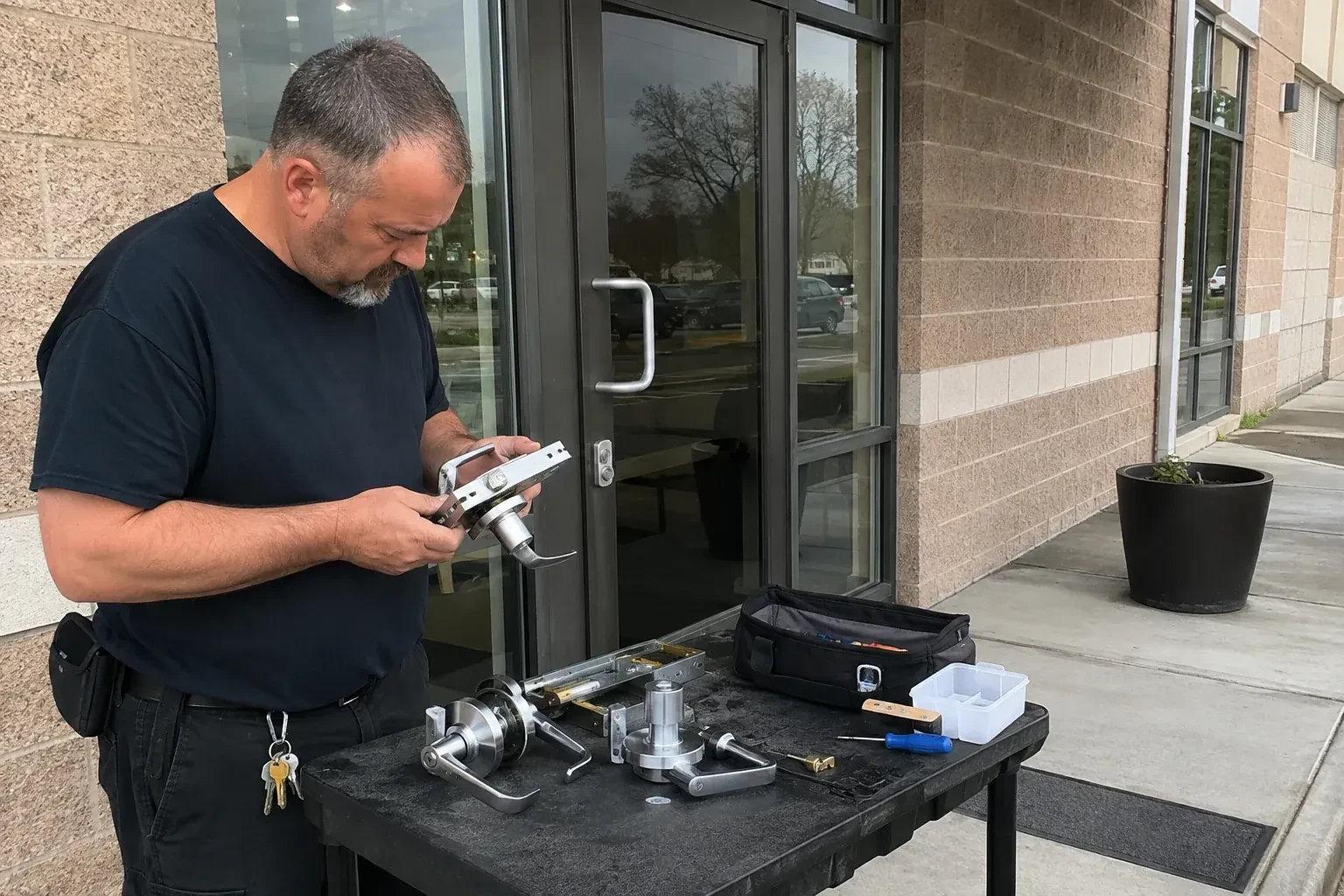
We are a landlord with a tenant leaving. When should the unit be rekeyed?
Between tenants is the ideal moment: the departing tenant has handed back their keys, the new one has not yet received any, and the unit is empty for the work. The incoming tenant then starts on keys nobody else has held, and the landlord's own master or emergency key is set up at the same time. Where a lease has ended in dispute, the locksmith asks to see the paperwork before changing locks on a unit that still holds a tenant's goods.
Can electronic locks be part of the same system as mechanical keys?
Yes. Where a property mixes keypad or card doors with mechanical cylinders, the access levels are designed to line up across both, so a department sitting at one sub-master level mechanically holds a matching level electronically. Mechanical override cylinders behind an electronic lock are pinned into the same chart as every other door, so one record still describes the whole property.
What happens at a networked location if the network or Wi-Fi goes down?
A standalone reader at a single door keeps working during a network or Wi-Fi outage, since it checks its own stored list rather than relying on a live connection. A networked controller generally keeps making local decisions at each door as well, though live updates, remote changes and off-site log access may pause until the connection returns.
Can I still lock the door from outside?
Yes. The releasing device only governs the inside of the door; the outside gets its own trim, a pull, a lever with a cylinder, or a keyed cylinder alone, chosen for how that door is entered. Locking or unlocking that outside trim has no effect on the inside crossbar, which always releases the latch under a push, so entry security and exit function are handled as two separate questions.
Who should hold the master key once the system is set up?
That is a decision for the business, not the locksmith, but the general practice is to limit master keys to the smallest number of people who genuinely need building-wide access, and to log who holds each one. Sub-master and change keys can then cover departments, shifts or single doors without every key holder carrying access to everything.
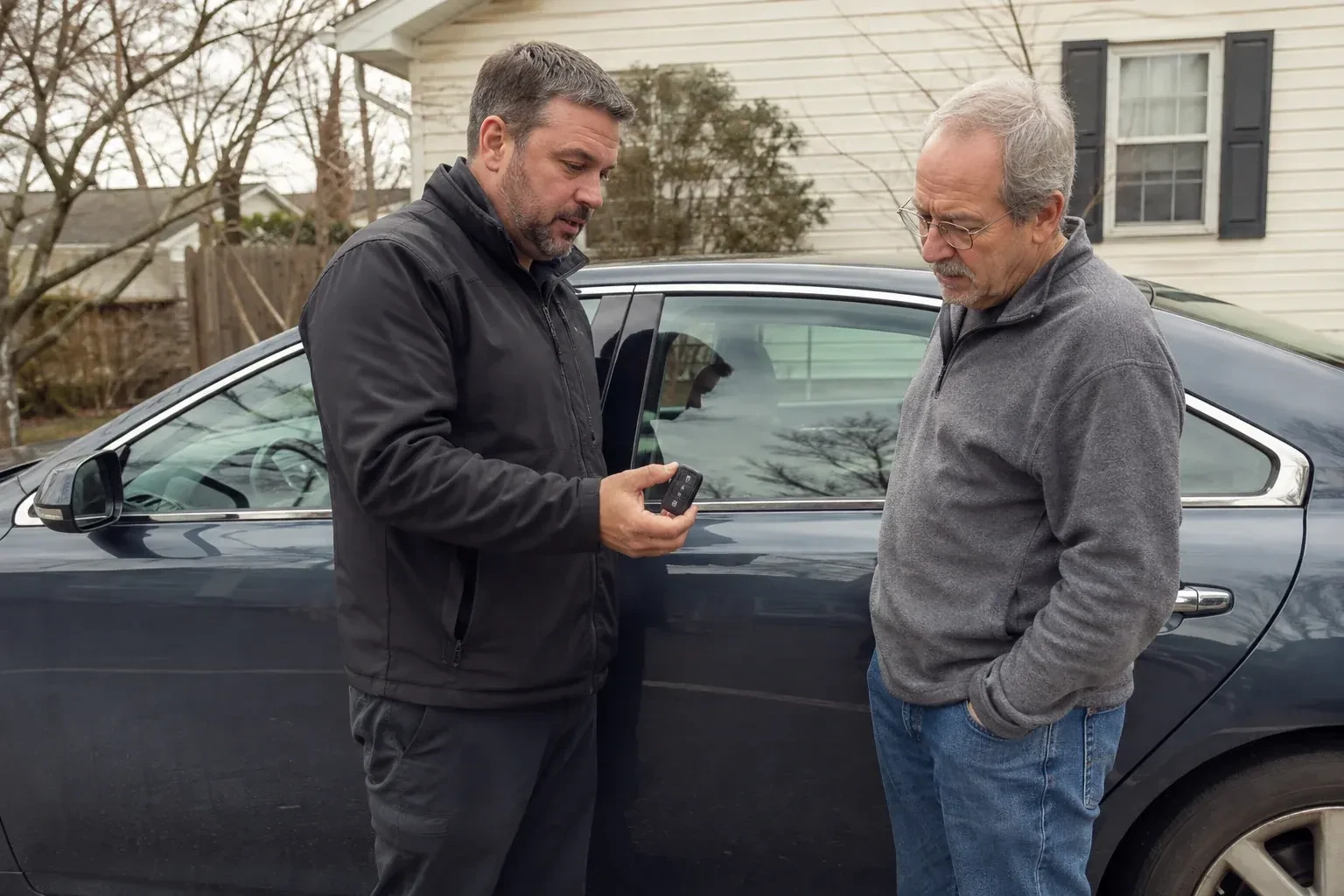
My child is locked in the car. What should I do first?
Call 911 before you call anyone else. A vehicle interior can climb past 50°C in about twenty minutes on a mild day, and a cracked window does little, so responders treat a child in a closed car as an emergency and are equipped to get in at once. Then call the locksmith, who will come as backup and can also make sure the car is secured and working afterwards. In winter cold the same rule applies.
Can the key I lost still start my car?
Until it is erased, yes, because the immobilizer still recognizes its chip. During the programming session the locksmith can remove every key from the car's memory except the ones in your hand, and unpair the old remote as well. After that the lost key is a blade that opens a door at most, and nothing else. If that blade worries you, changing or rekeying every mechanical cylinder it operates, doors and ignition, plus a trunk, tailgate, fuel door or glovebox where the car has one, finishes the job.
Will the spare include the remote buttons?
If the original has remote buttons and you want the spare to match, yes: the new key or fob is programmed to the vehicle's receiver so locking, unlocking and any other remote function respond the same way from either key. If a simpler spare is preferred instead, the remote portion can be left out while the chip that starts the car is still fully recognized.
Does key fob programming include cutting a mechanical key?
It can. Most proximity fobs hide a small mechanical blade inside the case for the day the battery dies or the electronics fail, and that blade is cut separately from the programming procedure, either to the vehicle's original code or matched to an existing working key. If your replacement fob arrived without a cut blade, mention it so the visit includes cutting one.
What's the difference between cutting a key and programming it?
Cutting shapes a blank to match the lock, so it turns the mechanical cylinder in the door or ignition. Programming is a separate step where the chip inside the key head is taught to the vehicle's immobilizer, so the engine agrees to start. A key can be cut perfectly and still fail to start the car if that second step was skipped, which is the single most common source of confusion in this service.
I just bought a used vehicle with one worn key. What should I expect?
A single worn key is a common starting point after buying used, and the visit usually has two parts: reading the existing wafers so a crisp new key can be cut, and deciding whether the barrel itself needs a service given whatever wear the previous owner's key left behind. Bringing whatever paperwork came with the sale helps confirm ownership before any work begins.
Does a repaired vehicle lock still use my original key?
Wherever possible, yes. The point of repairing rather than replacing a lock outright is to keep it working with the key and fob you already carry, so the whole vehicle continues to answer to one set rather than needing a second key for one door.
Do all motorcycles have an immobiliser these days?
Not all of them. Many machines built in roughly the last two decades carry a transponder chip and an ignition module that checks it, but plenty of smaller-displacement bikes, scooters and older machines still use a purely mechanical lock with no electronic layer at all. The locksmith checks for a coil around the ignition barrel and asks how the engine behaves with the current key to tell which type is on hand.