Change or rekey · Kawartha Lakes
Deadbolt Installation
The back door has a deadbolt in name only: a short bolt, a thin brass strike held by two little screws, and a jamb you can flex with your palm.
In plain words
Most of the value in a deadbolt is on the frame side, which is why a good installation spends as much time on the jamb as on the door. The bolt is only as strong as the pocket it throws into and the screws that hold the strike. Short screws in a standard strike bite only into the thin jamb board; a reinforced strike fastened with 75 mm screws passes through that board into the stud behind, so a blow against the door meets the house rather than a strip of pine. The pocket is cut deep enough for a full throw and aligned so the bolt slides home freely.
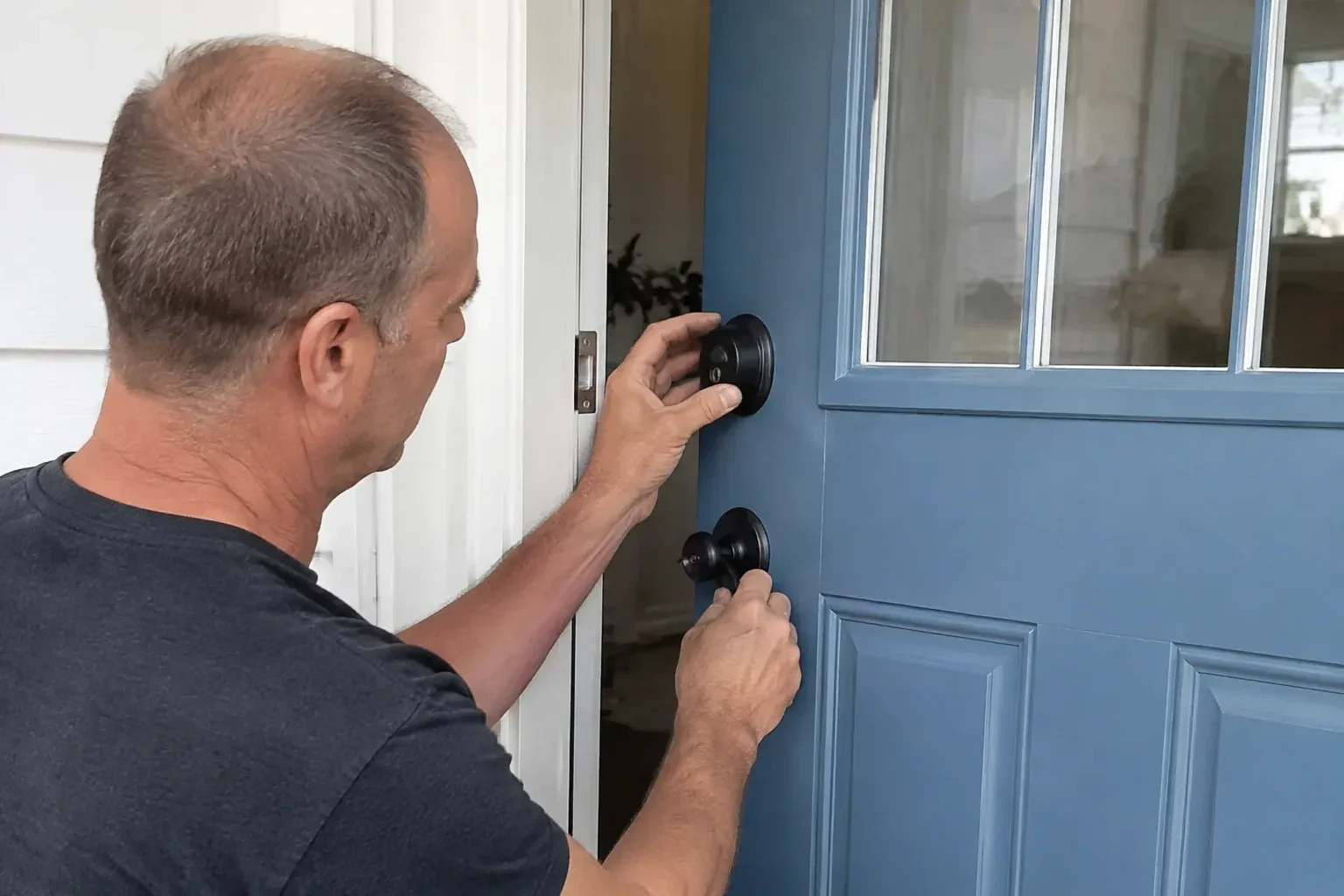
How the visit goesYou bought a keypad deadbolt online and pulled the old one off, only to find the hole in the door is a different size and the bolt latch sits at a backset the new kit does not list. The door is now open and the box is on the counter.
Deadbolt Installation
How the visit goes
Glass, sidelights and what is within reach
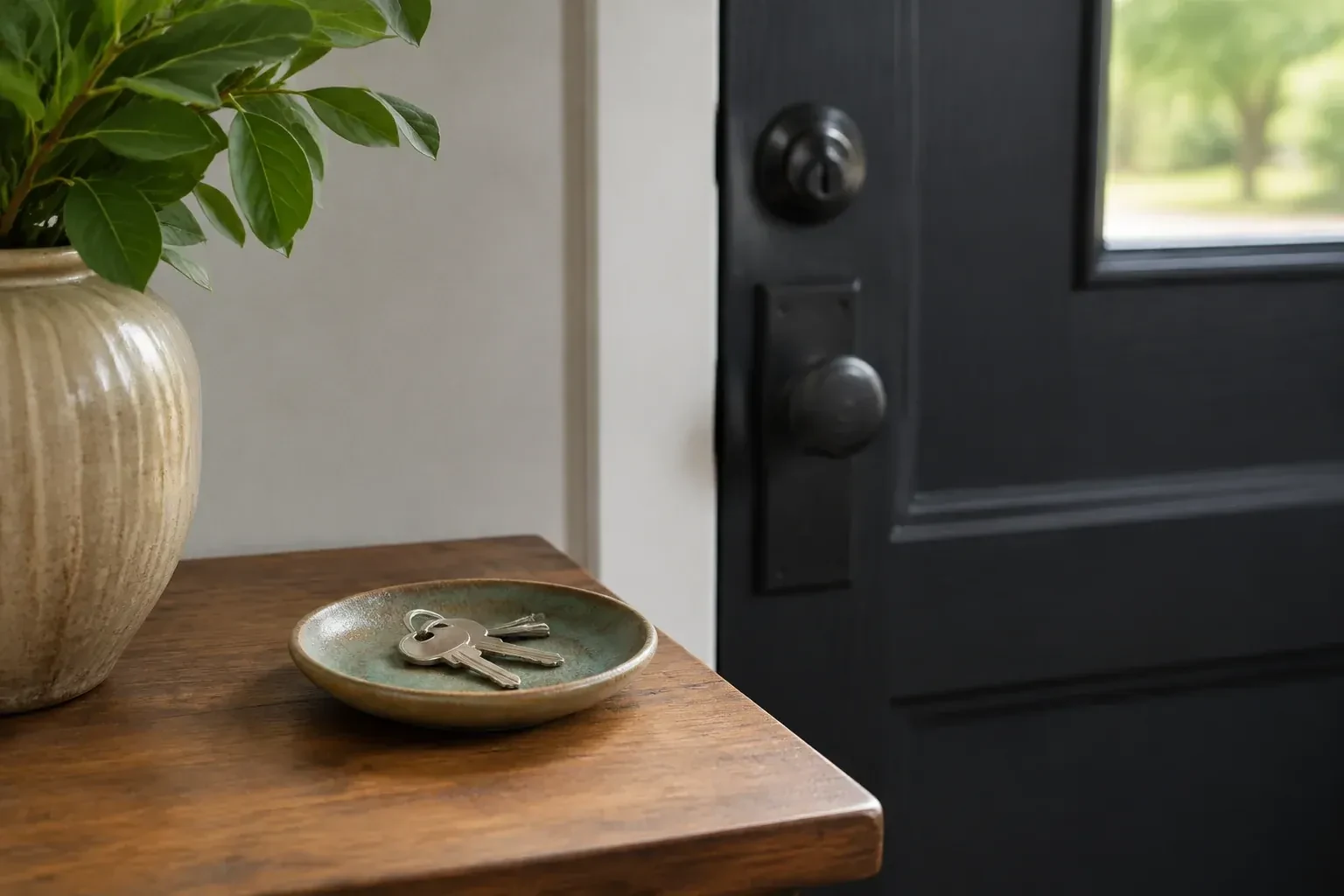
Glass changes the conversation about which deadbolt to fit. A pane in the door or a sidelight within an arm's reach of the lock means an inside thumb-turn could be reached by breaking the glass, which is why double-cylinder deadbolts are sometimes suggested. The locksmith measures the distance from the glass to the lock, notes whether it is tempered, laminated or plain, and lays out the options: a captive thumb-turn that needs a key only when you choose, a laminated pane or a tested security film that can delay an arm, or moving the bolt height. The aim is a door that keeps a stranger out and still lets everyone inside leave with one turn of the hand.
Marking and boring a fresh door
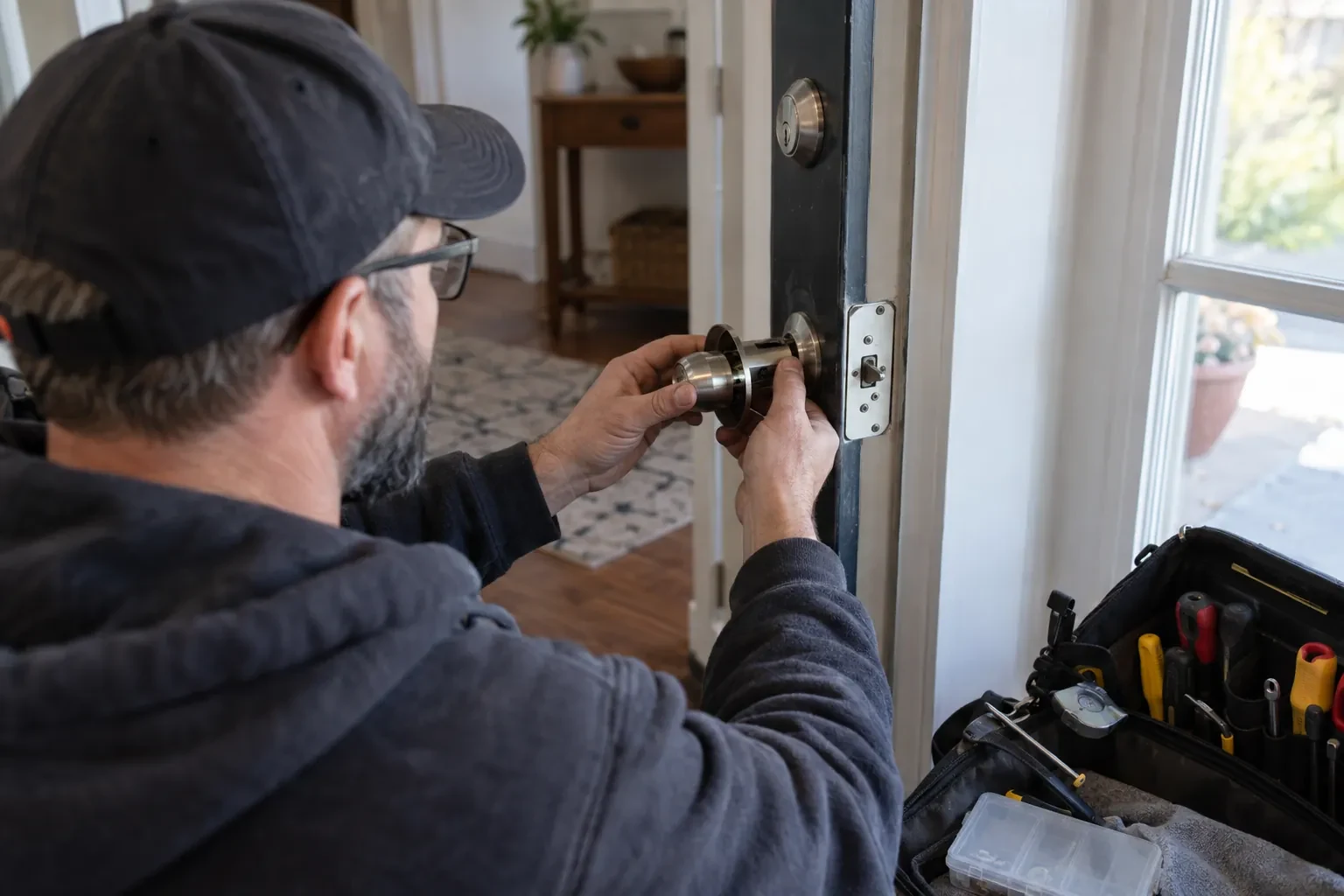
With the height agreed, the paper template is folded over the door edge and the two centres are marked: the cross bore on the face and the edge bore on the stile. A boring jig clamps over the door so the hole saw cannot wander, and the cross bore is cut from both faces to leave clean veneer or skin on each side. The edge bore is drilled with a 25 mm bit through the stile until it meets the larger hole. The locksmith then traces the bolt faceplate on the edge and chisels a shallow mortise so the plate sits flush, keeping the cut inside the lines so the edge stays sound.
A safer way out as well as a stronger way in
With a thumb-turn inside, everyone in the household can leave through this door without hunting for a key, day or night. The locksmith walks the family through the thumb-turn and shows children how it turns. If a double-cylinder bolt was replaced, the inside key is no longer needed at all and can be retired. Where glass sits near the lock, whatever measure you agreed on, a thumb-turn that locks with its own small key, a laminated pane, or a tested security-film system that can delay an arm's reach, is in place, so security did not come at the cost of a clear way out.
Deadbolt Installation
In the van
Single-cylinder deadbolt
Boring jig and 54 mm hole saw
Jamb reinforcer
Manufacturer's bore template
Reinforced strike plate
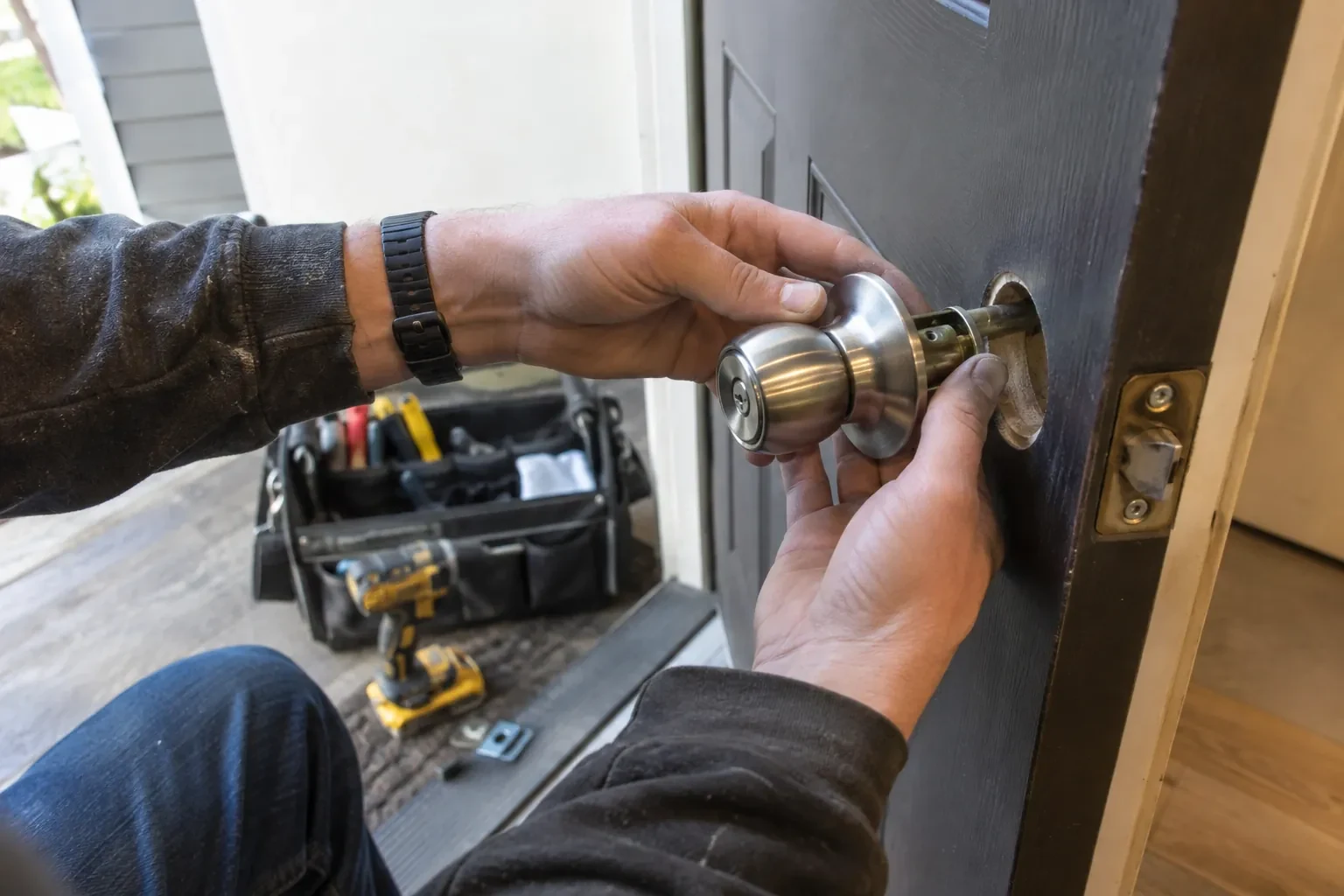
Deadbolt Installation
What affects the quote
Non-standard bore or backset
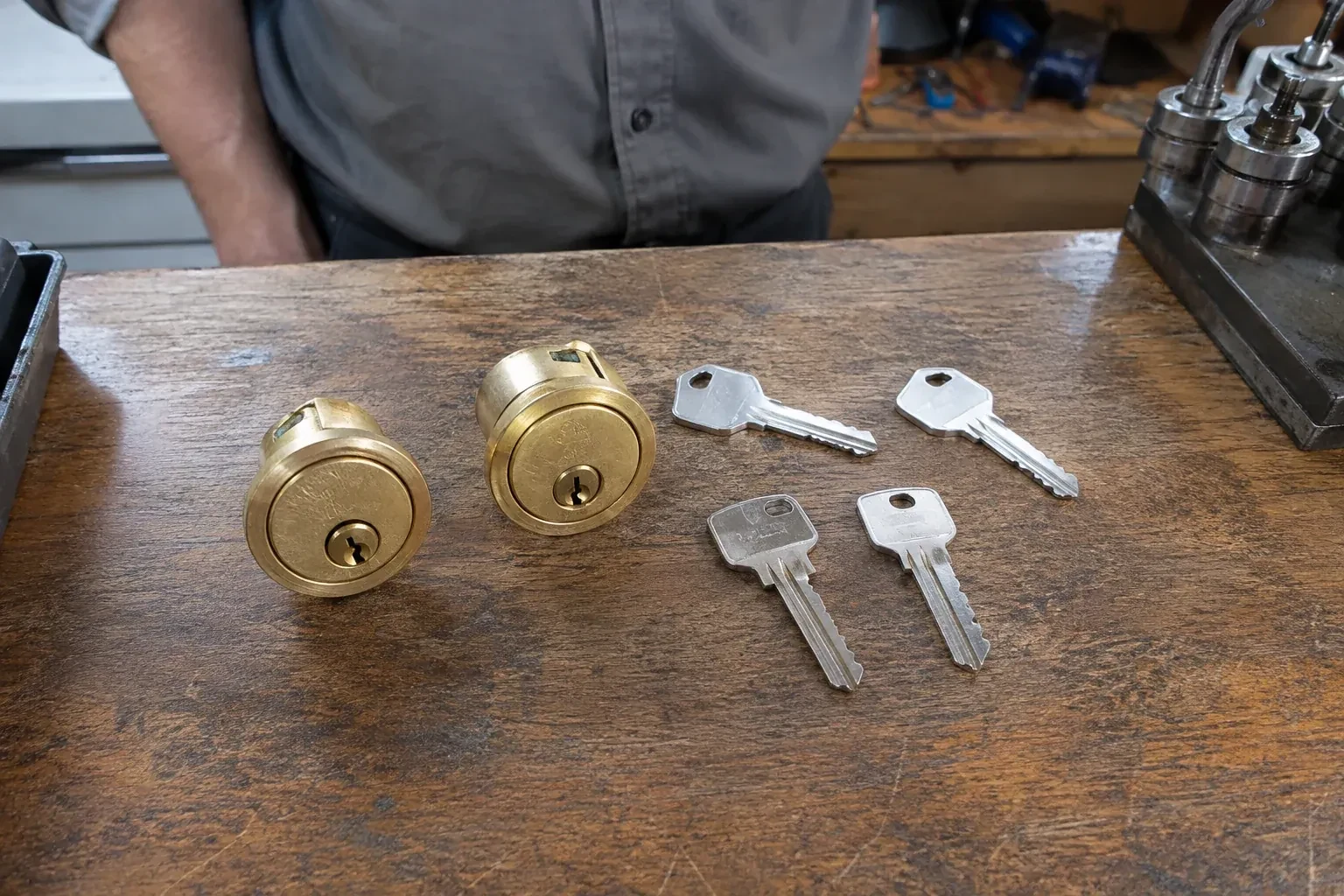
Older doors with a small cross bore, an unusual backset or a mortise lock case need adapting or filling before a modern deadbolt fits, and that preparation is quoted before work begins.
Travel to the property
Distance and access are part of any call-out: a house on a suburban street and a rural property down a long road involve different driving time, and the quote says so.
Door material
Solid wood, steel-clad and fibreglass doors are each cut differently. Metal skins call for slower cutting and cleanup of filings, so the material is one of the first things a quote takes into account.
What to have ready
- Does the door have to be pulled or lifted before it latches or locks at the moment?
- Do you want the new deadbolt to work on the same key as your other doors?
- Has the door or frame ever been forced, or are any screw holes stripped?
Deadbolt Installation: questions
QuestionsThe door has to be pulled before the old bolt will lock. Will a new one fix that?
The new bolt will only lock as smoothly as the door and frame let it, so the locksmith deals with the cause as part of the installation. A door that has sagged on loose hinges gets longer hinge screws or a shim, thick weatherstrip is trimmed, and the strike is set from the bolt's actual position with the door closed. The pocket is bored deep enough for a full throw. Afterwards the bolt should slide with fingertip effort.
What about glass beside the door or a window in it?
Glass within reach of the lock is the one case where a plain thumb-turn deserves thought. Options include a captive thumb-turn that turns freely until you remove its small key, laminated glass or a tested security-film system with its specified frame attachment, or simply setting the bolt farther from the glass. Lock manufacturers describe sidelights as a weak point, so the locksmith measures the reach and lays out the choices rather than defaulting to a key on the inside.
What should I have ready before the locksmith arrives?
Know which doors you want bolted, what they are made of, and whether each already has a deadbolt or only a knob. A photo of the door face and edge helps. Have any existing keys to hand, decide whether you want everything on one key, and mention glass near the lock, a storm door in the same opening, or a rental agreement. If you have already bought hardware, keep the box and template together.
Related services
- Lock Replacement & UpgradeThree teenagers, a dog walker, a cleaner and one house key that keeps going missing.
- Vintage Mortise Lock ServiceYou bought a house with its original hardware and a bag of loose keys.
- Smart Lock InstallationYour mother still lives on her own, and the personal support worker, the pharmacy delivery and two siblings all need to get in on different days.