Change or rekey · Little Britain
Vintage Mortise Lock Service in Little Britain
You bought a house with its original hardware and a bag of loose keys.
In plain words
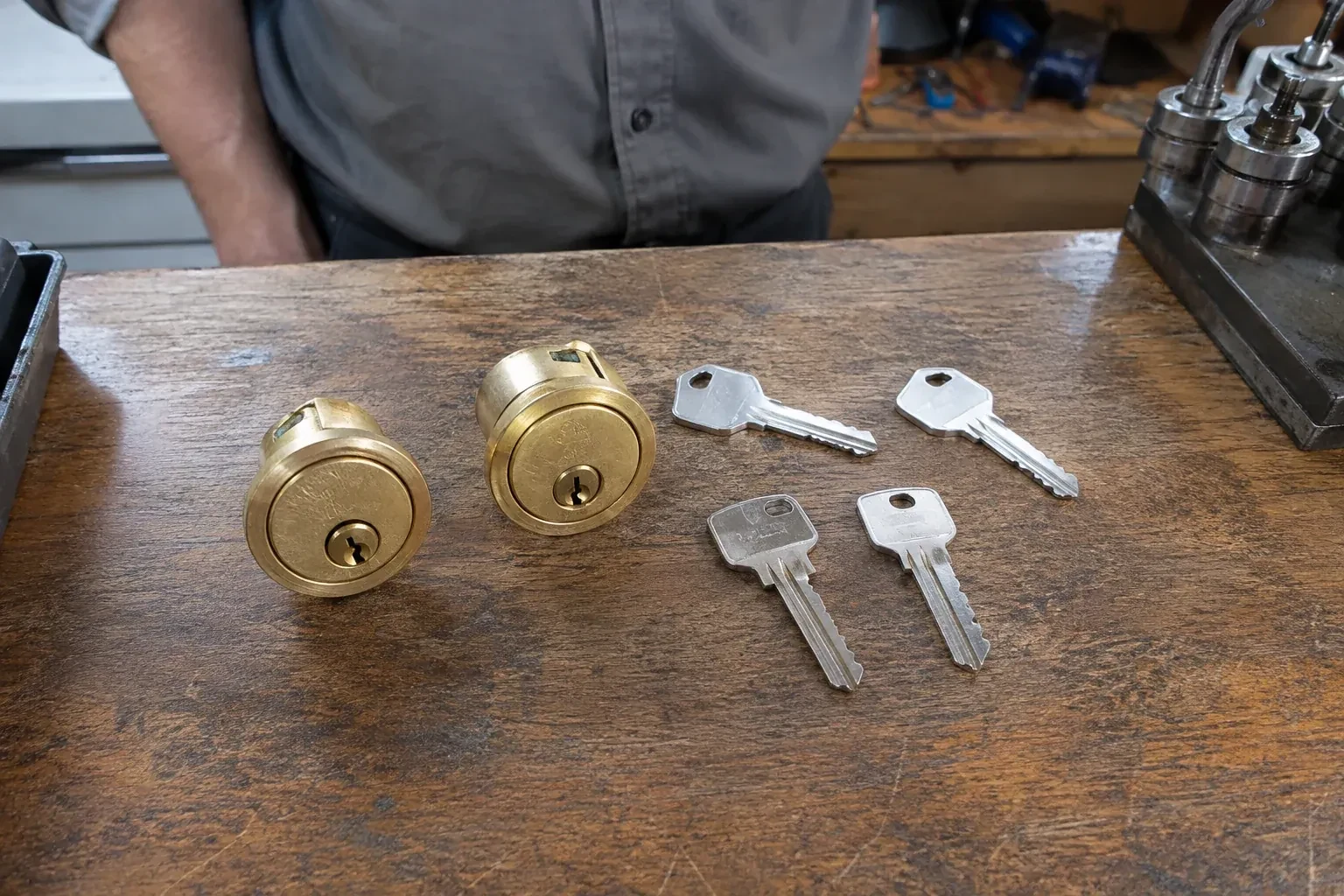
Keys are the part of the job people expect to be impossible, and they rarely are. A bit key, the skeleton key style used on older doors, is cut and filed on the bench to the wards and levers of your particular case, so a lost key can be replaced from the lock itself. A round cylinder on a later mortise lock is rekeyed like any modern cylinder, or exchanged for a new cylinder of matching thread and cam if it is worn out. Either way the service ends with keys in your hand that turn the original lock, and a spare made while the case is on the bench.
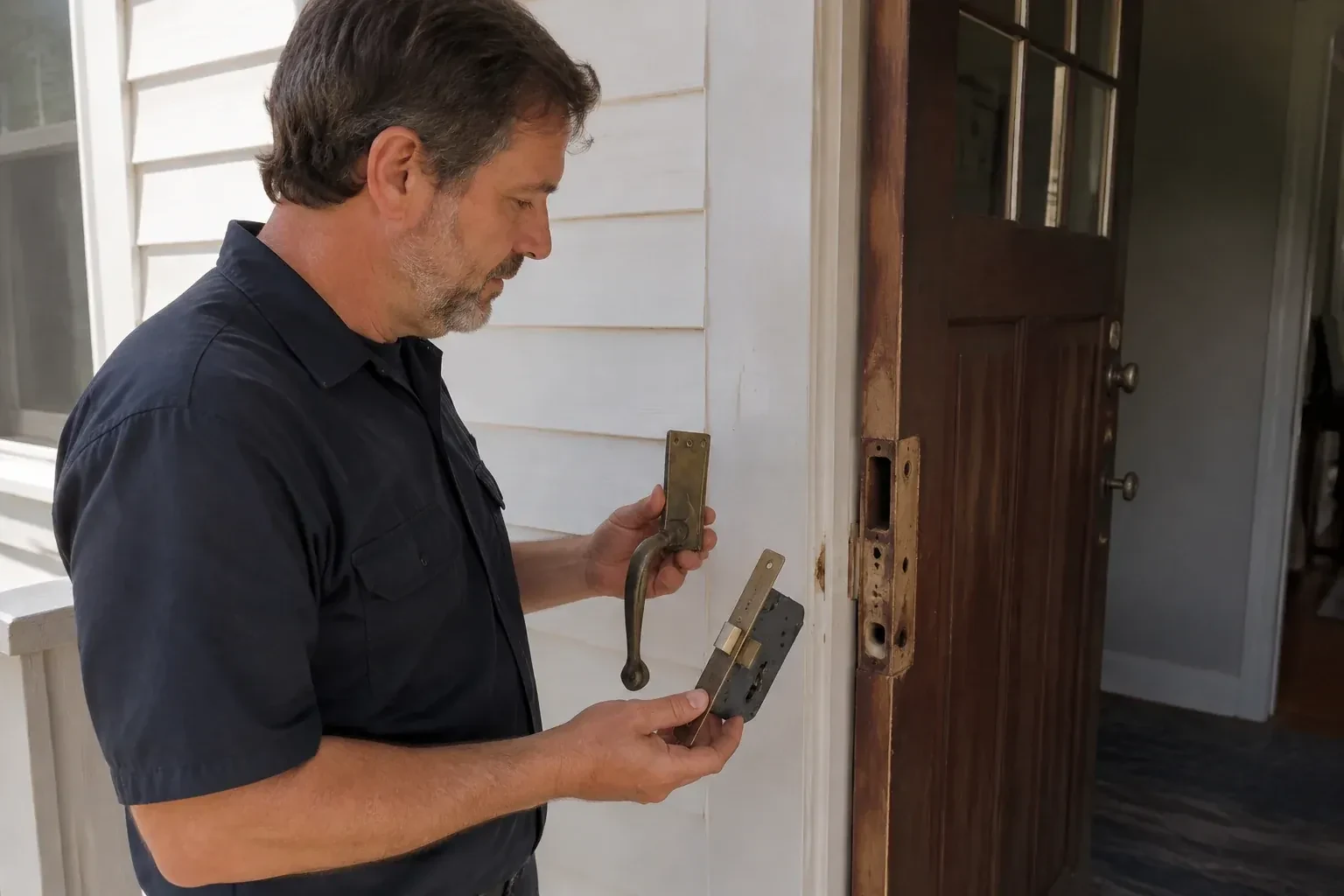
How the visit goesSomeone painted the door years ago without removing the hardware. The faceplate, the strike and the little thumb-turn are all under several coats, the deadbolt scrapes when it moves, and the knob is stiff enough to leave marks on your hand.
Vintage Mortise Lock Service
How the visit goes
How the knob and key actually behave
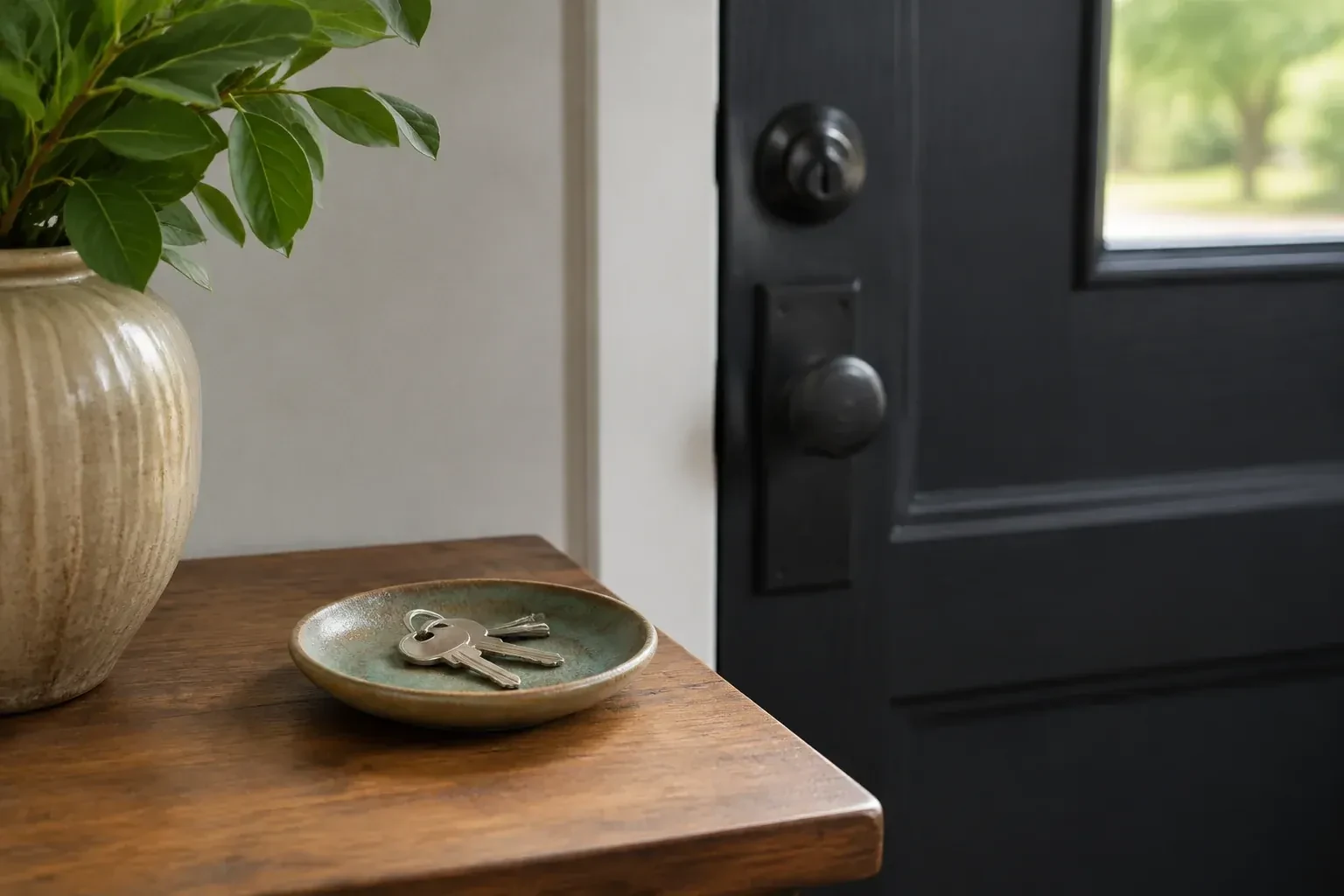
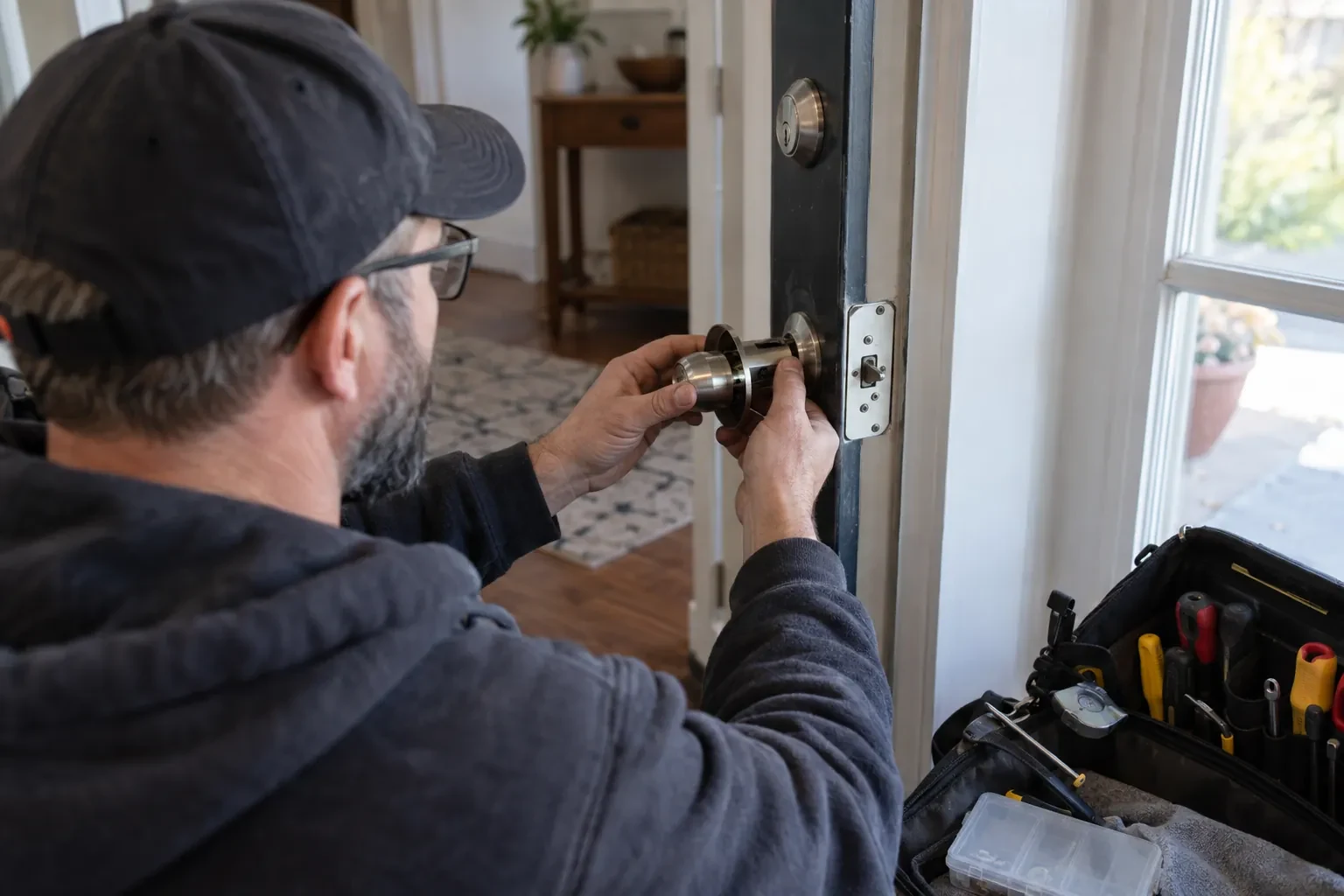
A short conversation with the hardware comes next. The knob is turned and released: does it return smartly, sag back, or not return at all? Is there free play before the latch moves? The key is tried in the deadbolt with the door open: does the bolt throw fully, catch part way, or ignore the key while the key turns? The thumb-turn gets the same test. Each answer points somewhere different inside the case, a latch spring, a hub spring, a worn hub square, a deadbolt lever, a cylinder cam, and the locksmith is building a short list of likely parts before the cover ever comes off.
Cylinder work on a later mortise lock
A pin-tumbler cylinder on a mortise lock is serviced the same way as a modern one. The plug is pushed out with a follower, the old bottom pins are replaced to a new combination, and keys are cut to match, so a lost key stops mattering. If the plug is worn past rekeying, a new mortise cylinder is selected with the same thread length, the same cam shape and a finish close to the trim, and threaded into the case to the correct depth so the cam swings the bolt without binding. The set screw is seated into the cylinder's groove, and the key is tested with the case in the door.
A clear way out
If the entry door's deadbolt was keyed from both sides, the service leaves the inside operable without a key: a thumb-turn fitted to the bolt tail, or a knob function that releases the latch from inside. This is simply good sense for a door people use to leave the home, so nobody is stuck hunting for a key inside their own house. You are shown how the inside release works and asked to try it, and everyone in the household should know it too, especially anyone who grew up with the old habit of leaving the key in the door on the inside.
Vintage Mortise Lock Service
In the van
Hub followers and lever packs
Mortise cylinder and cam
Latch and hub springs
Light lock oil
Warding files
Vintage Mortise Lock Service
What affects the quote
Number of locks in the visit
One entry lock is the simplest case. A whole floor of interior latches, or the front and back doors together, is a longer visit, and each case is quoted on its own so the total is easy to follow.
Parts that must be ordered
A reproduction case or an unusual cylinder size may have to be ordered to measurement, which means a second visit to fit it. The quote separates the first visit from the return.
Condition of the wood
Stripped screw holes, a loosened pocket or a split at the door edge need dowelling, shimming or gluing before the case can be trusted. That woodwork is quoted once the locksmith has seen the pocket empty.
What to have ready
- What does the knob do when you turn it: return, sag, or not come back?
- How many keys would you like to have afterwards?
- Do you own the home or rent it, and who should receive the keys?
Vintage Mortise Lock Service: questions
QuestionsWhat does the service visit involve, step by step?
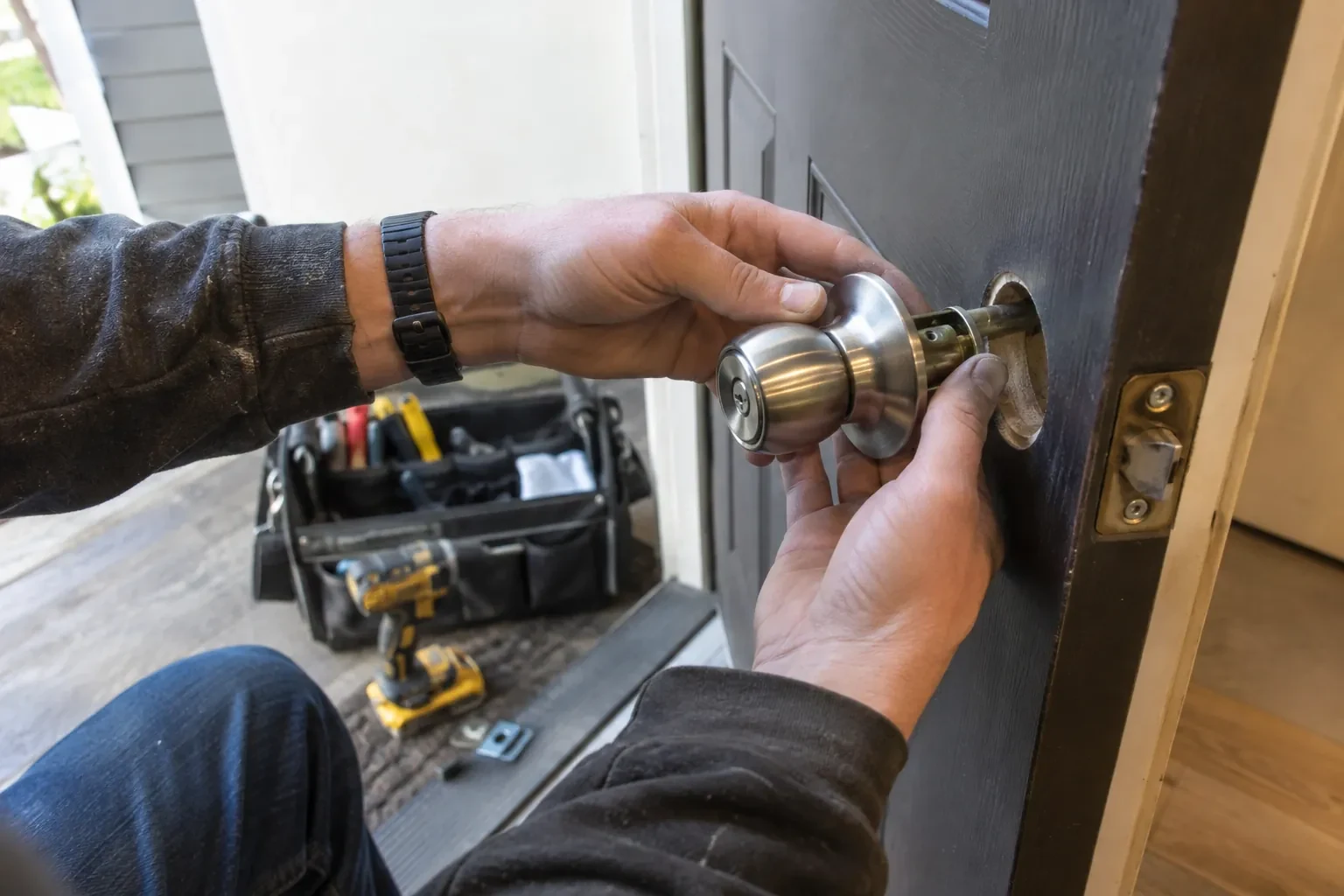
The locksmith checks your authority to request the work, examines the door and lock, and tells you what it needs. The knobs, plates and cylinder come off, the case slides out of the door edge and is opened on a bench, cleaned, re-sprung and repaired. Keys are made or the cylinder rekeyed, the door pocket is tidied, everything goes back on, and the strike is adjusted. You test the finished lock from both sides.
Which parts usually need replacing?
Springs, first and foremost: the latch spring, the hub spring that returns the knob, and the small springs on the deadbolt levers. After that, the spindle and knob set screws, a hub whose square has worn round, a worn deadbolt lever or follower, and on later locks the cylinder set screw or the cylinder itself. Bolts, cases and trim are almost always kept, cleaned and refitted rather than replaced.
The lock works with the door open but not when it is closed. Is the lock broken?
Almost certainly not. That pattern means the door has moved in its frame so the latch and bolt no longer meet the strike squarely. Solid wood doors in older houses swell in humid weather and settle on their hinges over the years. The service adjusts or shims the strike and tightens or packs the hinges so the bolt throws without lifting the door, and the lock itself is usually cleaned and lubricated at the same time.
Related services
- Deadbolt InstallationThe back door has a deadbolt in name only: a short bolt, a thin brass strike held by two little screws, and a jamb you can flex with your palm.
- Lock Replacement & UpgradeThree teenagers, a dog walker, a cleaner and one house key that keeps going missing.
- Smart Lock InstallationYour mother still lives on her own, and the personal support worker, the pharmacy delivery and two siblings all need to get in on different days.