Lockouts · Keneden Park
Seized & Jammed Lock Opening in Keneden Park
Every time you pull the key out of the side door it comes away gritty.
In plain words
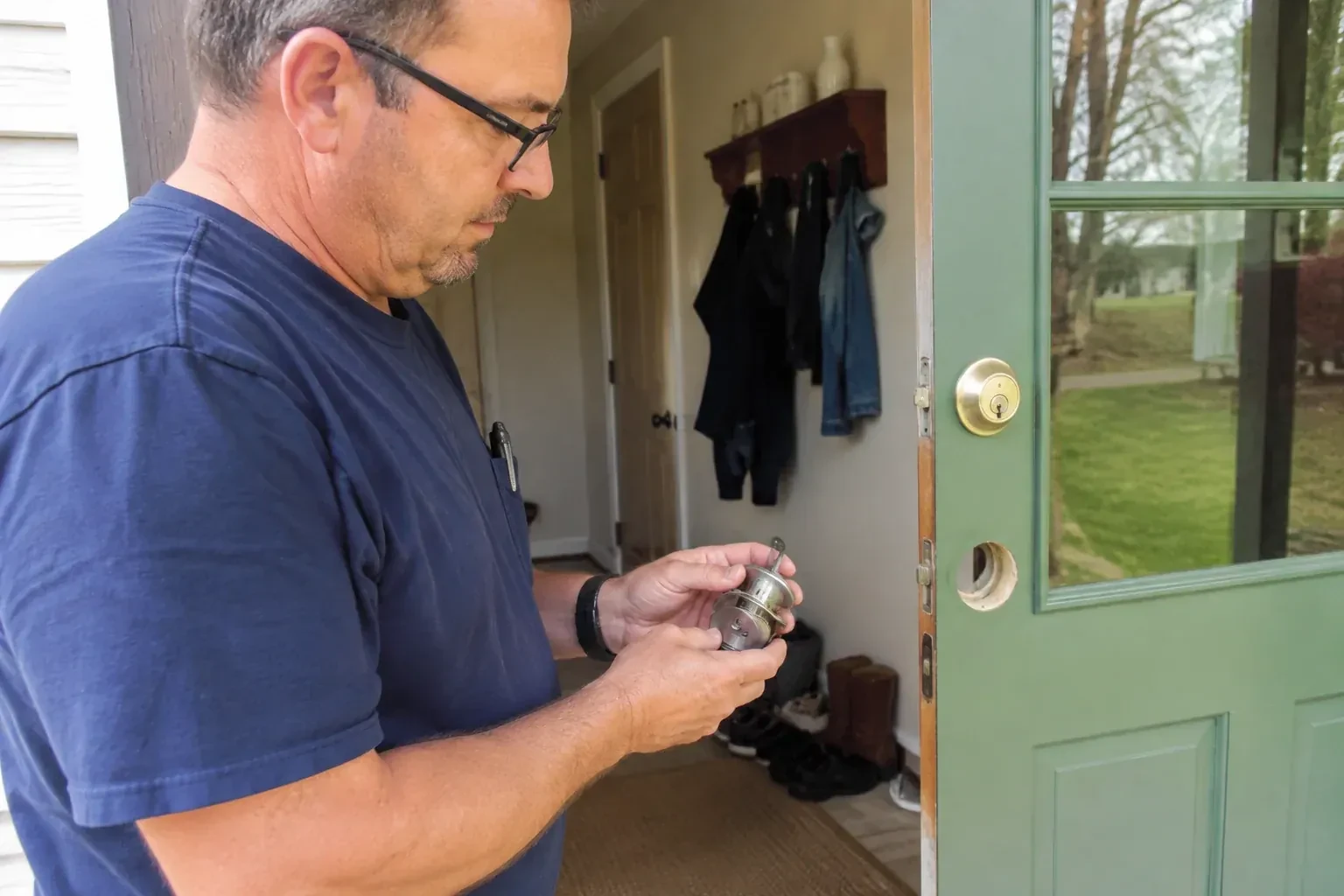
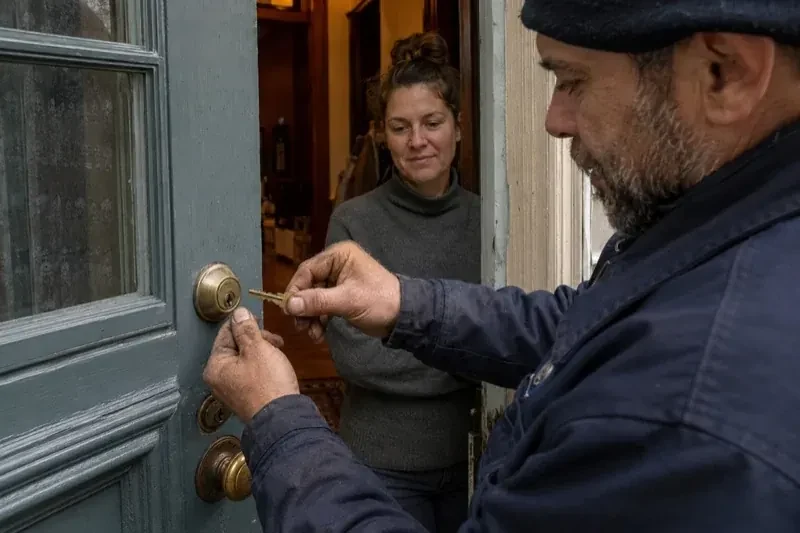
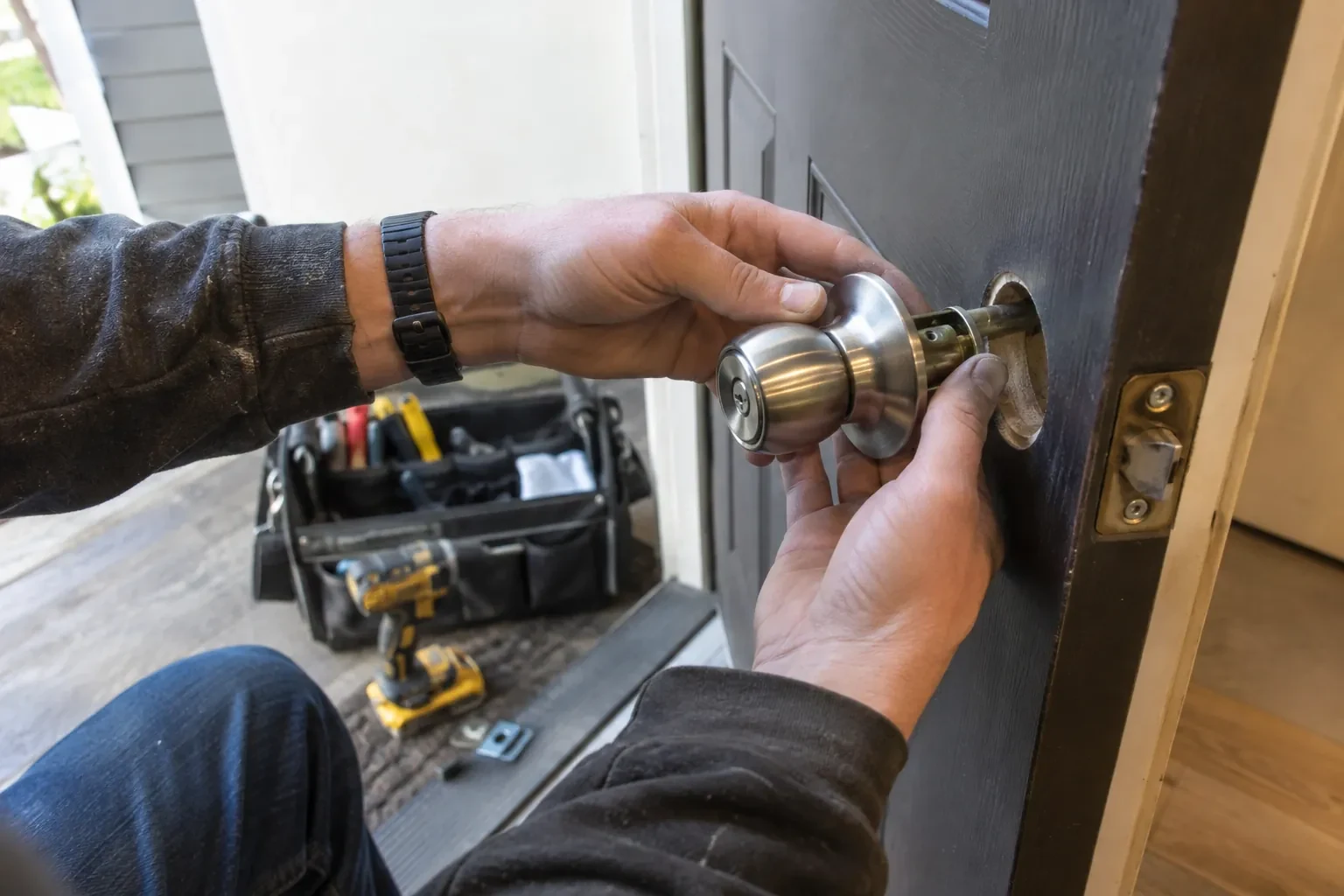
Most seized locks can be saved, and keeping your existing hardware is the aim. A cylinder that has stopped turning is usually recoverable with cleaning and fresh internal parts. A failed tailpiece is a small component swapped without touching the rest of the lock. A bolt bound by the door needs adjustment, not new hardware. Replacement is the answer for a plug or shell that is worn, damaged or hollowed out by corrosion beyond what cleaning and parts can fix, and then the new cylinder is matched to your keyway and finish and, where possible, keyed to the key already in your pocket.
How the visit goesThe shop's lever handle goes down as usual, but the latch inside the mortise case never pulls back. Staff are waiting on the sidewalk with their coffees, the door is locked, and the handle is simply moving air.
Seized & Jammed Lock Opening
How the visit goes
Strike plate, bolt pocket and seal
The frame side gets as much attention as the door side. The locksmith looks at where the bolt meets the strike plate: scuff marks on the plate's edge, a bolt pocket shallower than the roughly twenty-five millimetres a deadbolt needs, paint or filler that has crept into the pocket, and weatherstripping thick enough to hold the door proud of the frame. A dab of chalk on the bolt end shows exactly where it lands. These findings explain a lock that works with the door open and jams when it is shut, and they point to a chisel, a screwdriver and a strike adjustment rather than to anything inside the cylinder.
Taking the load off a bound bolt
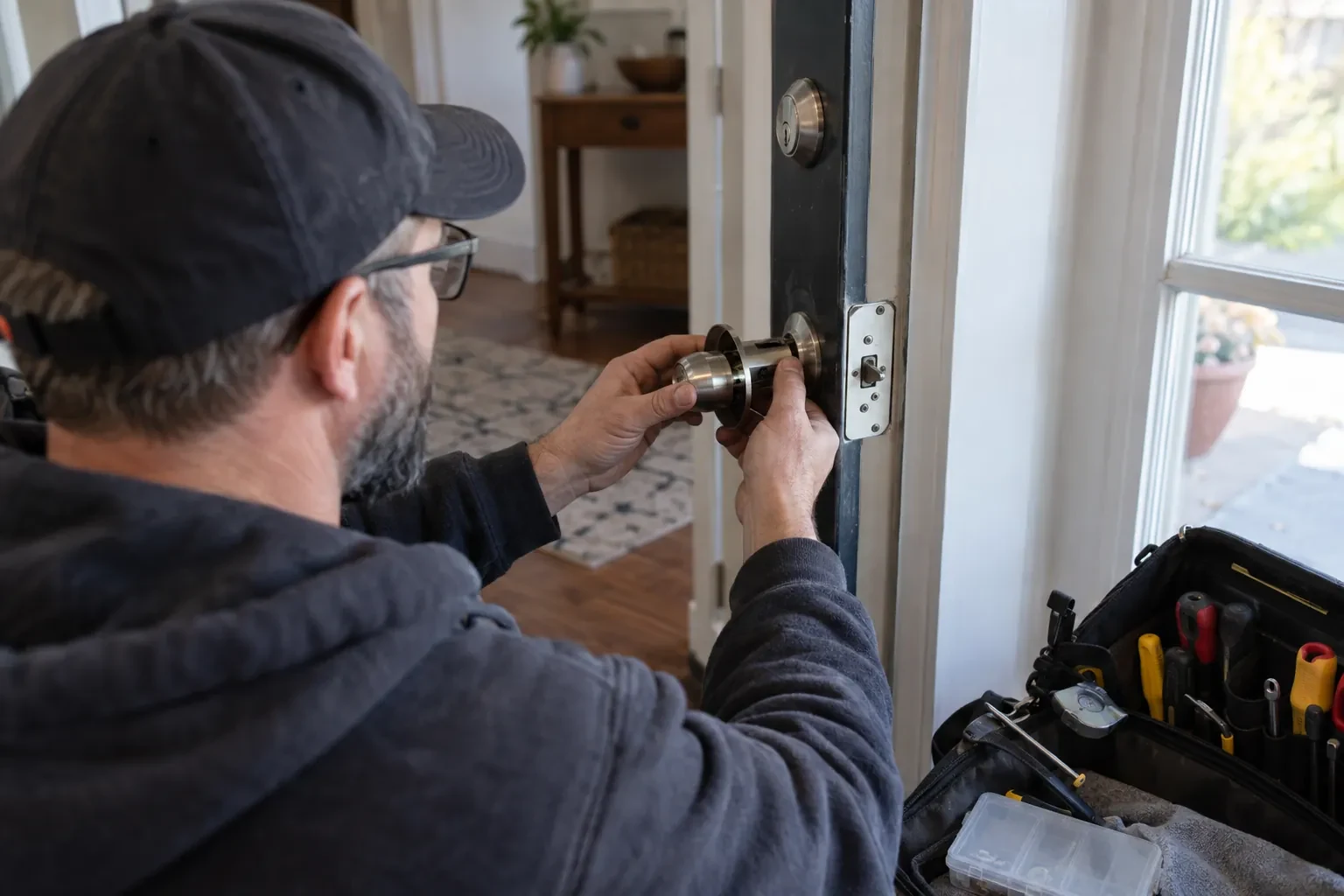
When the door is the cause, the opening is a matter of leverage rather than tools. The locksmith lifts, pushes or pulls the door to bring the bolt back into line with its pocket while the key turns, and the bolt slides home. With the door open, the reason is dealt with: hinge screws tightened or replaced with longer ones that reach the framing, a hinge shimmed to raise a dropped door, the strike plate moved or its edge dressed with a file, the bolt pocket deepened with a sharp chisel, or a weatherstrip trimmed. The lock is then thrown and retracted with the door closed until it moves without any pressure on the door.
Keeping the cylinder clean and dry
A serviced cylinder stays that way with very little effort. At the interval and with the product that cylinder's maker specifies, a short burst of lock lubricant into the keyway followed by a few turns of the key is enough; stay with that one product, since mixing lubricants makes a paste. Household oils, penetrating sprays and silicone meant for hinges belong nowhere near the pins, because they thicken and attract grit. Wipe the key before it goes in on a muddy or salty day. If the lock ever starts to drag, a puff of lubricant is the first response, and a call is the second.
Seized & Jammed Lock Opening
In the van
Dry PTFE or graphite lock lubricant
Mortise case spring and hub
Strike plate and hinge shims
Cylinder springs, pins and cap
Plug follower and repinning kit
Seized & Jammed Lock Opening
What affects the quote
Matching finish and keyway
A replacement that has to match an unusual finish or a restricted keyway takes a specific part rather than a stock one, and the quote reflects the part.
Type of lock on the door
A residential deadbolt, a knob latch, a lever set, a mortise case in an older house and a high-security cylinder each take different tools and time to open and to service.
Mortise and commercial hardware
Drawing a mortise case, replacing a hub or spring and regreasing the contact points is more involved than a cylinder service, and storefront and exit hardware are quoted accordingly.
What to have ready
- Is anyone inside, and can the door be opened from that side?
- Is the key worn, bent, or a copy made from another copy?
- Do you have identification, a lease or a management contact for the property?
Seized & Jammed Lock Opening: questions
QuestionsDoes road salt affect door locks?
Yes, especially on side doors near a treated driveway or walkway. Salt spray dries into a crust inside the keyway and around the plug, and each thaw dissolves and re-deposits it deeper. Over a few winters it pits brass and makes the pins drag. The remedy is a flush with contact cleaner, a thorough drying, and a dry lubricant that sheds moisture, followed by rinsing the hardware when the weather allows.
The thumb-turn is stuck from inside and we need that door to get out. What should we do?
Use another exit for now and call. From the inside the fault is usually a bolt pinned by the frame or a bent spindle, both of which the locksmith frees without damage. A main exit door should open from inside without a key or special knowledge, so the repair leaves the door doing exactly that, and if the hardware on it was the wrong type for an exit, a thumb-turn deadbolt is suggested.
The lever on our shop door goes down but the latch does not pull back. Is that a lock problem?
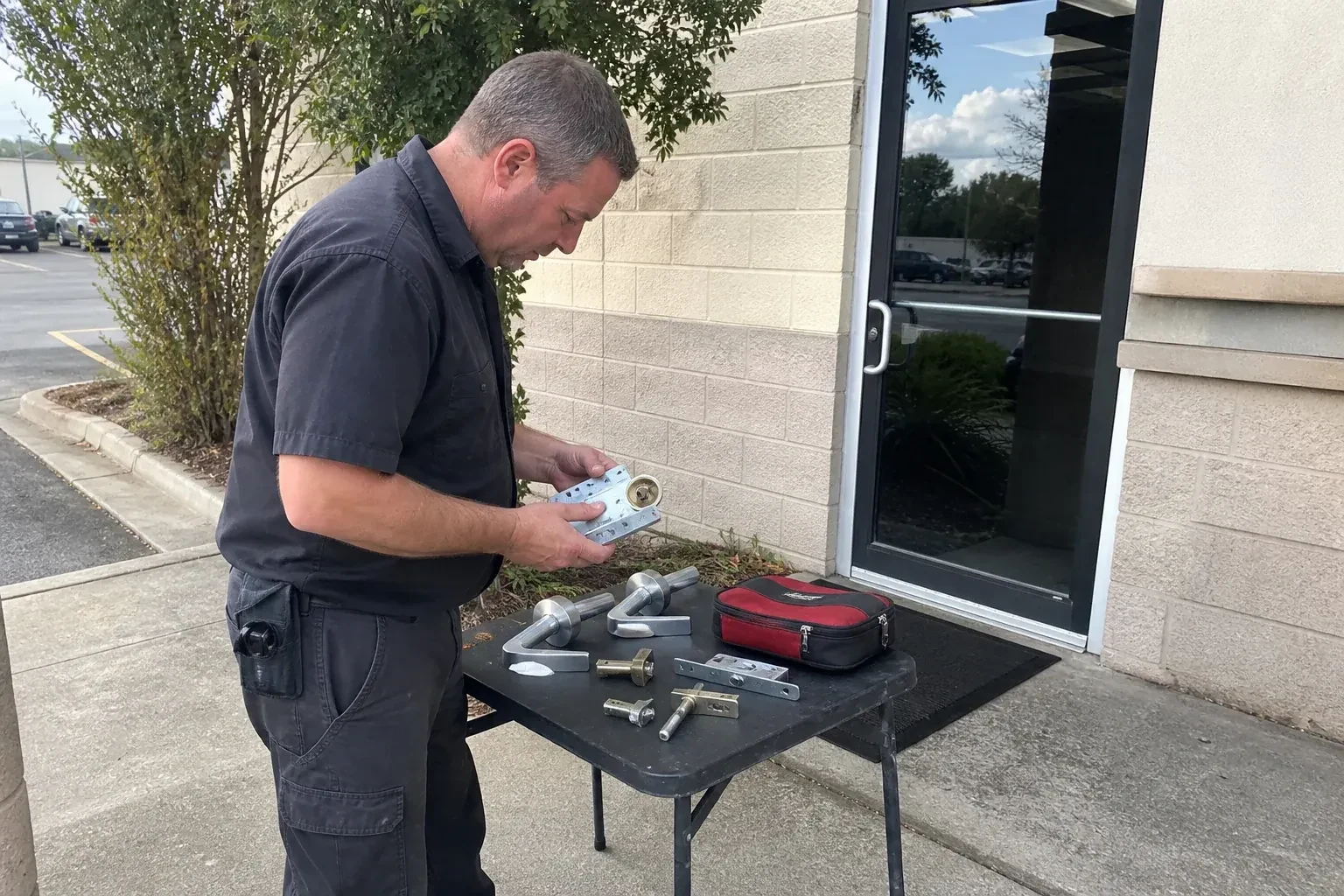
It usually points to the mortise case rather than the cylinder, and it is a common complaint on commercial doors. Inside the case a return spring, a worn hub, or another part of the latch's drive path can have failed, so the lever moves without driving the latch. The locksmith gets the door open, draws the case out of the door edge, replaces the worn part, cleans and greases the contact points and refits everything, then tests lever, key and thumb-turn together.
Related services
- Business Lockout ServiceYou signed the lease on the unit last week and the landlord handed over possession, but the previous tenant's locks are still on both doors and no keys came with them.
- Broken Key ExtractionOvernight the deadbolt froze, and this morning the key would only turn partway.
- Break-In Damage Lock RepairThe back door looks closed until you touch it.