Bethany Locksmith Specialists · Kawartha Lakes
Lock Rekeying: step by step
Locksmith · Kawartha Lakes, Ontario
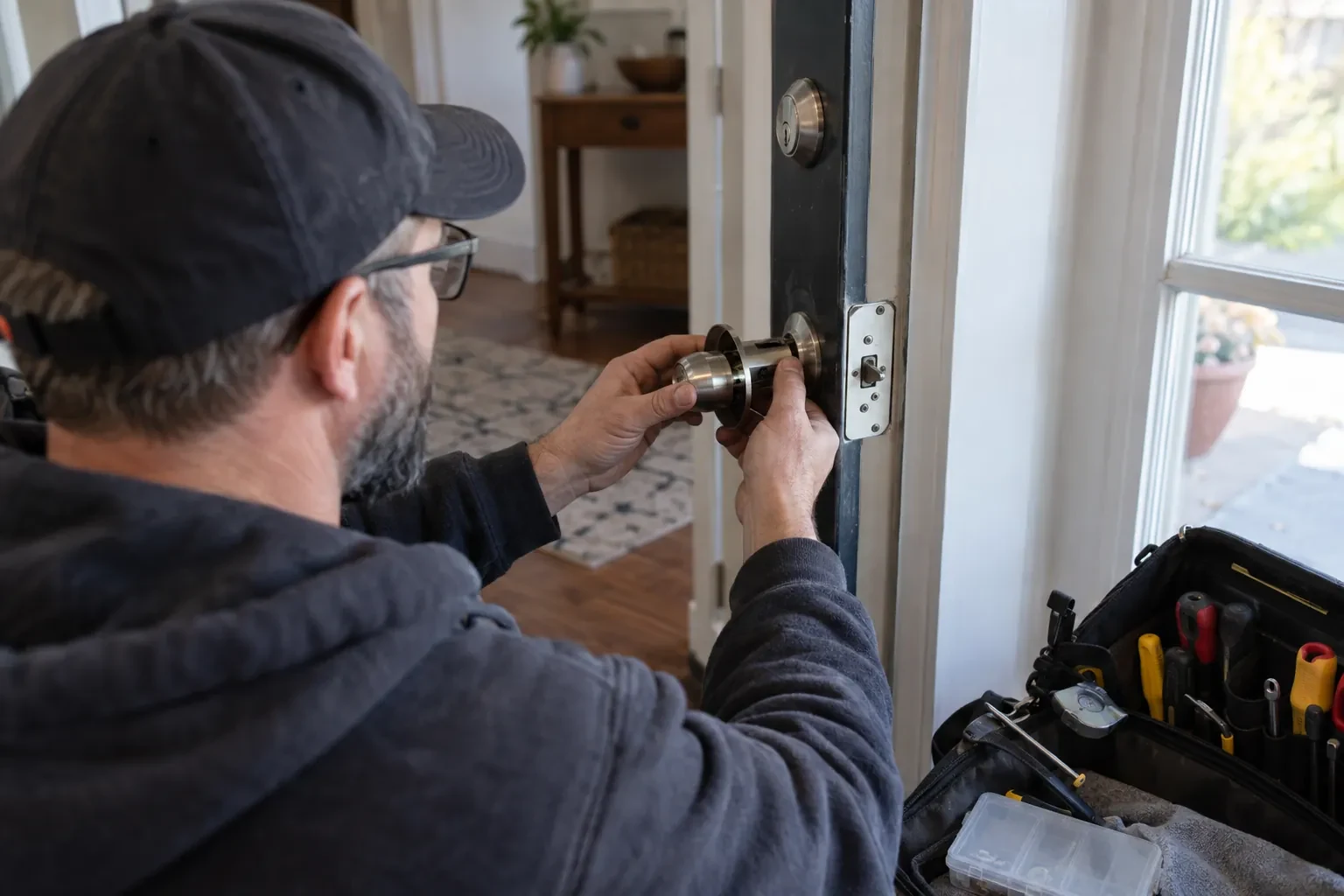
Rekeying is a change made inside the lock rather than to the lock itself. Many keyed cylinders hold a row of small pins that have to sit at exactly the right heights before the plug will turn, set by the cuts on your key, though some residential cylinders use a side-locking bar instead of pins. A locksmith slides the plug out, removes the pins, and loads a new set matched to a freshly cut key. Reassembled, the lock looks and feels exactly as it did, except that the new key turns it and every key cut before today does not. Your hardware, finish and door stay as they were.
Counting the keys that are already out there
Part of planning a rekey is understanding why it is happening. The locksmith asks how many keys exist as far as you know, who has held one, and whether any went missing with something identifying the address. The answers do not change the pinning, but they shape the advice: whether a padlock or mailbox shares the same risk, whether a garage keypad code should change on the same visit, and how many new keys make sense to cut. It also helps to know whether any key is a restricted or patented type, since those are cut from a record rather than duplicated and may involve the original supplier.
Taking the cylinder out of the lock
Each type of lock releases its cylinder in its own way, and the locksmith works door by door, finishing one before opening the next, so every entry stays lockable throughout. On a knob or lever set, the handle comes off after a retaining clip or set screw is released, and the cylinder slides out of the handle. On a deadbolt, the interior thumb-turn and housing are removed and the cylinder is withdrawn from the outside body. On an older mortise lock, a small set screw on the door edge is backed out and the cylinder unthreads from the case. Nothing is pried or forced; the door and trim stay untouched throughout.
Handing keys out with a little method
Rekeying gives you a clean start on who holds a key, and a few habits keep it clean. Give a key only to people who need one regularly, and know who they are. If a dog walker, a cleaner or a contractor needs access for a season, a lockbox with a code you can change afterwards is simpler than a key you have to ask for back. Tag spares with a colour or a number rather than the address. When a key does leave your control, a lost ring, a departing tenant, a relationship that has ended, that is the trigger to rekey again, and the next visit is simpler because the doors are already on one system.