Lockouts · Pontypool
Home Lockout Service in Pontypool
Someone pushed the privacy button on the bathroom door and pulled it shut behind them, leaving the room locked and empty.
In plain words
Most lockouts end with the original lock still on the door and still working. That is the point of professional entry: picks, tension tools, decoders and latch tools are designed to operate the mechanism the way a key would, without cutting or prying anything. Drilling is reserved for cylinders that will not yield, and when it is the only route the locksmith says so before starting and fits a replacement cylinder in the same visit so you are never left with a hole where a lock used to be. You keep your hardware, your finish and your existing keys whenever the situation allows.
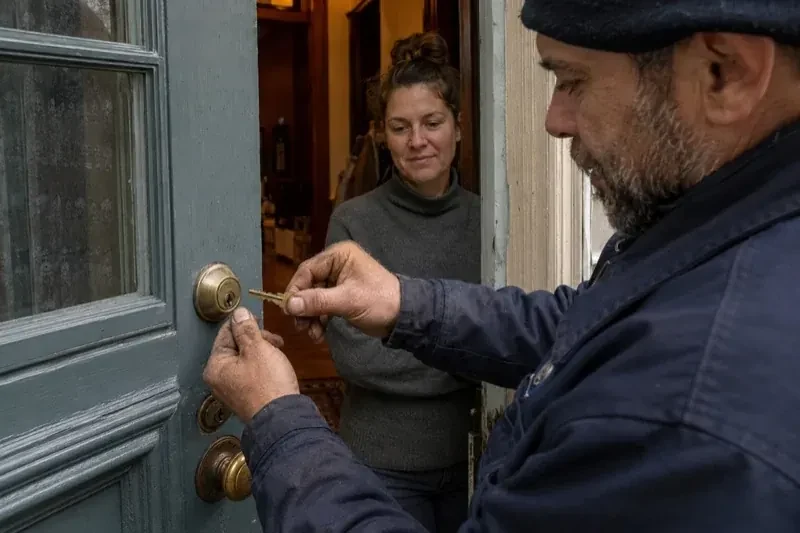
How the visit goesYou stepped out to grab the recycling bin and the door swung shut behind you. Through the glass you can see your keys hanging on the hook by the stairs, exactly where they always are, and the latch has caught.
Home Lockout Service
How the visit goes
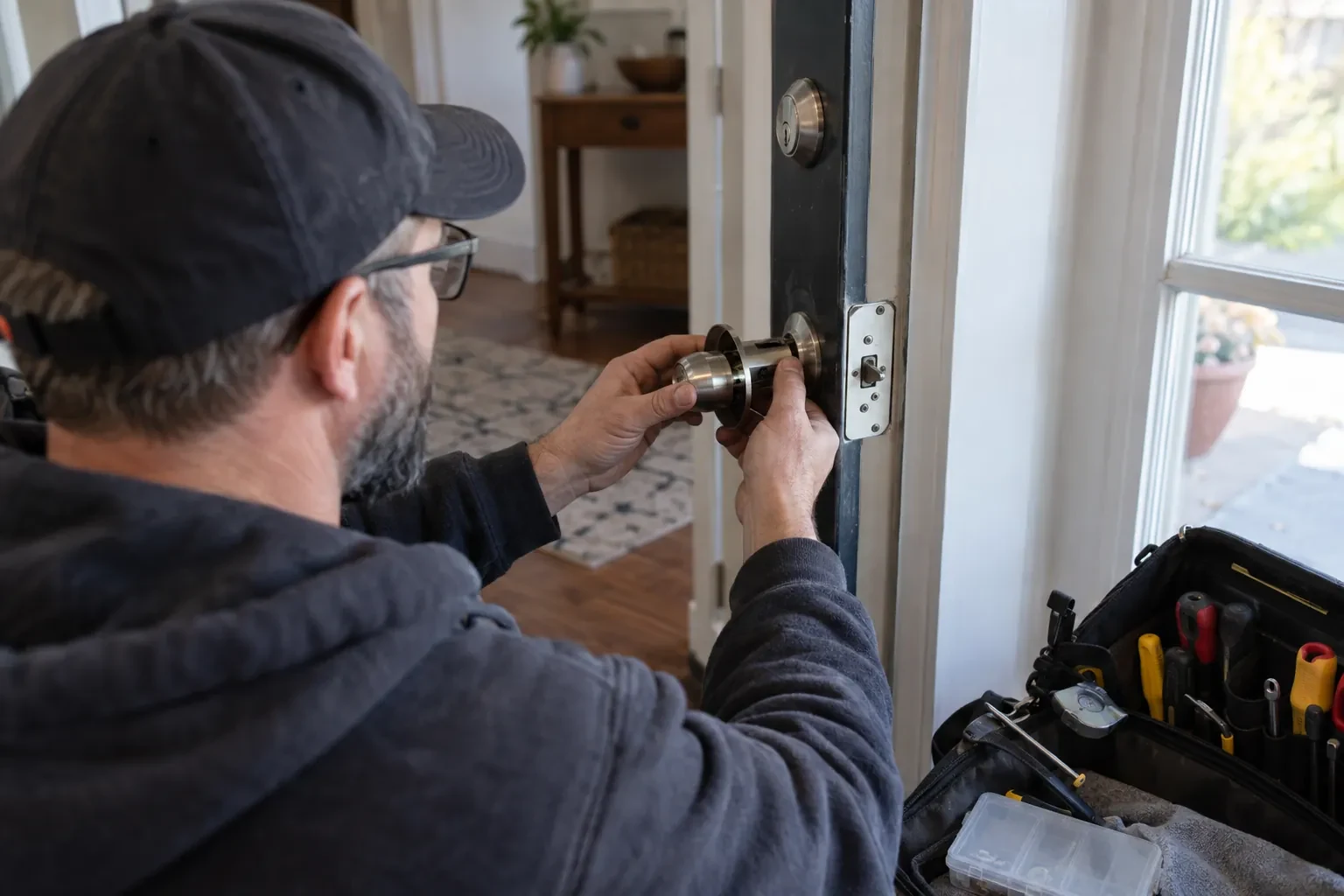
Reading the lock itself
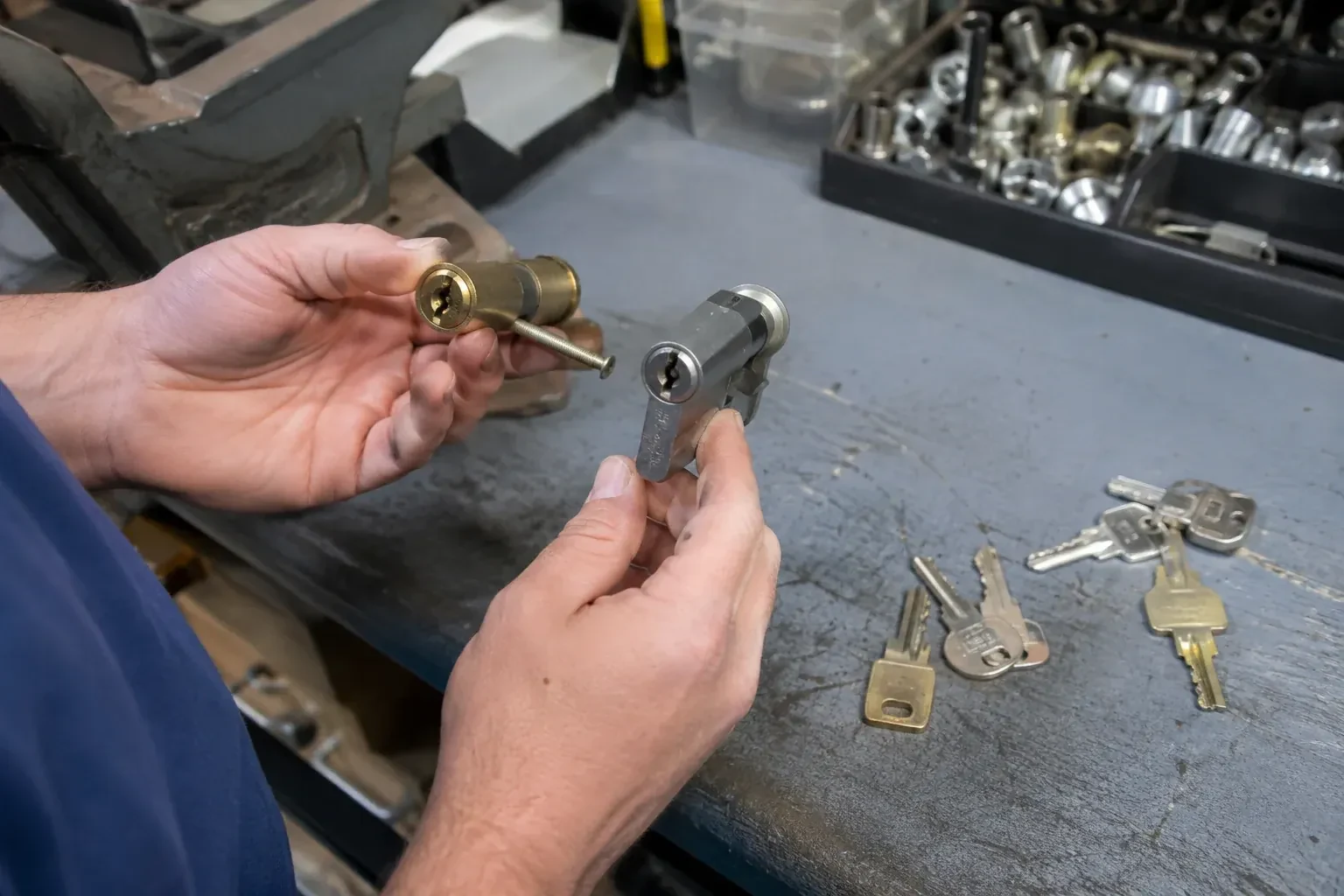
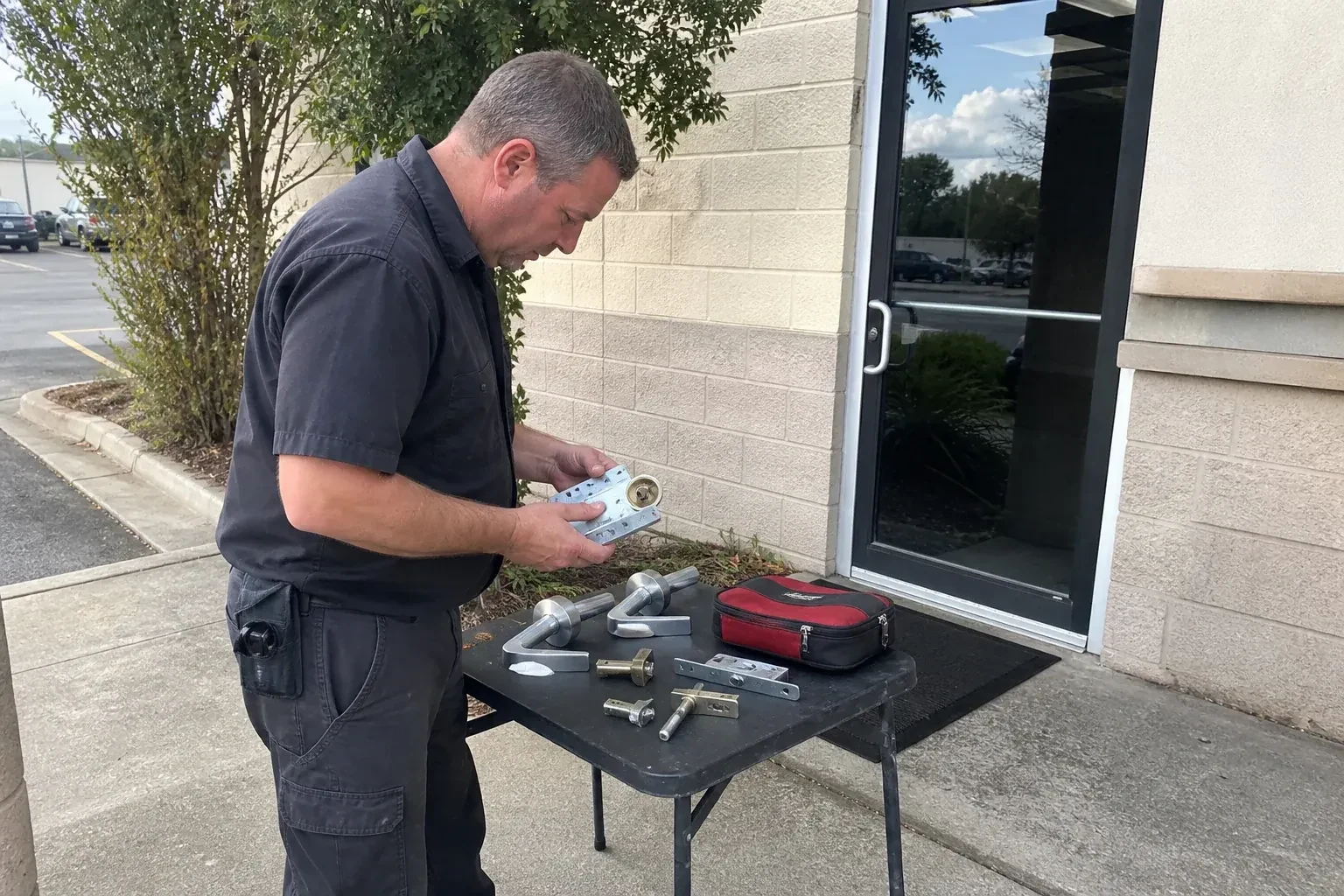
Every lock announces what it is to someone who knows where to look. The shape of the keyway, the maker's mark on the face, the presence of a thumb-turn or a second keyed side, and whether the door has a separate deadbolt above a latching knob all tell the locksmith which family of hardware they are dealing with. A residential pin-tumbler cylinder, a mortise case in a century home, a restricted keyway with security pins and a keypad lock with a hidden override each respond to different techniques. Identifying the lock correctly before touching it is what makes a clean, non-destructive opening the usual outcome.
Opening, then closing the loop on a lost key
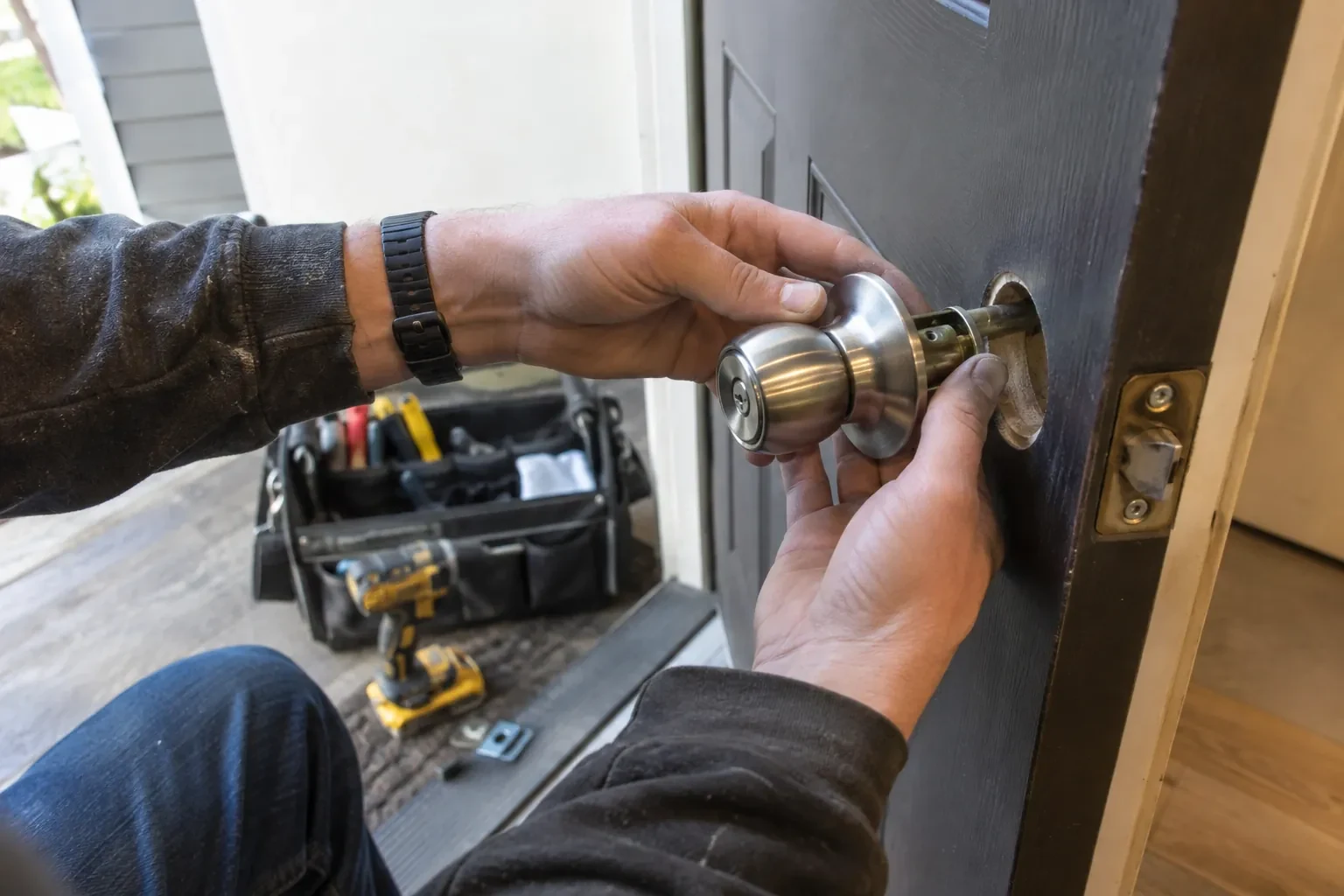
When the key is genuinely gone, the work has two halves. The first is the opening, done the usual way with picks, a decoder or a bypass. The second is making the missing key useless. The locksmith removes the cylinder, uses a plug follower to slide the plug out without spilling the springs, replaces the bottom pins to a new combination, and reassembles it so a freshly cut key operates it and the old one does not. Each exterior lock that shared the old key is treated the same so the house stays on one key. New keys are cut from the new pinning, tested in every door, and counted into your hand.
The missing key is now just a piece of metal
If the cylinder was rekeyed, whoever has the old key is holding something that fits the keyway and turns nothing. You receive the new keys, typically two or three, cut from the fresh pin combination rather than copied from a worn original, so they will operate crisply for years. It is worth counting them, deciding who in the household gets one, and writing down where the spare lives. If several doors were brought onto the same new key, test each one before the locksmith drives off. From this point the lost key is a story to tell, not a worry to carry.
Home Lockout Service
In the van
Plug spinner
Dry graphite or PTFE lubricant
Key blanks and key cutter
Cylinder decoder
Strike plate and long hinge screws
Home Lockout Service
What affects the quote
Restricted or high-security keyways
Security pins, sidebars and patented keyways take longer to open and, if replaced, cost more as hardware than a standard cylinder. Restricted keys also have to be cut from the system's records rather than duplicated.
Damage from earlier attempts
A latch bent by a credit card or a cylinder scarred by a screwdriver may need repair or replacement in addition to the opening. The locksmith points out what was already there before quoting that part.
Getting to the door
A ground-floor house door is straightforward. A unit up several flights, a building with a locked lobby and no concierge, or a gated property where the gate is also locked adds steps that the quote takes into account.
What to have ready
- Is there a second door, a garage entry or a spare key nearby you could use?
- Is the lock a keypad or smart lock, and does it have any power left?
- Is the key inside the house, lost, broken in the lock, or turning without opening?
Home Lockout Service: questions
QuestionsWhen does a locksmith decide to drill instead of pick?
Drilling is the last rung, reached only when the cylinder has genuinely stopped cooperating. Typical reasons are a plug seized by corrosion or a failed spring, a key snapped deep inside that blocks the pins, a high-security cylinder whose anti-pick features make picking impractical, or a lock already damaged by someone's earlier attempt. The decision is explained before the drill comes out, the hole is confined to the cylinder, and replacement hardware goes in straight afterwards.
I rent my place. Can I call a locksmith myself?
Yes. A tenant locked out of their own unit can arrange entry directly, and the identification check is the same: something that ties you to the address, such as a lease, a bill or a piece of mail, plus photo identification. Where you may want to involve your landlord is any change to the lock afterwards, because tenancy rules in this province expect landlords and tenants to agree on lock changes and to share keys. A locksmith can note what was done for the building manager.
What if the door is stuck rather than the lock?
This is more common than people expect, especially in older houses and at the change of seasons. A door that has swollen, sagged on its hinges or been pushed out of square by thick weatherstripping can pin the bolt against the strike so it will not draw back even with the right key. The locksmith relieves the pressure to free the bolt, then adjusts the strike, hinges or seal so the door closes and locks without a shoulder.