Change or rekey · Little Britain
Gate & Building Entry Locks in Little Britain
A visitor buzzes from the panel downstairs, someone presses the button by the door, and nothing happens.
In plain words
Gate hardware tends to struggle most in the season that stresses it hardest, and a cylinder or closer that has been sluggish all autumn rarely improves once the weather turns. Booking this service ahead of winter gives the locksmith a chance to catch a stiff cylinder, a slow closer or a gate that has started to sag before ice, salt and cold make the same problem harder to reach. What starts as a seasonal check-up often heads off a call made from outside a locked gate in January.
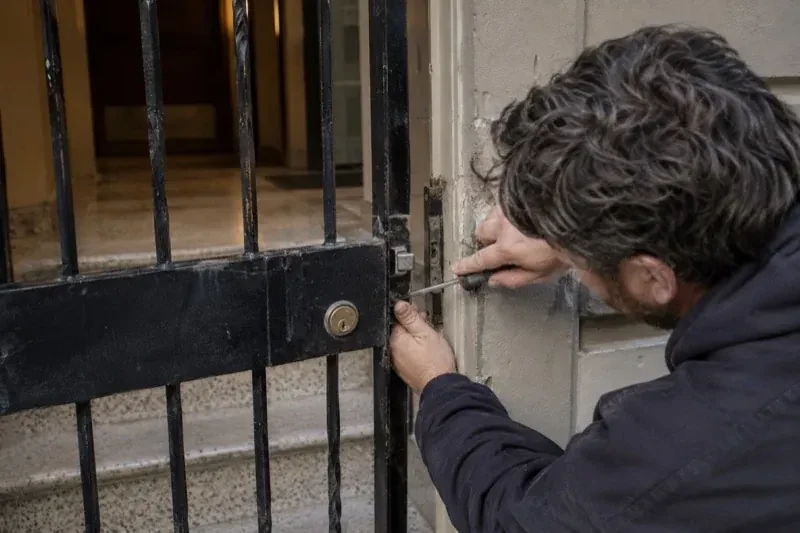
How the visit goesThe padlock on the side gate has gone stiff every winter for three years running, and this year the key simply will not turn past the first few pins. Salt spray off the road and a season of meltwater have left the cylinder pitted and reluctant.
Gate & Building Entry Locks
How the visit goes
Looking for prior damage or an attempted entry
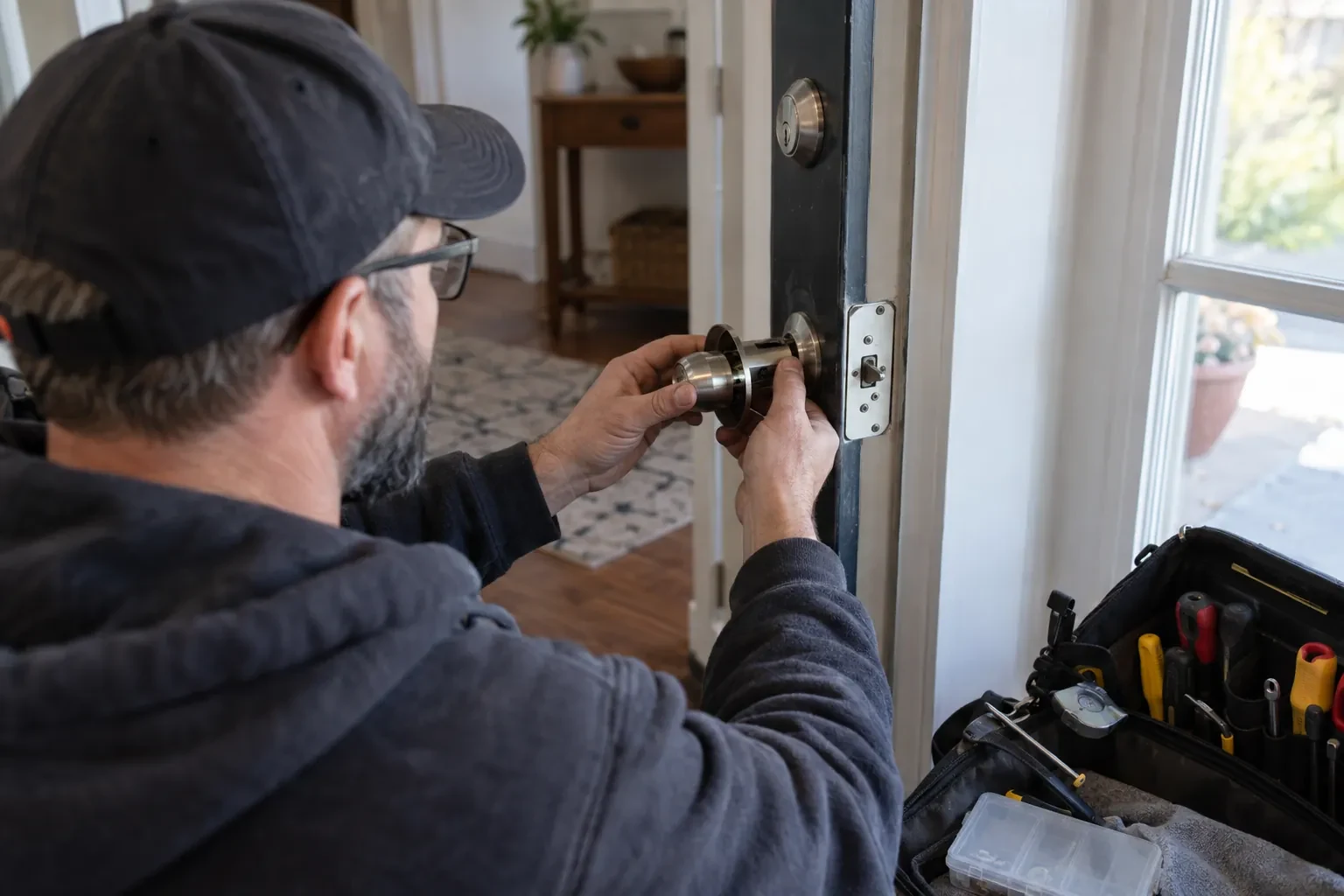
Before any work begins, the locksmith looks for signs that something has already been tried on the gate or door: pry marks near the strike, a scratched or spun cylinder, a bent hasp, or a padlock shackle that has been cut and replaced. Noting this clearly, before touching anything, means the property owner knows exactly what was there beforehand and what the visit actually changed. It also flags whether the surrounding frame or post absorbed damage that needs attention alongside the lock itself.
Bringing an electric strike or maglock back online
Where the entry includes a buzzer, keypad or electric release, the work follows the wiring back from the door: checking the transformer or power supply, the connections at the strike or maglock, and the intercom or keypad sending the release signal. A faulty component is repaired or replaced, and, where the specified lock includes a mechanical override cylinder, that cylinder is tested independently so the door can still be opened by key if the electronics ever fail again. The system is then tested as a whole, buzzing the door open and confirming any mechanical key still works, before the visit ends.
An electronic entry tested as one system
Where the entry includes a buzzer, keypad or electric strike, you see it worked before the locksmith leaves: the intercom releasing the door on a buzz, the keypad accepting a code, and, where the installed lock includes one, the mechanical override key turning cleanly as a backup. Batteries or settings that were touched during the visit are confirmed, and, if a backup key exists, you are shown where it lives so it is not lost track of. An entry with both a working backup key and working electronics now has two independent ways to open it, worth keeping in mind the day the power or the app misbehaves.
Gate & Building Entry Locks
In the van
Gate locks and latches
Dry graphite or PTFE lubricant
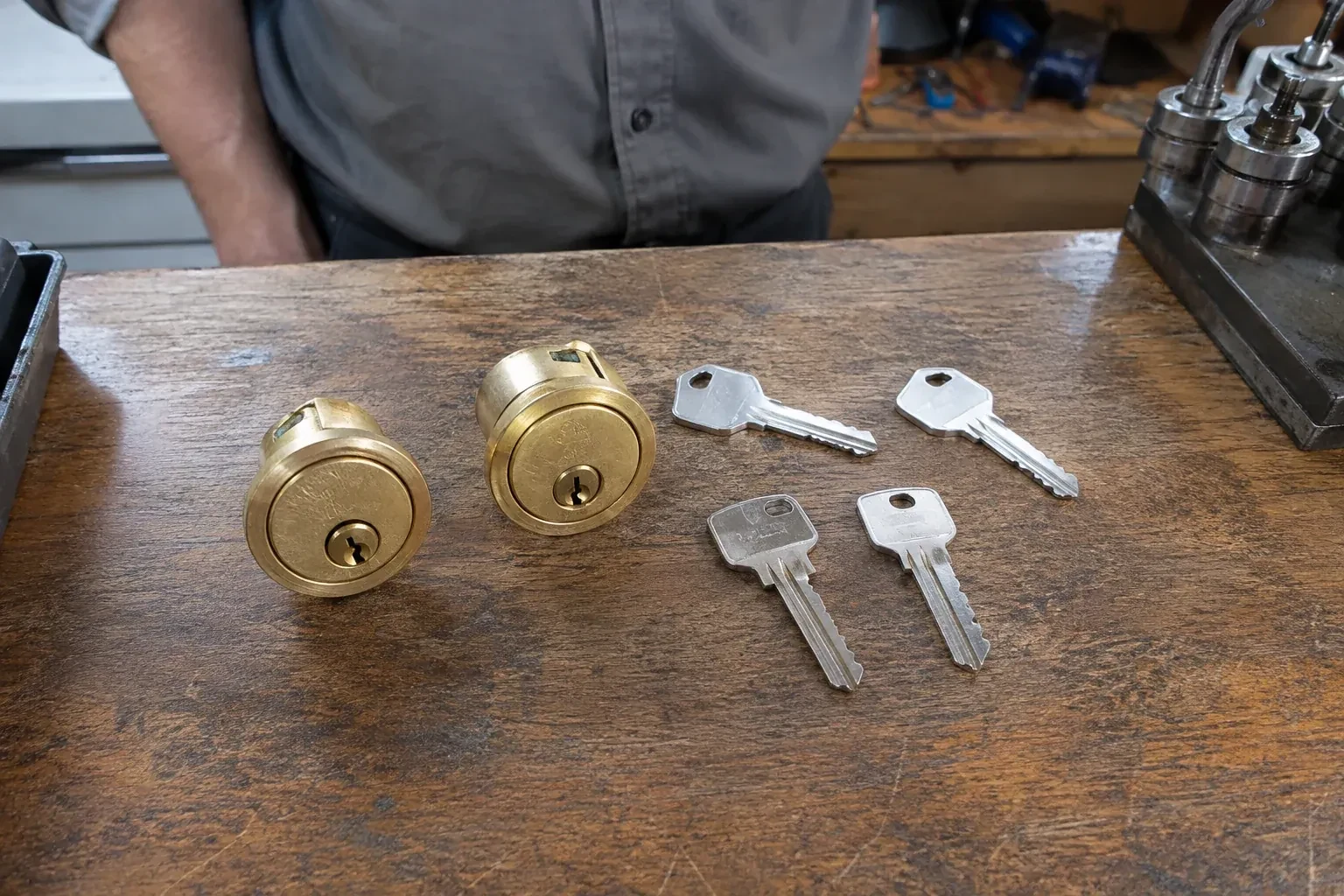
Keyed-alike cylinders
Corrosion-resistant fasteners
Gate and door closers
Gate & Building Entry Locks
What affects the quote
Whether keys need coordinating across doors
Rekeying a single lock is one task. Bringing several gates or a shared entry onto one common key, or setting up a master key arrangement across a property, adds planning and cylinder work beyond a single rekey.
Access to the gate or entry
A ground-level gate on an easy driveway is straightforward. A shared building entry behind a locked lobby, a gate at the far end of a long property, or awkward scaffolding around the hardware adds time the quote takes into account.
Master key or keyed-alike planning
Setting up a master key system, or bringing several separate locks onto one shared key, involves planning the pinning structure across every cylinder involved, which is more work than rekeying one lock in isolation.
What to have ready
- Are there other gates on the property that should share a key?
- Do you manage this property, or should someone else be involved in the decision?
- Has the lock been stiff or slow in cold weather?
Gate & Building Entry Locks: questions
QuestionsHow do you decide whether to repair a gate lock or replace it?
The decision follows what the assessment actually finds rather than the age of the hardware alone. A cylinder that is only stiff or slightly worn is usually serviced and left in place, while one that is pitted, cracked or built to a grade unsuited to its exposure is replaced. The same logic applies to a closer or hinge: adjustment first, replacement only once the part itself has genuinely failed. You are told which category the hardware fell into and why before any work proceeds.
Does this service cover the gate itself, or only the lock?
Both, where the two are connected, which on a gate they usually are. A locksmith working on a gate lock also looks at the hinges, the post and the closer, since a lock rarely fails on its own when the real cause is a sagging gate or a post that has shifted. Work that goes beyond hardware the locksmith carries, such as rebuilding a rotted post or a damaged fence panel, is flagged so it can be handled by whoever normally does that kind of repair.
What actually happens during a gate or building entry lock visit?
The locksmith first watches the gate or door move and checks the hardware fitted to it, then works out whether the issue sits in the lock, the closer, the hinges or the alignment of the frame itself. Whatever combination is found, the relevant piece is adjusted, rekeyed or replaced, and the whole assembly is cycled repeatedly afterward to confirm it closes, latches and locks the same way every time. Any keys involved are cut and tested before the visit is considered complete.
Related services
- Deadbolt InstallationThe back door has a deadbolt in name only: a short bolt, a thin brass strike held by two little screws, and a jamb you can flex with your palm.
- Lock Replacement & UpgradeThree teenagers, a dog walker, a cleaner and one house key that keeps going missing.
- Vintage Mortise Lock ServiceYou bought a house with its original hardware and a bag of loose keys.