Car keys · Bethany
Transponder Key Programming in Bethany
A second driver has joined the household, and the one existing key gets handed back and forth between two schedules that rarely line up.
In plain words
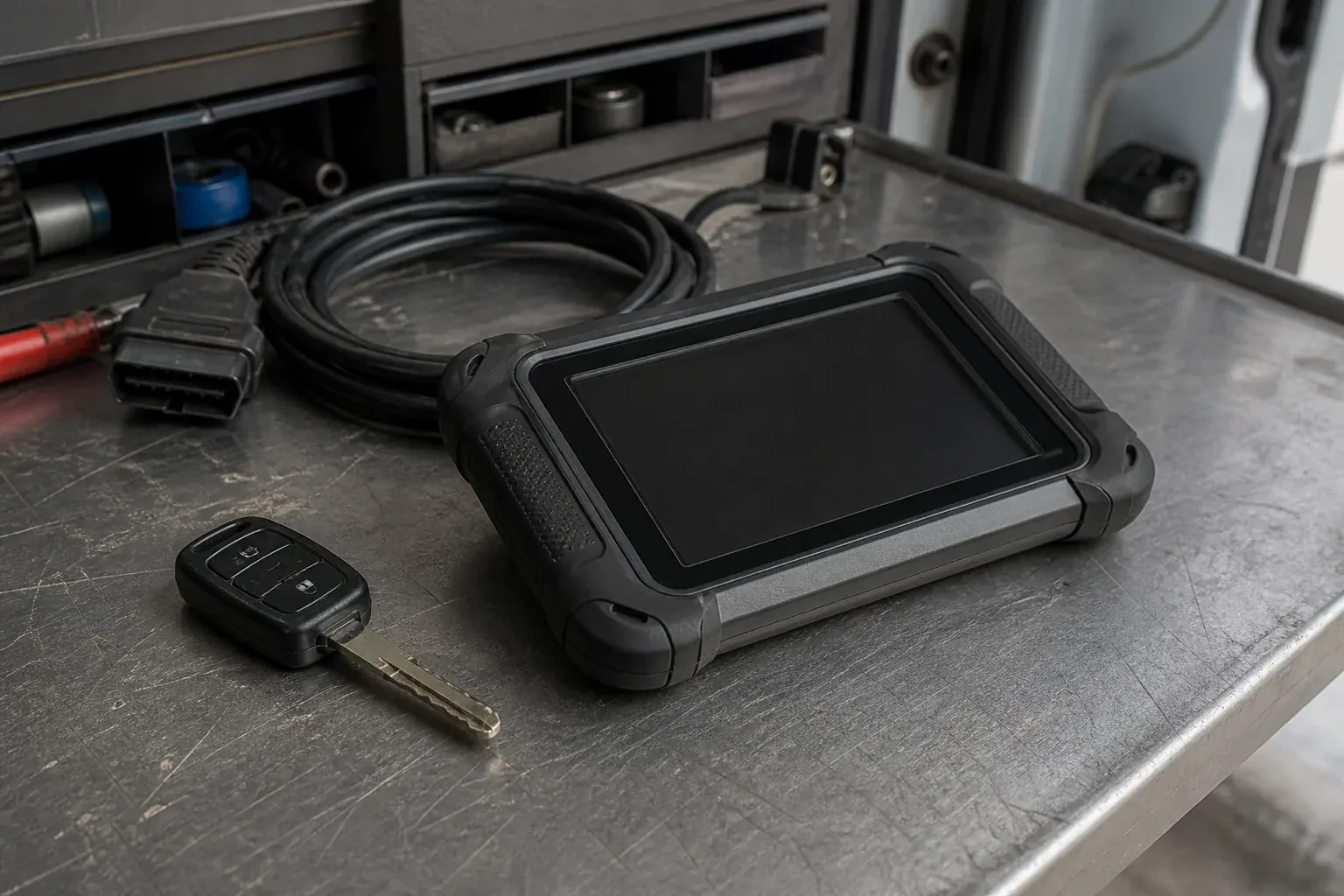
Some vehicles let a locksmith reach the key list directly through the onboard diagnostic port with the right equipment, which keeps a spare or replacement fairly direct. Others, especially newer models, gate that list behind a security session tied to the manufacturer's own network, adding a step before any new key can be written. Knowing in advance which category a vehicle falls into sets realistic expectations for how the visit will unfold, rather than assuming every car behaves the same way under the dash.
How the visit goesThe remote fob has gone silent, the doors won't unlock with a button press, and the little emergency blade tucked inside it has not been used since the day the car was bought. Nobody remembers exactly where the metal edge is supposed to go once it's out.
Transponder Key Programming
How the visit goes
Counting the keys that still work
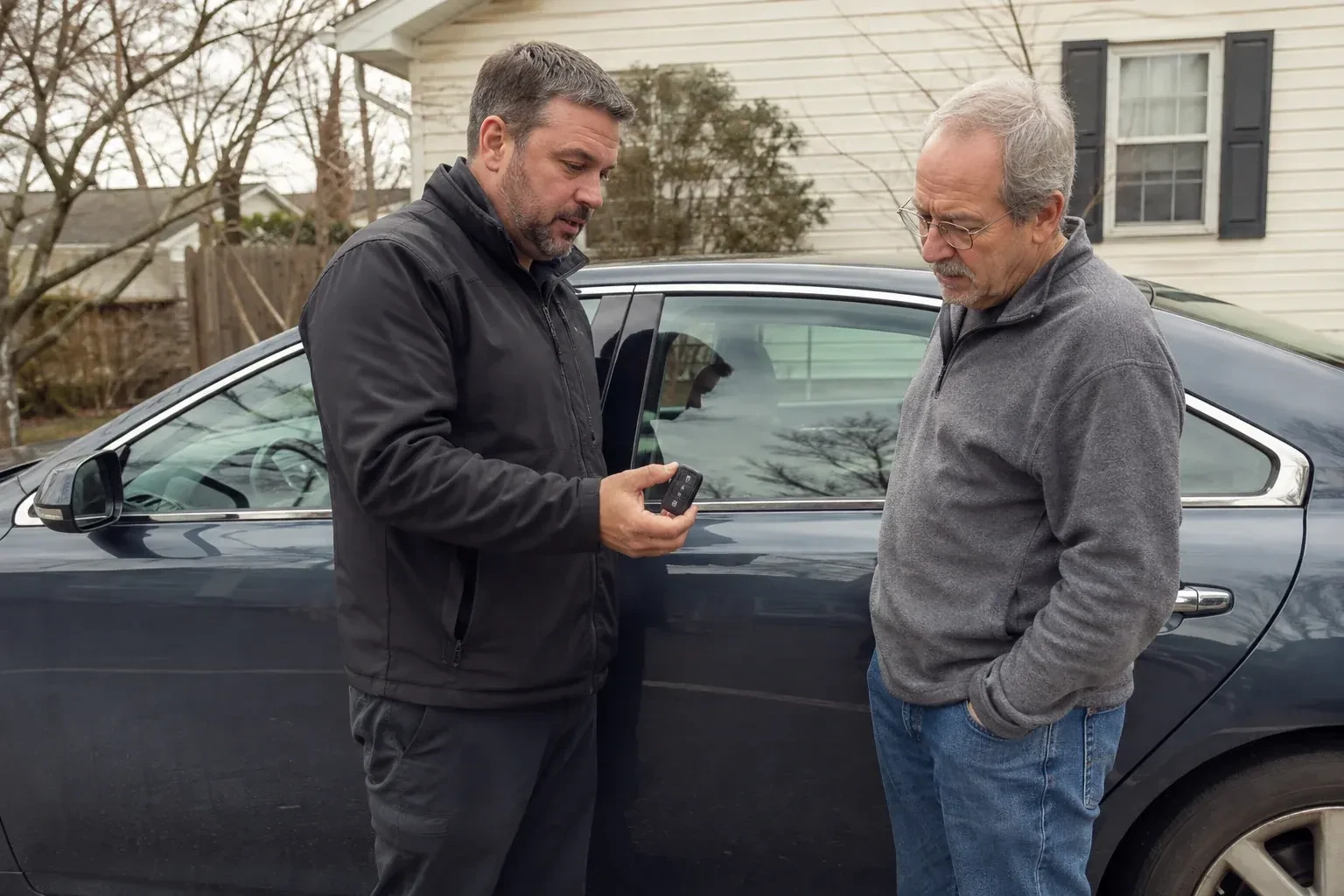
The next question is not about the lock but about the keys: how many currently work, whether one was lost or stolen, and whether every key for the vehicle is genuinely gone. A single missing key changes little beyond adding a spare and clearing its old identity. All keys lost changes the whole visit, since there is nothing left to prove the system already trusts, and the work has to start by re-establishing that trust before a single new key can be written.
Proving it with the engine, not just the tool
A programming tool reporting success is not where the job ends. Every key that should now work is tried in turn: a cold start, a restart a few minutes later, and several full ignition cycles, because a connection that looks fine once can still be marginal. Remote and proximity functions get the same treatment, tested from a normal distance rather than right beside the vehicle. The visit is only considered finished once every key does what it is supposed to, more than once.
Looking after the fob
A fob that has just been given a fresh battery and paired functions should be treated normally rather than babied, but a couple of habits extend its working life: avoid leaving it somewhere that gets very hot, such as a dashboard in direct sun, and replace the battery again at the first sign of a weak or intermittent response rather than waiting for it to fail outright. The metal emergency insert is worth testing once, so its location and its awkwardness are familiar before it is actually needed.
Transponder Key Programming
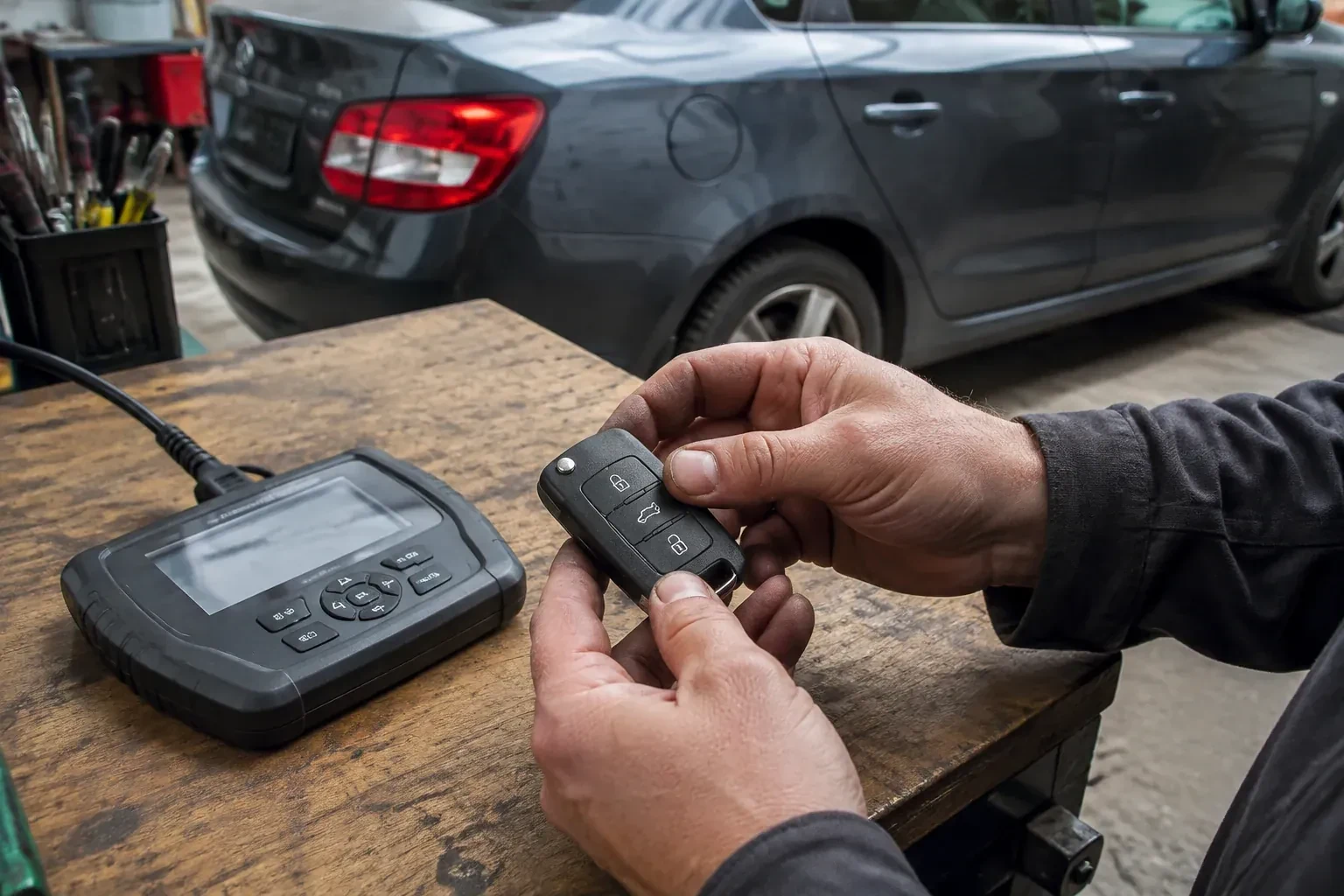
In the van
OBD-II key programmer
Security-access module
Proximity smart key
Frequency test reader
Replacement remote-head fob
Transponder Key Programming
What affects the quote
Cutting method: by code or by duplication
Cutting from a manufacturer code tends to be more direct than duplicating from a worn or damaged working key, where extra care is needed to read the original cuts accurately before a blank is shaped to match.
Fob battery or housing replacement
A fob with a failing battery, cracked buttons, or a worn housing may need that hardware replaced alongside the programming, which is identified during the initial check of the key rather than assumed either way.
Type of key: blade, remote-head or proximity
A basic transponder blade, a remote-head key with buttons, and a push-button proximity key each involve a different amount of pairing beyond the immobilizer chip itself, which affects both the parts involved and the time the visit takes.
What to have ready
- Is the vehicle owned, financed, leased or company-registered?
- What is the year, make and model of the vehicle?
- How many keys currently work?
Transponder Key Programming: questions
QuestionsWhat's the difference between cutting a key and programming it?
Cutting shapes a blank to match the lock, so it turns the mechanical cylinder in the door or ignition. Programming is a separate step where the chip inside the key head is taught to the vehicle's immobilizer, so the engine agrees to start. A key can be cut perfectly and still fail to start the car if that second step was skipped, which is the single most common source of confusion in this service.
Will adding a new key affect the keys I already have?
Adding a key is meant to leave every existing key exactly as it was; the new identity is written alongside the others rather than replacing anything. The locksmith checks that the older keys still work as part of the same visit, precisely so an oversight does not go unnoticed. Only a key you specifically ask to have cleared, such as one that was lost, stops working.
What identification should I bring to a key programming visit?
Photo identification, along with something that connects you to the vehicle: the vehicle permit or registration, or paperwork for a leased, financed or company vehicle if your name is not the one on file. Having this ready before the locksmith arrives keeps the visit moving directly to the vehicle itself rather than pausing partway through.
Related services
- Car Key ReplacementThe car is yours now, but somebody else still holds a key to it.
- Spare Car Key DuplicationThe proximity fob has ridden in a pocket for years, the range feels shorter than it used to, and a dashboard warning mentioned a battery a while back.
- Key Fob ProgrammingThe remote clicks the way it always has, but the vehicle no longer locks, unlocks or answers with its usual chirp.