Commercial · Sonya
Commercial-Grade Lock Replacement in Sonya
Head office wants every branch keyed alike under one system, and half the locations are still running whatever lockset the original contractor happened to install years ago.
In plain words
Fire separations and exit routes add a layer that a house entry door never has, and this service is where that layer gets handled properly. A door that forms part of a fire separation needs hardware listed for that door's rating, and a door on a required exit may need to open with a single motion and no key once the building's occupant load crosses a threshold. The locksmith checks whether either condition applies to this specific opening, selects hardware that satisfies it, and installs the new lock so the door still closes and latches the way a fire-rated or exit door is required to.
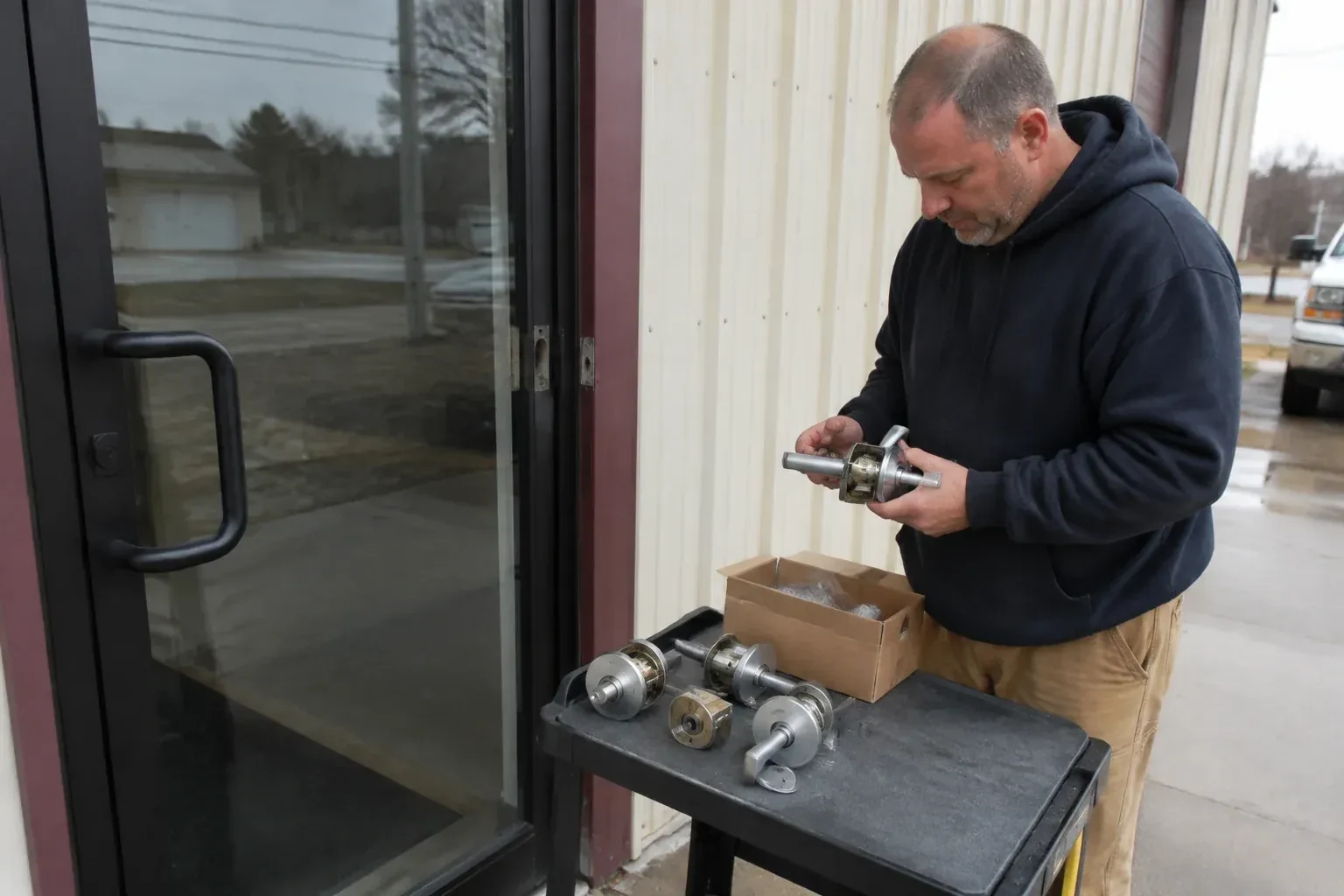
How the visit goesThe kitchen delivery door gets shouldered open more than a hundred times a shift, and lately the latch slips past the strike plate instead of catching it on the first push.
Commercial-Grade Lock Replacement
How the visit goes
Weighing what the new hardware needs to do long term
The last part of the assessment looks past today's problem to how the business expects to manage this door going forward: does staff turnover happen often enough that an interchangeable core, which lets a key holder change the combination without pulling the whole cylinder, would pay for itself in convenience? Does the business want a restricted keyway so blanks cannot be cut at an ordinary hardware counter? These questions shape the specific hardware ordered as much as the door's physical construction does.
Connecting any electrified or access-control hardware
Where the opening already carries an electric strike, a maglock, a door position switch or a card-reader tie-in, that wiring is reconnected to the new mechanical hardware and tested together rather than assumed to still line up. Voltage, fail-safe or fail-secure operation, and monitoring contacts are confirmed against what the access-control or alarm system expects, since electrified hardware that is almost, but not quite, matched to the mechanical lock is a common source of a door that buzzes open but still needs force.
A storefront that closes the way it should
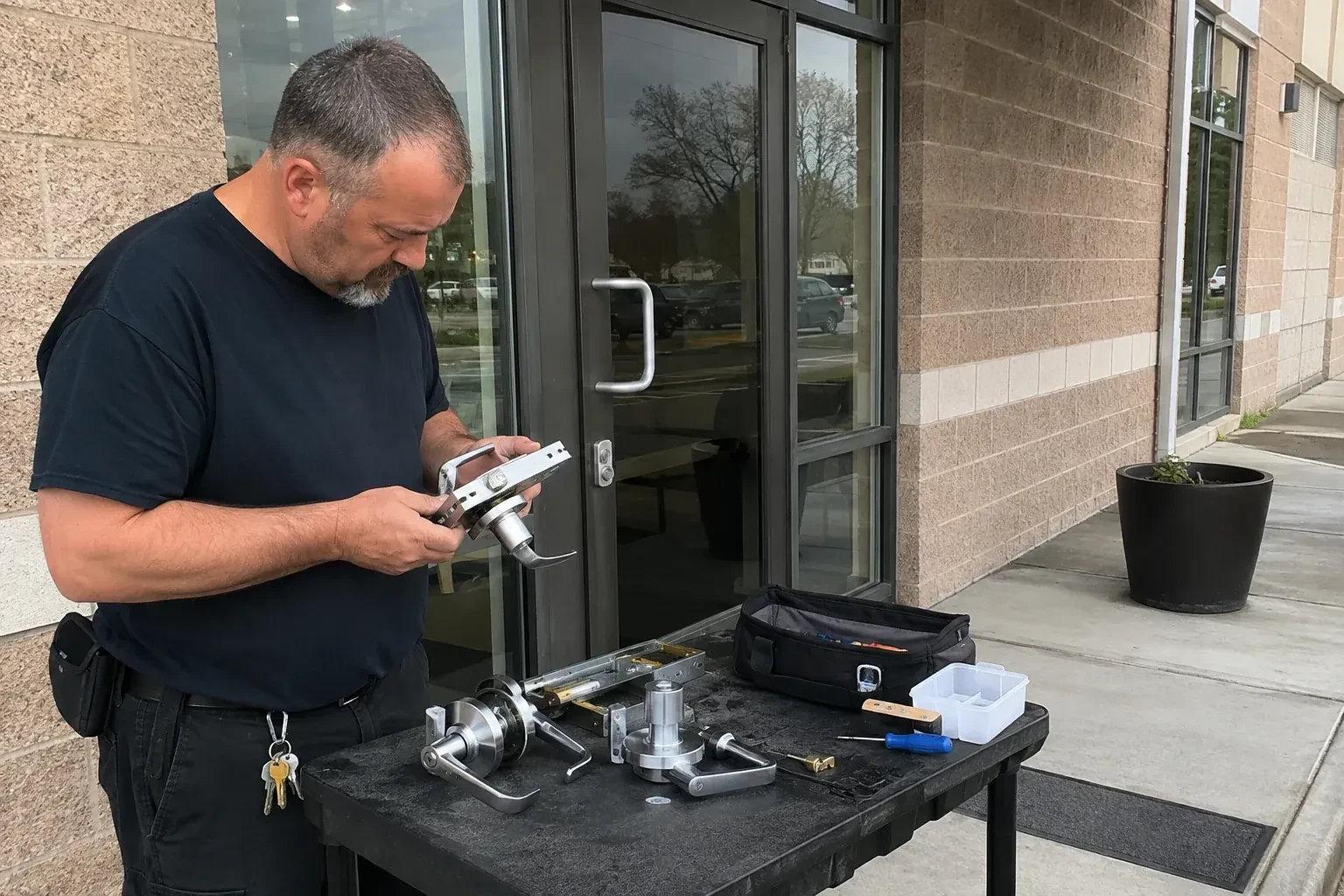
For a narrow-stile or glass storefront door, the finished job means the hookbolt or deadlatch engages fully across its travel every time, without the shoulder-check that a worn or mismatched lock used to need. Staff closing up for the night can throw the lock once and trust it caught, and the business is no longer relying on a habit of double-checking a door that should simply work. The hardware's finish is also suited to public-facing use, holding its appearance under daily handling.
Commercial-Grade Lock Replacement
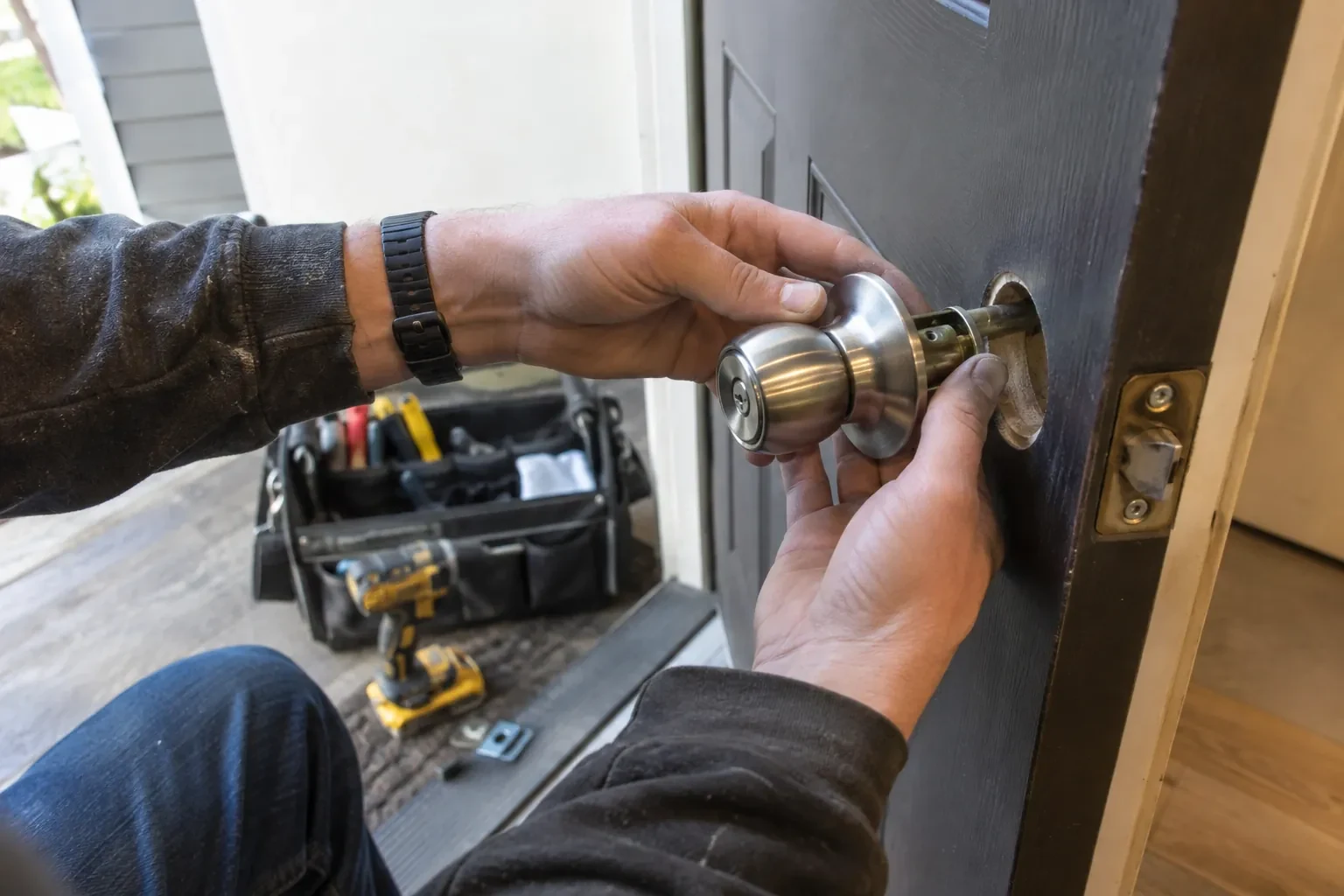
In the van
Mortise lock body
Heavy-duty cylindrical lockset
Strike plates and keepers
Hookbolt and deadlatch hardware
Electric strike
Commercial-Grade Lock Replacement
What affects the quote
Keying complexity
A single stand-alone cylinder is the simplest keying job. A master or grand-master structure spanning multiple doors, departments or locations takes more planning and more cylinders to combinate correctly, and that planning is part of the quote.
Panic or exit hardware
Listed exit devices cost more than a standard lockset and are quoted per opening, since a route requiring this hardware often needs it consistently across more than one door along that path.
Number of keys cut and issued
Keys are counted individually into the quote. A small office needing a handful of keys is a smaller line item than a multi-shift operation issuing keys to a large staff roster.
What to have ready
- What is currently installed: a knob, a deadbolt, a mortise lock, or an exit device?
- Is there an electric strike, maglock or card reader already on this door?
- Is this one door, or part of a wider multi-door or multi-branch project?
Commercial-Grade Lock Replacement: questions
QuestionsWho should hold the master key once the system is set up?
That is a decision for the business, not the locksmith, but the general practice is to limit master keys to the smallest number of people who genuinely need building-wide access, and to log who holds each one. Sub-master and change keys can then cover departments, shifts or single doors without every key holder carrying access to everything.
Do you match hardware to my building's existing key system?
Yes, that is usually the first decision made. The locksmith checks whether your doors already run on a master or grand-master system, an interchangeable-core setup, or a restricted keyway, and orders replacement cylinders that slot into whichever structure you want to keep or move to. Bringing a new door onto an existing system is generally simpler than starting that door on its own.
What is the difference between a mortise lock and a cylindrical lockset?
A mortise lock has its whole mechanism, latch, deadbolt and sometimes a separate handle function, built into one case that sits inside a pocket cut into the door's edge. A cylindrical lockset is a bored-in unit, simpler to service, common on standard commercial and residential doors alike. Which one your door takes depends on how it was originally prepped, not on preference alone.
Related services
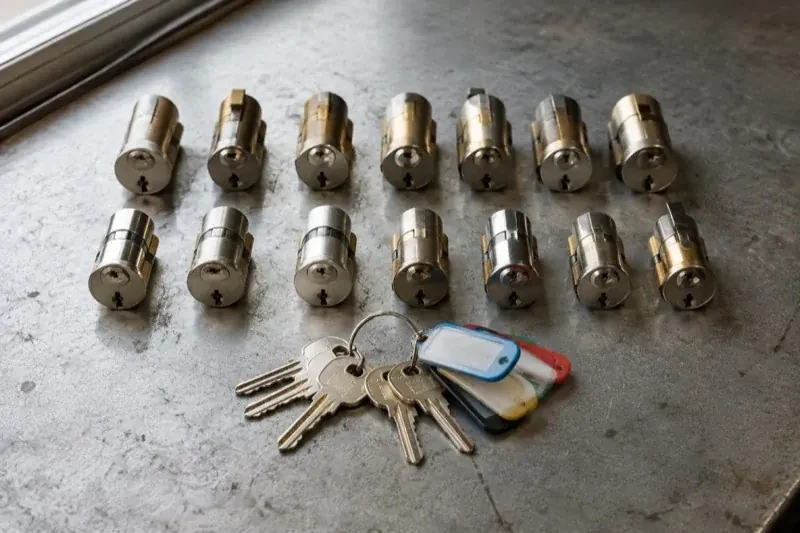
- Master Key System DesignA property manager taking over a small commercial building inherits a shoebox of keys with no labels and no chart.
- Access Control InstallationAnother employee left and the keys never came back.
- Panic & Exit HardwareAfter the fit-out, the gym floor now holds more people than the old office space ever did, and the exit door at the back still has the same turn-lock it had when the room held desks.