Commercial · Kawartha Lakes
Commercial Rekeying in Kawartha Lakes
You have just signed the lease on a unit the previous tenant ran for a decade.
In plain words
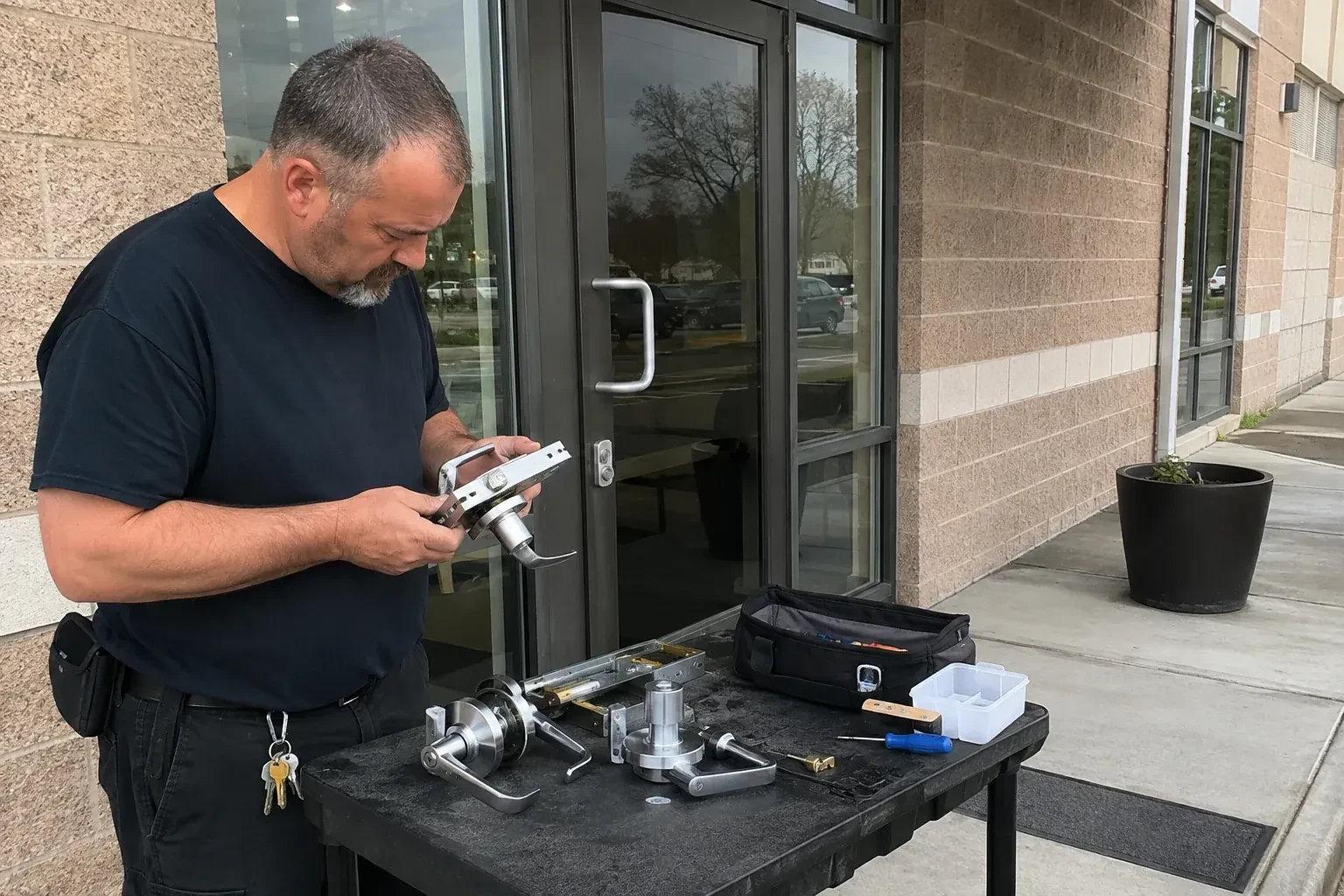
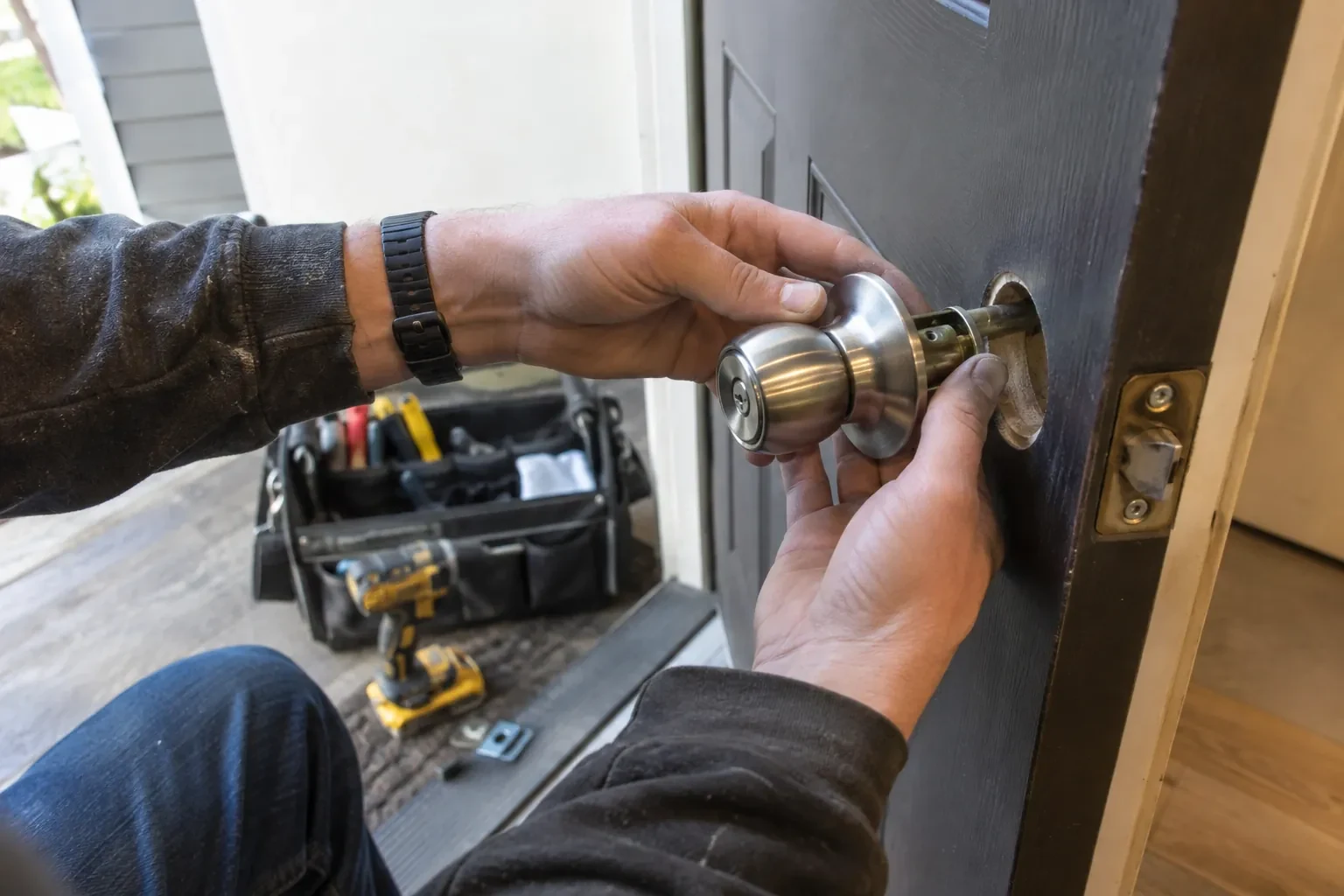
A commercial rekey is planned around the trading day. The locksmith agrees a window, often after close or before opening, and works door by door so the premises is never left without a locking entrance. Cylinders come out, are repinned at a bench in the van or on a counter, and go back in; interchangeable cores are simply swapped for freshly combinated ones. Each door is tried with both new and old keys before the next is started. New keys go to whoever opens up in the morning, and a written chart of doors and key groups stays with the manager.
How the visit goesA break-in overnight took the cash float and a staff member's bag with her work keys inside it. The glass is being replaced this morning, but the key that opened the door yesterday will still open it tonight unless the cylinders are changed.
Commercial Rekeying
How the visit goes
The state of the cylinders and the doors
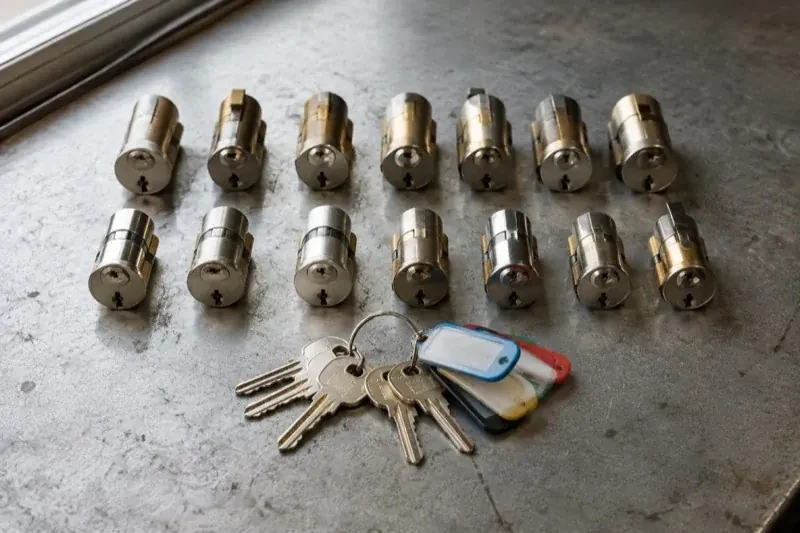
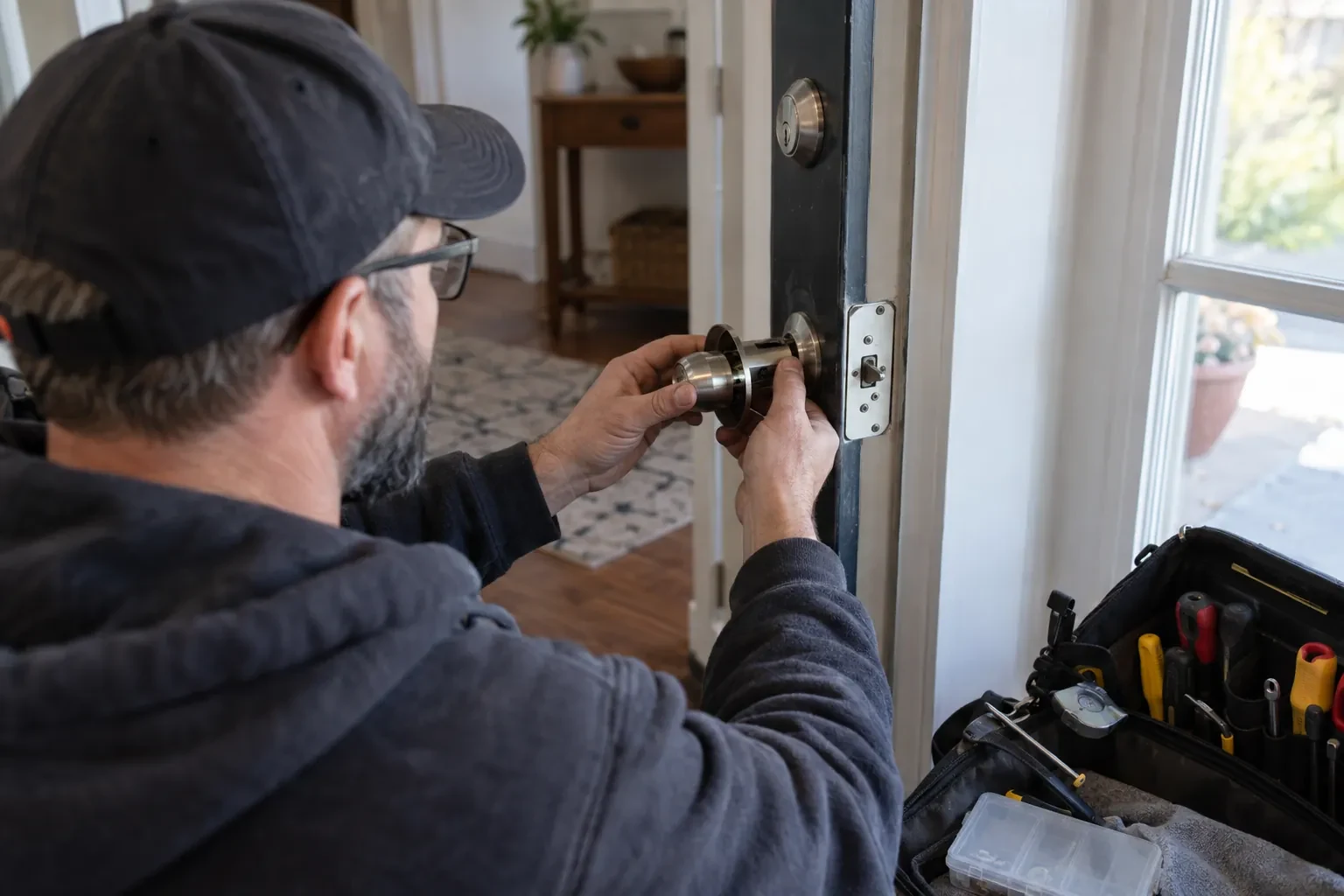
A cylinder about to be repinned is examined the way a mechanic looks over a part before rebuilding it. The plug should turn smoothly with the right key, the pins should spring back cleanly, and the face should be free of the green bloom that salt spray leaves on storefront hardware after a few winters. The locksmith also checks how the door closes: a strike that no longer lines up, a closer that slams, or a deadlatch that fails to catch will keep a freshly rekeyed door from locking properly. Most cylinders pass and are repinned; a worn or corroded one is pointed out so you can choose a replacement for that opening.
Swapping interchangeable cores
Where the business already runs on interchangeable cores, the door hardware never comes apart. The control key goes into the figure-eight core, turns a few degrees, and the whole core slides out of the lever or padlock in one piece. A freshly combinated core goes in the same way, the operating key is tried, and that door is done. The old cores travel back to the bench to be repinned for another opening or held as spares. This is what makes cores so well suited to businesses with steady turnover: a single control key, kept in the manager's safe rather than on a ring, is all it takes to change a lock.
A routine for the next departure
Turnover stops being a security event once there is a procedure for it. When someone leaves, their key is collected against the register and ticked off; if it cannot be produced, the chart shows exactly which cylinders that key opened, and only those are dealt with. Businesses that chose interchangeable cores can go further: the manager takes the control key from the safe, swaps the affected core for a spare in less time than a coffee break, and the locksmith repins the removed core at leisure for the next time. Either way the response is measured and specific, and the front door is never left answering to a key that walked out with a former employee.
Commercial Rekeying
In the van
Standard and restricted key blanks
Rekeyable padlocks
Mortise cylinder set screws and cams
Interchangeable cores and control key
Commercial pin kit
Commercial Rekeying
What affects the quote
Documentation and register
A keying chart, a key register and stamped codes on every key are part of a proper commercial rekey, and the quote names the paperwork so it is never skipped.
A master key plan
Pinning cylinders to accept both a change key and a master, and designing the chart so no key opens a door it should not, is more work per cylinder than keying everything alike.
Padlocks, cabinets and mailboxes
Small locks add up. Each padlock repinned to the door key, each cabinet keyed alike and each mailbox cylinder replaced is listed on its own so you can decide what to include.
What to have ready
- How many keys do you need cut, and for whom?
- Are any cylinders stiff, loose or hard to turn at the moment?
- When is the premises quiet or empty enough for the work?
Commercial Rekeying: questions
QuestionsWe are a landlord with a tenant leaving. When should the unit be rekeyed?
Between tenants is the ideal moment: the departing tenant has handed back their keys, the new one has not yet received any, and the unit is empty for the work. The incoming tenant then starts on keys nobody else has held, and the landlord's own master or emergency key is set up at the same time. Where a lease has ended in dispute, the locksmith asks to see the paperwork before changing locks on a unit that still holds a tenant's goods.
What is a master key system and does a small business need one?
In a master key system each lock accepts its own change key and also a master key above it, so a manager carries one key while staff carry keys that open only their own doors. Small businesses with three or four doors often manage without one. A master earns its place once there are several rooms with different people in them, or several locations, and the owner would otherwise carry a ring of keys.
What is the difference between rekeying a business and replacing its locks?
Rekeying keeps every lock on the door and changes only the pins inside the cylinder, so a new key works and the old ones stop. Replacing swaps the hardware itself. Commercial cylinders are made to be repinned many times, so rekeying suits any lock in sound condition and leaves the levers, trim and door untouched. Replacement is chosen door by door for cylinders that are worn, corroded or too light for what they protect.
Related services
- Access Control InstallationAnother employee left and the keys never came back.
- Panic & Exit HardwareAfter the fit-out, the gym floor now holds more people than the old office space ever did, and the exit door at the back still has the same turn-lock it had when the room held desks.
- Commercial-Grade Lock ReplacementHead office wants every branch keyed alike under one system, and half the locations are still running whatever lockset the original contractor happened to install years ago.